Difference between Digital and Analog TV Broadcasting - Detailed review
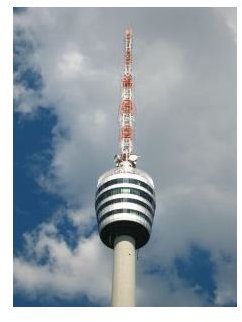
Analog TV Broadcasting
While televisions were in existence as early as the 1920’s, the first television broadcast did not occur until 1936 in London. By 1945, there were less than 7000 TV sets in U.S. homes, and only nine television stations. While these analog sets left something to be desired - they usually took several minutes to warm up and all broadcasts were in black and white - it was certainly an exciting improvement over radio programming. Interestingly though, analog television broadcasting is transmitted in much the same method as radio broadcasts.
Analog TV broadcasting transmits audio and video signals over the air waves, just as radio broadcasts send only audio. Each station uses a single frequency over which it broadcasts analog television signals. You know these frequencies as channels. When these broadcasts experience interference with their frequencies, what you get is a channel with noisy static and annoying “snow” disrupting the program you are attempting to view. Also, because analog TV broadcasting signals vary and fluctuate depending on several factors, you may experience instable color, brightness and sound quality.
Digital TV Broadcasting
While digital TV has only been highly touted in recent years, the first digital television broadcast actually took place in 1996, when a North Carolina TV station broadcast programming in digital. Digital TV broadcasting uses “packets” of compressed data to transmit television programs. The audio and video components of a program are packaged together into these packets of data and broadcast to your digital TV (or analog television with a converter, cable, or satellite box).
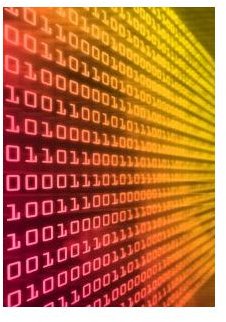
The code used to transmit sound, picture and even text (such as Closed Captioning) in digital TV broadcasting is very similar to the way pictures and sounds are transmitted to your computer via the Internet. Digital television broadcasting is not subject to the same type of interference often experienced by analog TV broadcasting. This means that you will enjoy a consistently clear, bright picture, high-quality audio and no static or snow.
Digital television is not perfect, though. If your reception for a certain channel is poor, you will not receive a poor-quality image or sound. You will not receive anything at all. Because of the manner in which digital TV broadcasting works, you will get great reception or no reception - there is no middle ground. Provided you have the right equipment and make proper adjustments, though, you can expect to enjoy great reception the majority of the time. Read How to Improve Digital TV Reception for tips on getting the best reception.
Another benefit of digital TV broadcasting is that television stations can transmit more data using the same “bandwidth” they were using to broadcast analog television. This means they can supply more features for you, the consumer, such as surround sound or high-definition programming using the same amount of space it took before to broadcast basic audio and video.
Photo Credit: sxc.hu/flaivoloka
Analog TV Sets
Analog television sets have been used in the United States for around fifty years, although they are no longer produced or sold here. If you have ever seen paintings by Georges Seurat or other pointillism masters, you know that while, from the wrong distance, the artwork look like a bunch of colorful dots on canvas, when you move closer and get to the ideal distance, you are able to see the images intended. Analog TV sets include a cathode ray tube (often called CRT) that helps to receive and display television programs in much the same manner. Video cameras take pictures of whatever is going to be broadcast over the analog frequency. These pictures are taken in rapid succession, at thirty frames per second. The camera then turns these pictures into pixels, which is rows of individual dots. Each dot has a specific color and intensity, and they are combined with special signals called horizontal and vertical sync.
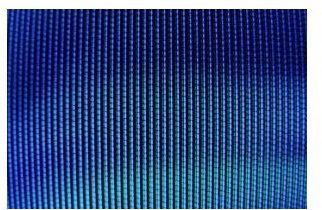
When these pixelated pictures and accompanying signals are broadcast to an analog television, the TV takes all of those little dots and puts them onto the TV screen in the exact position the horizontal and vertical sync signals direct. The dots are displayed in a size that the viewer’s eye sees as the picture originally taken by the video camera.
Digital TV Sets
Digital TV is broadcast differently, therefore digital TV sets need a different type of tuner in order to receive, understand and display the programs transmitted. The compressed digital signal is received by the digital tuner. These signals can also be received by a (digital) cable or satellite box, as well as a digital converter connected to an analog television. Digital TV broadcasting has the ability to be transmitted in wide screen, so watching a wide screen digital TV program is more like being at the movie theater, whereas a big screen analog TV simply displays a streched-out picture. Because of the plasma and LCD technology used in digital televisions, rather than the big, bulky cathode ray tube (CRT), another benefit of digital TV sets is that they can be sleek and thin enough to mount on a wall.
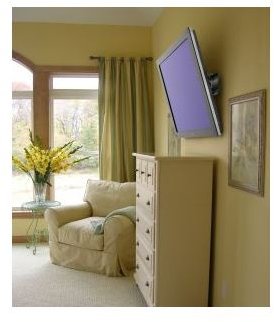
If you are not sure whether you have an analog or digital TV, there are a few rules of thumb to go by. If your TV was manufactured prior to 1998, you can bet it is analog. Big screen TVs produced between 1998 and 2004 may have digital tuners. If you bought your TV after 2004, your chances of it having a digital tuner go way up, and after March 1, 2007 all TV sets have digital tuners. If you still aren’t sure, look for labels or markings on the TV that say “Digital Tuner” or “Digital Receiver.”
Find out everything you need in order to receive digital TV broadcasts in the Bright Hub article What You Need for Digital Television. Learn even more about the different types of televisions by reading DTV, HDTV and HDTV Ready Television: What is the Difference?