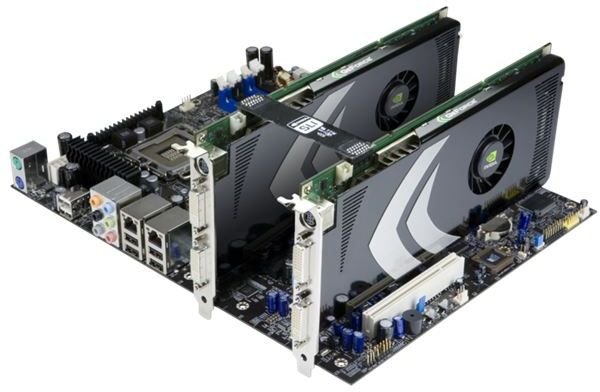
NVIDIA’s SLI and ATI’s Crossfire capabilities have allowed motherboards to hold two graphics cards running at the same time. While it does boost the performance of the PC, does is increase the performance as much as it should? It may just be better to get a brand new one altogether.
Cost & Benefits
Using dual video cards means you will will significantly boost performance without having to spend the extra money on a high-end graphics card. The essential problem is that going SLI or Crossfire will not double the performance, which is contrary to the fact that a person will have to spend twice as much to get two cards.
Even by their own statement with the release of the new GTX 200 series, NVIDIA states that dual-card SLI shows an increase between 60 and 90 percent. The argument here is that SLI should provide double, or 100 percent, performance increase if the owner is to spend twice as much to get two of the same card. Most graphics cards don’t always cost half the price of another card that is double the performance. For the test below, the 6600GT originally retailed from $150 to $250 and the 7600GT retailed between $199 and $270. Another benefit of spending more on a better card is length of compatibility with future applications. It is unlikely that the 6600GT will be compatible for as long as a 7600GT, which means less time between upgrading again and less money to spend in the long run.
SLI Mode
3DMark Comparison Test
For the comparison between SLI, each computer will be using the same settings:
- AMD Athlon X2 3800+
- ASUS A8N-SLI nForce4
- 1GB PC3200
- Western Digital 160GB 7200
For the two graphics cards, the test will compare the GeForce 6600GT 128MB, GeForce 6600GT 128MB (SLI mode), and a GeForce 7600GT 256MB. While they are not the most current cards on the market, the gap between the two models makes it important to show how big a difference SLI makes when comparing to one graphics card that is not too far advanced. The program used was Futuremark’s 3DMark05. After optimizing the each system, the results came out as follows:
- GeForce 6600GT Single Card: 3606
- GeForce 6600GT SLI Mode: 3595
- GeForce 7600GT Single Card: 5994
The test for the SLI mode was done two more times for the sake of making sure that the results were not some fluke or error. Surprisingly, SLI mode didn’t seem to make a hit at all, which brings up doubts about the capabilities of SLI. The average difference of frame rate from the 7600GT to the 6600GT was between 10-15FPS. While other online tests have shown that not all companies produce the same results for the same video cards, the fact that this 6600GT made virtually no impact seemed to show that SLI doesn’t always produce improvements.
Another issue has been the program being run for the test. 3DMark does provide a good benchmark with a fair number of tests that stress the performance of a computer, but certain games, like Half-Life 2 and Quake 4, have been known to run better on either NVIDIA or ATI. This is irrelevant to the SLI performance tests here, but it is possible that dual cards may perform better on a certain application that is optimized for one brand.
Conclusion
Given the variable for applications to perform better with specific graphics cards and the difference in performance between each manufacturer, it is better to spend more on a better video card than to spend double on two of the same video card. Perhaps SLI does give off a better performance, but it is certainly not twice as fast, which ultimately defeats the intended purpose. With the 3-way SLI in NVIDIA’s new GTX 200 series, performance may show similar results as dual cards. Improvements can and likely will occur, but the best argument for having two graphics cards now seems to be nothing more than appearance or bragging rights.