Everything was started by a Finnish student who wanted to get more out of his PC. He was not happy with running MINIX and he wanted to exploit his PC’s full potential to access the servers in his school. Read on to find out more about the history of Linux in this introductory article.
The Early Days
Way back in 1983, Richard Stallman initiated the GNU Project , which was a recurring acronym for “GNU is Not Unix.” His idea was to make an operating system free from all commercial restrictions – one that is free, which can be freely tweaked, modified and used. There was just a small restriction: if you modified the code, you have to make it available freely and you would have to cite the original developer. He wanted this operating system to be UNIX-like and POSIX compliant. The operating system kernel, hurd, did not attract much attention, but the GNU project, allowing free use and modification of the software did.
Years later, Linus Torvalds was using MINIX for his academic studies. MINIX was a system developed by Andrew Tanenbaum to teach UNIX in schools. The source code of MINIX was available but the distribution license did not permit changes and modifications. And this MINIX could not exploit his PC’s full potential. He wondered why he didn’t just write his own program to access his university’s (University of Helsinki) servers.
This thought turned into a simple terminal emulator which he began to use. Torvalds developed the terminal emulator in C and compiled it with the GNU C Compiler. But the terminal emulator would evolve into a kernel, and the kernel into a giant operating system.
The Name
Torvalds wanted to host his work on his university’s servers and asked his coworker to upload the files to the server. He wanted to name his work “freax”, which would be a combination of “freak”, “free” and “X” and which would allude to UNIX. However, his coworker had a different idea: he decided to name it “Linux” and did so, without informing Torvalds at first. But later on Torvalds also agreed on the name. The announcement was made about Linux in the comp.os.minix newsgroup.
I strongly advise reading Torvalds’s “Just for Fun” book , in which he tells about his life and how he created Linux.
The Kernel and the GNU
Before Linus Torvalds officially released the kernel, he licensed it with his own license, which prohibited any commercial activity. The software that he used to develop the kernel was available under GNU General Public License (GPL), which is a free software license. In the 0.01 release, Torvalds wrote in his release notes that the kernel would actually get people nowhere, and to get an operating system, there should be a shell, compilers, libraries, etc. He also stated that these items could be under a stricter or a looser license. In 1992, he decided to license the code under GNU/GPL. Then developers from Linux and from GNU took on the work to make Linux a free and a fully functional operating system.
The Mascot
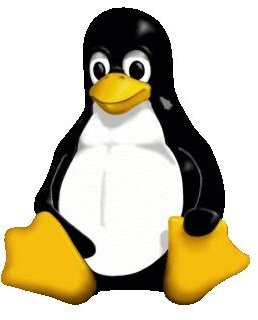
The mascot, the penguin, or better, the Tux does not originate from Torvalds’ love for penguins. When he went to Australia for the first time to speak about Linux to the Australian community, he visited a zoo and was bitten badly by a ferocious penguin. This bite did not do anything bad to his love for penguins, other than elevate it, which would develop into “penguinitis.” Linus Torvalds would explain “penguinitis” as “staying awake at night thinking about penguins and feeling great love towards them.” These little animals were exactly what Torvalds was looking for as his Linux mascot: something fun and sympathetic. The penguin was a little bit “modified” by Lerry Ewing, the creator of Tux; he changed the penguin’s feet to look like a duck’s feet and played a little bit with the mouth to give the impression of a happy fat penguin who just had his tasty meal.
Now
The idea of a free and fully functional operating system is still alive today, and it is made even more powerful by the millions of users and thousands of developers worldwide. Linux is now fast, stable, reliable, scalable and easy to deploy, from your netbook to mainframe servers. Linux development is based on “meritocracy”, where language, religion, and politics do not matter, and respect is earned by “merits.”
If you have not used Linux before, why not download Ubuntu , burn it to a CD and boot your computer from that CD? This will let you play with Linux without making any changes to your system , install it if you like or install Linux programs to your Windows box and see how things work in the Linux realm. And yes, these are just some things about Linux that you won’t find in other operating systems.