Looking at the success of Intel over the past 42 years from inception in 1968 to the present day.
The Intel Timeline
If it wasn’t for Bob Noyce and Gordon Moore leaving Fairchild Semiconductors in 1968 to form their own company, the face of modern electronics would be very different and there is every possibility that we wouldn’t have so many different types of computer.
It was in 1968 that Intel was formed, and since moving from memory production to focussing on processors in the early 1980s, the company has gone from strength to strength, powering a succession of home computer, business computer and server architectures.
There’s some remarkable history in Intel. Take a look this Intel timeline which lists the company’s major milestones.
1968-1980
Following their departure from Fairchild Semiconductors, 1968 saw Bob Noyce and Gordon Moore found Intel with the help of venture capitalist Arthur Rock.
By 1969 they had their own corporate identity – the famous “dropped-e” Intel logo and the following year purchased 26 acres of land to develop as the company grows off the back of successful RAM components. 1970 also sees silicon adopted as the basis for DRAM.
With the world’s first microprocessor and the first erasable programmable ROM chip (EPROM), Intel went public in 1971, with $23.50 per share raising $6.8 million.
Following the first international plant in Malaysia, Intel entered the then-embryonic digital watch market in 1972 by purchasing Microma – and in 1974 the first general purpose microprocessor, the 8080, is introduced, featuring 4,500 transistors. Within two years the 8080 can be found in cash registers, traffic lights and the Altair 8080 hobbyist home computer.
The world’s first microcontrollers – the 8748 and 8048 – were unveiled in 1976, combining CPU, RAM, peripherals and other functions on a single piece of silicon, and two years later Intel celebrated their first ten years of success with 10,000 employees.
After making the Fortune 500 list in 1979 as one of ten “Business Triumphs of the Seventies” Intel welcomed a new decade by demonstrating Ethernet with DEC and Xerox in 1980.
1981-1990
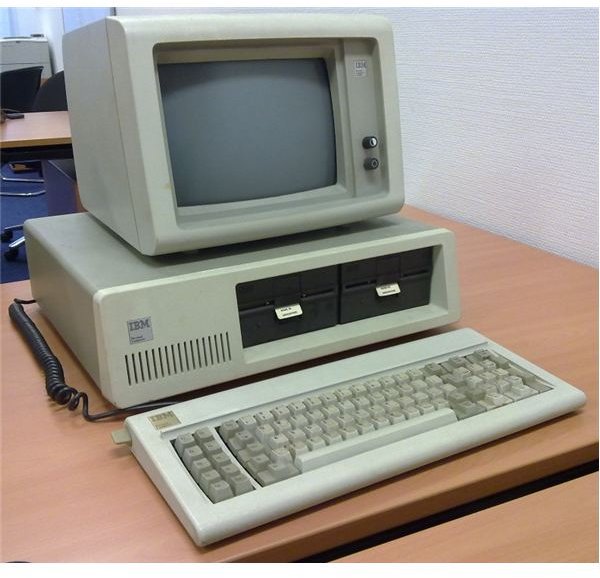
It was in 1981 that the world we know today was born. IBM chose Intel as the supplier of processors to their new range of PCs, and the following year saw the launch of the 286 range of processors. By 1985 Compaq had reversed engineered the PC and became the first of many manufacturers releasing cut-price “clone PCs” into the market. Intel benefited considerably from this, and even supplied Compaq with the first 386 processor in 1986, allowing the company to beat IBM to the punch.
Intel’s future was assured in 1986 as the US courts ruled that microcode was covered by US law. Software embedded in silicon has been Intel’s life blood since exiting the DRAM business in 1985.
1988 saw the birth of the Intel Foundation as well as the company entering the flash memory business with its EPROM Tunnel Oxide (ETOX) system, while 1989 saw the launch of the first commercially available microprocessor holding over 1 million transistors, the i860.
Sadly, founder Bob Noyce passed away in 1990 following a sudden heart attack, but it wasn’t long before Intel became a household name.
1991-2000
No intel timeline article can be without a mention of the “Intel Inside” slogan which has been around for years – it was first used in 1991 in order to attract buyers to PCs built with Intel CPUs rather than PowerPC chips.
After being declared the largest supplier of semiconductors in the world, 1992 saw the release of the 486 processor, and just one year later the first Intel Pentium processor was released, 5 times more powerful than the 486, holding an immense 3.1 million transistors running at 66MHz, making it the fastest mass produced CPU available.
Estimated to power 85% of all desktop computers by 2001, Intel was soon developing their own chipsets and in 1995 it was the Intel Proshare videoconferencing software that allowed a video conversation to take place between the crew of the Space Shuttle Endeavour and ground control.
With 7.5 million transistors, the Intel Pentium II processor was launched in 1997 with the Xeon available for servers one year later, and in 1999 the Pentium III was launched.
2000 was a huge year for Intel, however, with the first Pentium 4 processors released. Wielding the power of 42 million transistors, the first Pentium 4s had a speed of 1.5GHz.
2001-2010
Always planning for the future, Intel formed an industry consortium in 2001 in order to develop extreme ultraviolet lithography (EUV), which they expect will allow the manufacture of even smaller semiconductor components.
Efficiency was the name of the game throughout the decade, however – in 2002 Hyper Threading technology was introduced to increase system performance when multitasking, while 2003 saw the launch of the Intel Centrino processor for laptops, offering higher performance and longer battery life, and reinvigorating the market for portable PCs.
2005 saw a considerable change in the personal computer market as Apple announced they were dropping the PowerPC architecture in favour of Intel. By 2007 all new Macs had an Intel inside.
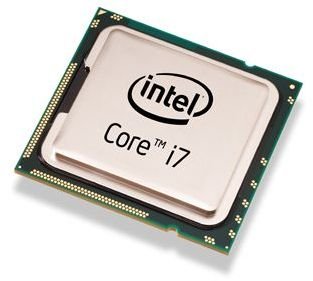
By 2006 the Intel Core 2 Duo was ready to be shipped, breathing new life into the PC industry, while one year later Core 2 Quad increased the number of integrated processors on a single chip from 2 to 4.
Celebrating its 40th anniversary in 2008, Intel embraced the emerging portable platform of netbooks, in particular developing the Atom processor for use in future classmate PCs, designed for use by school children in developing nations.
Recent expansions into new markets and new processors indicate that Intel will continue to play a driving role in computing.


