The Big Crunch Theory: The Other Explanation as to How the Universe was Formed
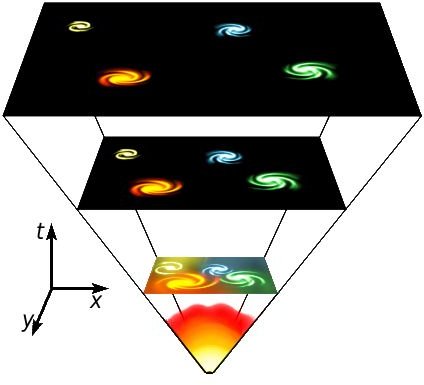
Theories to Explain How the Universe was Formed
One of the most famous and accepted cosmological models of the universe is the Big Bang Theory. In a nut shell, this theory states that around 13.73 billion years ago, all matter and energy were concentrated in an infinite density before they started to expand and became the universe we know today or at least the part which we are able to observe.
Having said that, did you know that the Big Bang Theory has a sister conjecture known as the Big Crunch? While the former speculation deals with the beginning of the universe, the Big Crunch contemplates on the universe’s possible end.
What Is The Big Crunch Theory?
To put matters into perspective, think of it this way: the Big Bang Theory suggests that the universe is still expanding even up to this very moment and is doing so at a continuously accelerating pace. Astronomers assume that this is being aided by a cosmos-wide “scalar field” that forces everything away from the original point of the Big Bang. The repulsion, experts think, is the same in magnitude across space - much similar to the way water ripples form and expand.
However, some experts also believe that there will come a time when the whole universe will reach a saturation point. This is when the gravity being exerted by all the matter in the universe exceeds the energy of the said scalar field. When this transpires, expansion will stop altogether and the whole process will reverse until everything is condensed once again in a massive black hole of singularity. In short, astronomers believe in the Big Crunch, where the universe will eventually collapse on itself until nothing is left.
Big Crunch Model
Could the Big Crunch Theory be Correct?
Much like the Big Bang Theory, experts admit that a big chunk of the Big Crunch is highly speculative and that there are also other plausible scenarios regarding the end of the universe. The Big Freeze, for example, states that the continued expansion of the universe will make it too cold to sustain life. Another theory known as The Big Rip mentions that our universe will be eventually torn apart like a piece of paper due to expansion.
Aside from these competing theories, the Big Crunch also has to contend with doubts and speculations from the scientists themselves. For example, it has been established that the gravitational pull of a heavenly body becomes weaker as you go further away from that particular body. Then, why would the universe expands at an ever accelerating pace, given that it is expanding away from the original point of the Big Bang? Scientists admit to not having an answer yet.
Despite these so-called road blocks on The Big Crunch’s journey to universal acceptance, this particular theory is still the most feasible one in the eyes and minds of the experts. And for those who fear that the end is near, we can assure you that you don’t have to worry yet, as scientists added -provided that it is true, the Big Crunch will commence within the next 20 billion years.
Sources:
Universe might yet collapse in ‘big crunch’ - https://www.newscientist.com/article/dn2759-universe-might-yet-collapse-in-big-crunch.html
Cosmic Doomsday Delayed - https://www.nature.com/news/2004/041101/full/news041101-15.html
The Friedman Equation - https://hyperphysics.phy-astr.gsu.edu/Hbase/astro/fried.html
The Big Bang and Big Crunch Model: https://upload.wikimedia.org/wikipedia/commons/3/37/Universe_expansion2.png
