
One of the preeminent astronomers of the 20th century, Jan Oort was responsible for giving us an understanding about the rotation of the Milky Way, the distance to the center of the galaxy, using radio telescopes, and proposing an area outside of the solar system where comets originated.
Facts About Jan Oort (1900-1992)
Basic facts:
-
1900: Born in Franeker, The Netherlands
Advertisement -
1921: Graduated from University of Groningen
-
1921-1922: Assistant, University of Groningen
Advertisement -
1922-1924: Research Assistant, Observatory of Yale University
-
1924-1930: Conservator, Leiden Observatory
Advertisement -
1926: Ph.d, University of Groningen Thesis: The Stars of High Velocity
-
1935-1970: Professor of Astronomy, Leiden University
Advertisement -
1945-1970: Director, Leiden Observatory
-
1958-1961: President, International Astronomical Union
Advertisement -
1970-1992: Professor Emeritus, Leiden University
Scientific Achievements
Summary:
- 1928: Jan studied the dynamics of the Galactic System in the vicinity of the Sun
- 1941: One of the first to note on the structure of the inner parts of the Galactic System
- 1950: He hypothesized the structure of the cloud of comets surrounding the solar system, and a hypothesis concerning its origin (Oort Cloud)
- 1954: Jan proposed the spiral structure of the outer part of the Galactic System derived from the hydrogen emission at 21-cm wave length (with H.C.van de Hulst, C.A.MŸller)
- 1956: He showed the polarization and composition of the Crab Nebula (with Th. Walraven)
- 1966: He studied High-latitude, high-velocity clouds
- 1981: Jan provided evidence for the location of quasars in superclusters
He confirmed the hypothesis of galactic rotation put forth by the astronomer Bertil Lindblad in 1927. Since a galaxy is comprised of billions of stars, it is not a solid object. So it does not rotate as a single solid object. Stars near the center of the galaxy move faster, while those farther out move slower. He was able to show that the Milky Way Galaxy was a spiral galaxy.
Jan confirmed that the Sun was 30,000 light years from the center of the galaxy and one solar rotation around the galaxy would take 225 million years. He was one of the first to use radio astronomy to study stars and the galaxy. In 1951 he and Hendrik van de Hulst studied interstellar space and looked at the hydrogen it contained. They discovered that the hydrogen gave off a 21-centimeter radio emission, confirming that it interstellar space was made up of neutral hydrogen (only a proton with one electron). Because the hydrogen gas is more concentrated in the arms of the Milky Way galaxy, they were able to use radio telescopes to trace out the spiral structure.
[inlineImage|center|27EB7045254EA01A13781CDA78C90AFA6490485A|Milky Way Galaxy Through the Spitzer Telescope[Artwork]|]
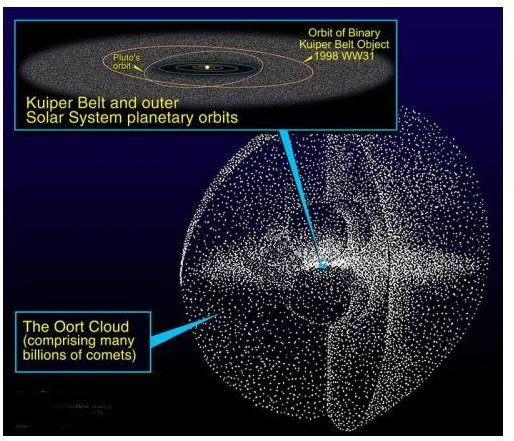
He proposed that there was a large reservoir of space matter outside of the solar system and was the birthplace of comets. This became known as the Oort Cloud.
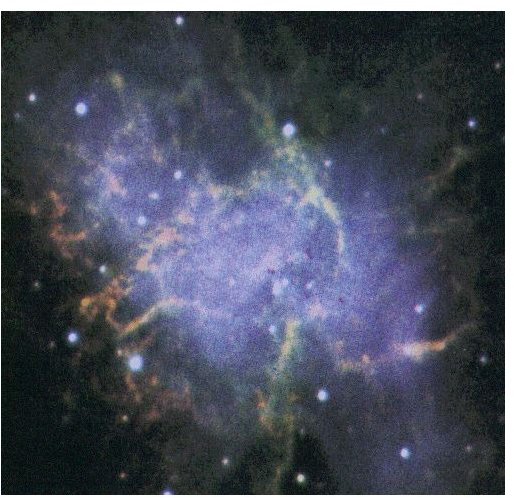
Studying the Crab Nebula, he showed that there was strong polarization originating from the center confirming the synchroton radiation character of the nebula, and this was responsible for its expansion. (Synchrotron radiation is electromagnetic radiation generated by the acceleration of charged particles traveling through magnetic fields and traveling at speeds near the speed of light.)
The Oort Cloud
Named after Jan Oort, this area of space was researched by Professor Oort as a sideline. His main area of interest had been the Galaxy, but he was curious about where comets came from and after tracing the origins of the elliptical trail, he surmised that there must be an area outside of the solar system that comets originated from.
This was painstaking work because no one had considered such a question or such an astronomical area. In 1950 Oort noticed that comets came from different areas of space, but none from interstellar space. That is, they were not free roaming objects between stars, they had a running period through the solar system. One of the things that focused his attention was that the orbits of most observed comets are shaped like extremely elongated ellipses. He concluded that comets, for the most part, were long period comets. They have orbits that lie at a great distance from the Sun and have no preferential direction. So he deduced the existence of a vast cloud of comets that looked like spherical shell at about 50,000 AU from the Sun (which is about 20% of the distance to Alpha Centauri, the nearest star).
In fact, Oort identified comet orbital distribution using only 19 well-measured orbits. From this analysis, however, he successfully identifed where these comets came from.
Scientific Awards
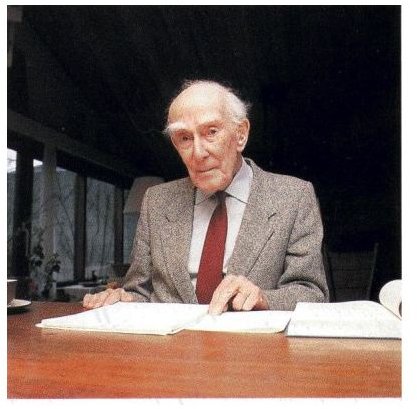
Jan Oort is considered to be one of the 20th century’s most important astronomers. Here is a list of some of his awards.
- Bruce Medal of the Astronomical Society of the Pacific in 1942 (Awarded every year for outstanding lifetime contributions to astronomy. First awarded in 1898, it is considered one of the highest honors in the field of astronomy.)
- Royal Astronomical Society, Gold Medal , 1946.
- Henry Norris Russell Lectureship of the American Astronomical Society in 1951
- Gouden Ganzeveer in 1960 (This is an annual Dutch cultural award that began in 1955. It is given to a person or organization of great significance to the written and printed word.)
- Vetlesen Foundation, Vetlesen Prize , 1966.
- National Radio Astronomy Observatory, Jansky Prize , 1967.
- Karl Schwarzschild Medal of the Astronomische Gesellschaft in 1972 (An award presented by the German Astronomical Society to eminent astronomers and astrophysicists, and named after the astrophysicist Karl Schwarzschild.)
- Association pour le Développement International de l’Observatoire de Nice, ADION medal , 1978
- Balzan Prize for Astrophysics in 1984 (The International Balzan Prize Foundation awards four annual monetary prizes to those who have made outstanding achievements in the fields of humanities, natural sciences, culture, and peace. The prize ranks close to the Nobel Prize and is one of the highest awards for science.)
- Inamori Foundation, Kyoto Prize , 1987.
- International Astronomical Union , President, 1958-61; General Secretary, 1935-48.
Sources
https://www.bookrags.com/biography/jan-hendrick-oort-wsd/
https://bc.ub.leidenuniv.nl/bc/tentoonstelling/Jan_Oort/inhoud.htm