ISRO : History and Development of the Indian Space Research Organization
Introduction
Indian Space Research Organization (ISRO) is an esteemed organization responsible for space research, which is controlled by the government of India and has over the years attained an enviable position of being one of the most prestigious and leading space research organizations in the world.
ISRO till date has successfully conducted different kinds of operations under the guidance of the Indian scientific community. In the last four decades they have been serving Indian and foreign clients with the help of their launch vehicle fleet. ISRO has over the years built many field installations and works together with the international space research community on many important bilateral and multilateral research agreements.
A Brief History
ISRO was established in the year 1969 to focus the talent of Indian researchers into advancing the space program. There were several fledgling projects that formed the base for setting up the ISRO like the INCOSPAR (Indian Committee for Space Research) guided by Prof Sarabhai and the Tata Institute of Fundamental research (TIFR) and the Rohini Sounding Rocket (RSR) program. The success of the fledgling projects laid the cornerstone and foundation for the formation of the ISRO in 1969.
Initially, there were trying times with the Indian government being unable to focus on solely on expanding the space project. The ISRO however did manage to get active support from the government when the Indian government started a Space Commission and handed over the running of the entire space program to the Department of Space (DoS) in 1972. ISRO came under the DoS management on 1st June 1972. It is the primary research and development body of the DoS.
During the initial stages of the formation of ISRO, the socio-political conditions from hostile neighbors and the prevailing economic conditions during 1960-1970, forced India to initiate its own launch vehicle programs. It successfully developed rocket programs and by 1980, the first Satelite launch vehicle SLV was created.
The Indian space research program set a precedent for the space community in 2008 when it became the first country to launch ten satellites on a single rocket in the year 2008.
Projects Undertaken
The initial projects of ISRO formed the back bone of the organization and are still well remembered. A quick recap of what the ISRO was able to achieve over the years in the form of launch vehicles and satellites are:
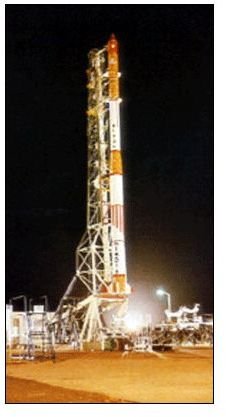
1. The Satellite Launch Vehicle (SLV) was created to launch multiple rockets and could reach a height of 500 km with a payload of 40 kgs. It was released in 1979 and the project was decommissioned in 1983.
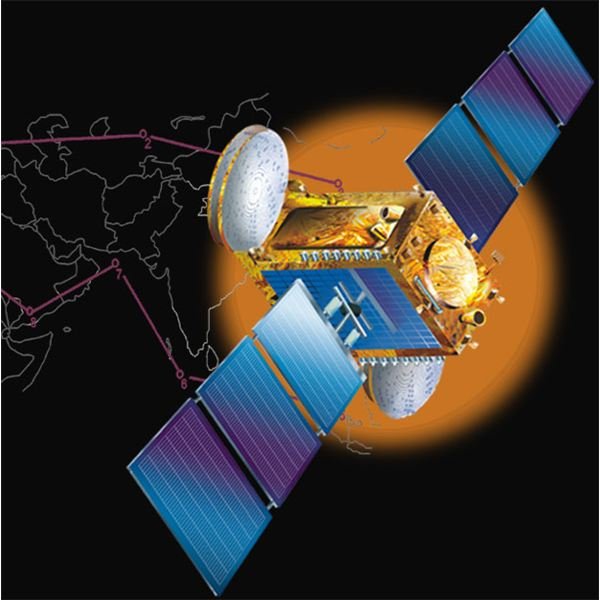
2. The INSAT series were launched by the ISRO to reduce dependence on foreign satellites and to increase local telecommunication, broadcasting and search and rescue needs.
3. The Augmented Satellite Launch Vehicle (ASLV) was started in the year 1987.
4. The IRS series of satellites was ideal for remote sensing and was expressly created for dealing with civilian use of remote sensing.
5. The Polar Satellite Launch Vehicle (PSLV) is still in use to launch satellites into space.
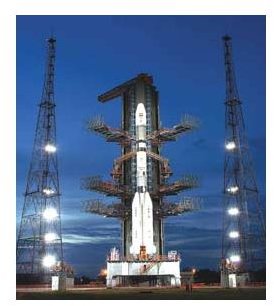
6. The Geosynchronous Satellite Launch Vehicle (GSLV) is used to launch India’s geosynchronous satellites into space for geostationary orbits. At present, this is one of the ISRO’s heaviest satellite launch vehicle and probably the favorite too. It has a payload mass rof about 2500 kg capacity.
7. The GSAT series of satellites, the KALPANA-1 were all launched with the Polar Satellite Launch Vehicle.
8. The Geosynchronous Satellite Launch Vehicle Mark-III (GSLV III) is now under active research and development to help get heavy satellites into space and geostationary orbits. Its first flight is scheduled to be launched in 2010 and has a lift capacity of about 5000Kg.
ISRO And Other Space Research Agencies Of The World
ISRO has mutually signed a formal Memorandum of Understanding with many foreign countries such as Australia, Italy, Brazil, Japan, China, Kazakhstan, Canada, Netherlands, Egypt, Russia, France, Sweden, Germany, Ukraine, Hungary, United Kingdom, Israel and the United States of America. ISRO carries out joint operations with foreign space agencies, such as the Indo-French collaboration called the Megha-Tropiques Mission(MTM) in 2004, which has brought the two nations closer. It is a mission planned to study the water cycle in the tropical atmosphere with respect to the climate change.
Reaching For Mars By 2013
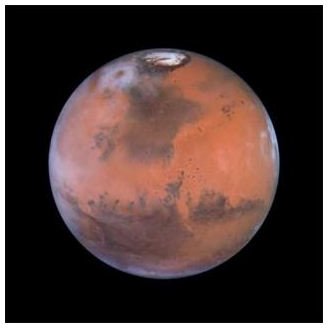
The Indian Space Research Organization has begun preparations for a unique mission to Mars in 2013. It is in the conceptual stage at present, but has received appropriate grants to conduct the project. G. Madhavan Nair, (Chairman, ISRO), revealed that the current launch vehicle GSLV, will be used to lauch the probe to Mars. It is also considering using ion-thrusters, nuclear power or liquid engines to propel the space vehicle towards Mars and thereby creating another breakthrough in space research.
This mission will be followed after the completion of the mission Chandrayan-II which intends to land rover robot on moon by 2012. A Russian collaboration is anticipated in this mission. ISRO also plans human space flight program in collaboration with the Soviet Union.
Conclusion
ISRO had always been a globally competent space agency, which has brought laurels for India in terms of space research technology. The future of ISRO is bright with its current success of Chandrayaan and upcoming project of MARS mission.
For more information visit https://www.isro.org/
References
https://www.secureworldfoundation.org/index.php?id=107&page=India_Launch
Hennock etc. (2008), “The Real Space Race Is In Asia”, Newsweek.
https://en.wikipedia.org/wiki/Indian_human_spaceflight_program
https://en.wikipedia.org/wiki/Department_of_Space
https://www.dst.gov.in/stsysindia/space.htm
https://en.wikipedia.org/wiki/Megha-Tropiques_Mission
Images:
SLV-3: https://www.isro.org/Launchvehicles/images/slv3_img.gif
INSAT 4A : https://t1.gstatic.com/images?q=tbn:apR13DKFnhmy1M:https://www.isro.org/insat-4a/images/home_big_03.jpg
Mars: https://abclive.in/thumbnail.php?file=mars_195248141.jpg&size=article_medium
