The History of Space Tourism - Civilians in Space, Space Tourists or Spaceflight Participants
Civilian Space Program
In the 1960’s and 70’s, many Americans thought that space hotels would be launched by the year 2000 and that civilian space travel would be commonplace. Social prognosticators from the mid 20th century regularly expressed their belief that the average family of the early 21st century would be able to travel to the Moon for a holiday. But with the moon landing in 1969, “the space race” between America and the Soviet Union lost much of its urgency. Afterwards, national governments de-emphasized space exploration, with a fall in public funding for manned space flights in its wake. Currently the space tourism is a privilege, reserved for the wealthy, but the quest for civilian space travel continues.
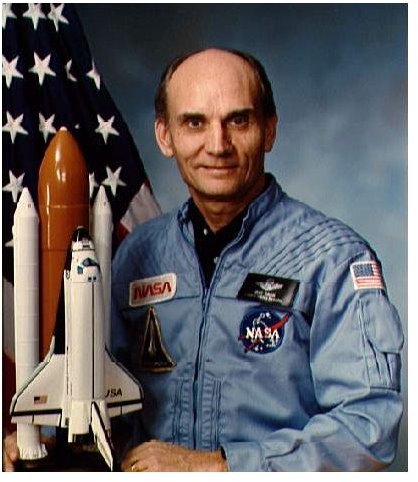
America’s first “guest astronaut” was Senator Jake Garn of Utah, who was chair of the NASA oversight committee. On-board, his role was officially designated as a “congressional observer.” His 7-day flight took place in April 1985. NASA’s astronauts deployed two satellites into orbit and conducted various science experiments. One of Garn’s responsibilities as a congressional observer was a fairly informal, “Toys in Space” study.
Royal, Arab, Muslim
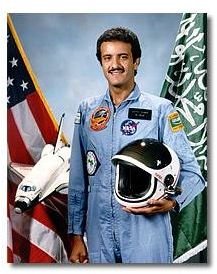
In June 1985 28-year-old Prince Sultan Salman Abdelazize Al-Saud accompanied a Space Shuttle crew of six on a one-week mission. The prince’s shuttle flight was tied to a piece of payload the shuttle was carrying, an Arabsat communications satellite. Abdelazize Al-Saud is now a retired officer in the Royal Saudi Air Force. He is the only Saudi citizen to travel in space, the first Arab, the first Muslim, and the first member of royalty to travel in space.
Challenger Disaster
U.S. congressman Bill Nelson of Florida flew on what was the penultimate Shuttle flight of the first phase of America’s “civilians in space” program. After his flight in January 1986, the Space Shuttle Challenger launched on January 28; the ill-fated shuttle mission that killed five career astronauts, a scientist, and teacher Christa McAuliffe. After Challenger, plans to send a journalist into space and any other civilian for that matter were put on hold indefinitely.
Civilians Come Again
In 1998 NASA showed a very careful willingness to allow non-astronauts to fly in space by approving U.S. Senator and former Mercury 7 astronaut, John Glenn’s request to fly on the space shuttle for a geriatrics research program. Glenn, retired from the U.S. Senate, was 77 years old at the time, and the experiments in which he participated were funded by the U.S. National Institutes of Health. Soon afterward, NASA Administrator Daniel Goldin created a new position in the astronaut corps: the educator-astronaut. Goldin chose Barbara Morgan, the back-up astronaut to McAuliffe, to the position. Morgan finally flew in August 2007, more than two decades after she became part of NASA’s astronaut corps for the Teacher in Space Program.
Space Tourists
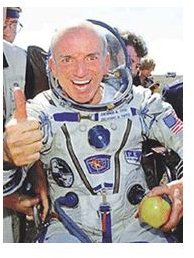
Since the Space Shuttle Challenger disaster, civilian space exploration has shifted to Russia, due to their orbiting MIR space station, and later, their participation in the construction and use of the International Space Station. Russia sold the first seat on a Soyuz rocket bound for the International Space Station (the MIR had been de-orbited by that time) in 2001 to American businessman Dennis Tito for a reported $20 million. A few more have followed since then, roughly at the rate of one “space tourist” per year, with Anousheh Ansari, an Iranian-born American, becoming the first female space tourist in 2006.
Private Space Flights
While Soyuz is theoretically available for civilian space travel for the right price, in America, private space flight is in its larval stage. In 2004, a craft called SpaceShipOne, designed by aviation legend Burt Rutan, won the $10,000,000 X-Prize, for being the first private company to reach and surpass an altitude of 100 km twice in two weeks. A few years earlier than that, XCOR Aerospace flew the world’s first private rocket-powered plane in 2001, piloted by Dick Rutan, brother of Burt Rutan. The EZ-Rocket was the first plane to be totally rocket powered.
Bright Future?
In a 2009 appearance on the BBC World Service’s Talking Point program, Buzz Aldrin, the second astronaut to set foot on the moon, says that he still has high hopes for civilian use of space, and that he doesn’t want it to be limited to the super wealthy. “We want very qualified people, but that doesn’t mean that ordinary income people cannot be selected to do that.” He went on to declare ambitiously, “I’d like to see that happen by October next year.”
References
https://www.xcor.com/news-articles/local-articles/01-09-11_baby-step_towards_civilians_in_space.html
https://www.encyclopedia.com/doc/1G2-3408800230.html?jse=0
https://74.125.47.132/search?q=cache:2vJG2D5CUBcJ:212.58.226.17:8080/hi/english/sci/tech/newsid_397000/397830.stm+civilians+in+space&cd=8&hl=en&ct=clnk&gl=us https://www.bookrags.com/research/civilians-in-space-spsc-03/
https://en.wikipedia.org/wiki/Sultan_bin_Salman_bin_Abdulaziz_Al_Saud
