An Overview of the Chandra X-Ray Observatory
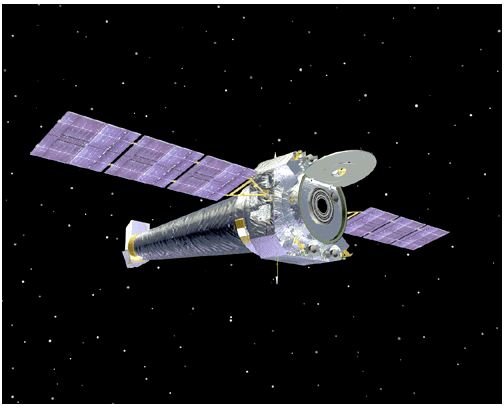
The Chandra X-Ray Observatory has provided the world with some of the most stunning photographs—and deep insights—in astronomy. But what does it do precisely—and how much longer does it have? This article provides a basic overview of the Chandra X-Ray Observatory.
The Chandra X-Ray Observatory
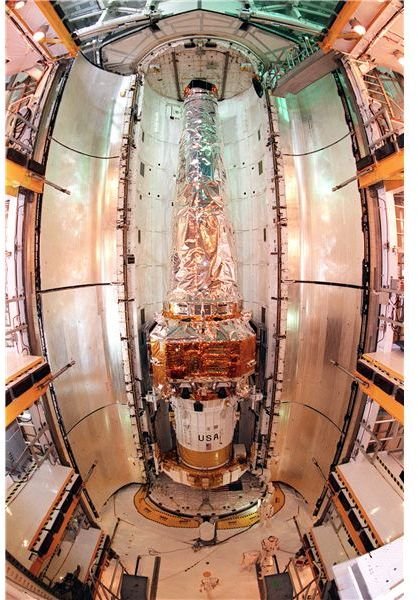
How Chandra Works
Chandra, as its full title implies, detects energy in the x-ray spectrum. It possesses both high and low energy transmission grating spectrometers, HETGS and LETGS respectively, to detect the full x-ray range. Chandra also possesses the ACIS, or Advanced CCD Imaging Spectrometer, and the HRC, the High Resolution Camera. These parts can all observe independently or in conjunction to satisfy every observational need of us Earth-based scientists.
The satellite housing Chandra has a high, very elliptical orbit, one of the furthest, keeping it well away from the absorptional effects of the atmosphere of Earth and away from the radiation belts. However, this also means that repair missions are impossible—good thing that Chandra hasn’t had any real technical difficulties.
Somewhat unusually for such a renowned telescope, Chandra is operated not only by NASA but by SAO, the Smithsonian Astrophysical Observatory, at the Chandra X-ray Center in Cambridge, Massachusetts. MIT and Northrop Grumman provide assistance. Together, this combined team has won the prestigious Smithsonian Achievement Award for their management of Chandra.
Chandra Images
Discovery Through Chandra
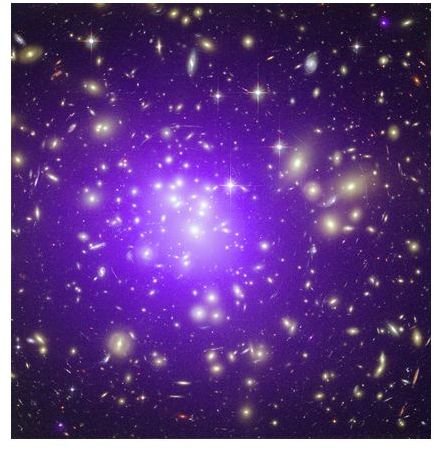
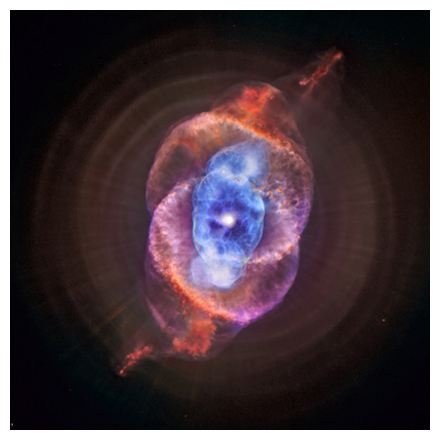
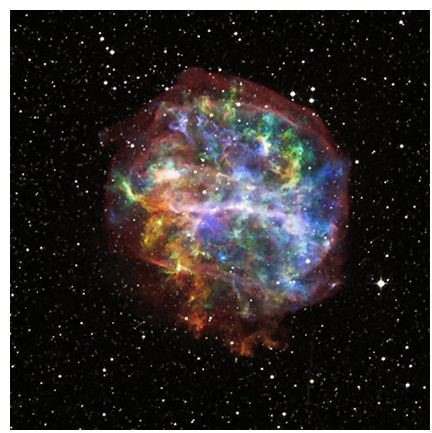
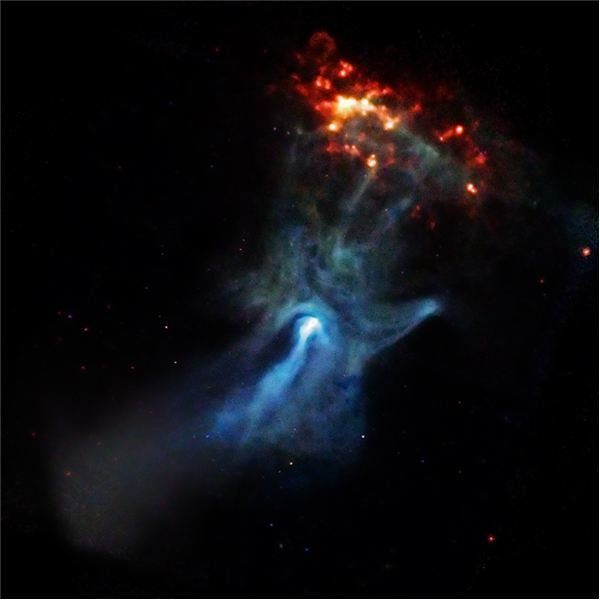
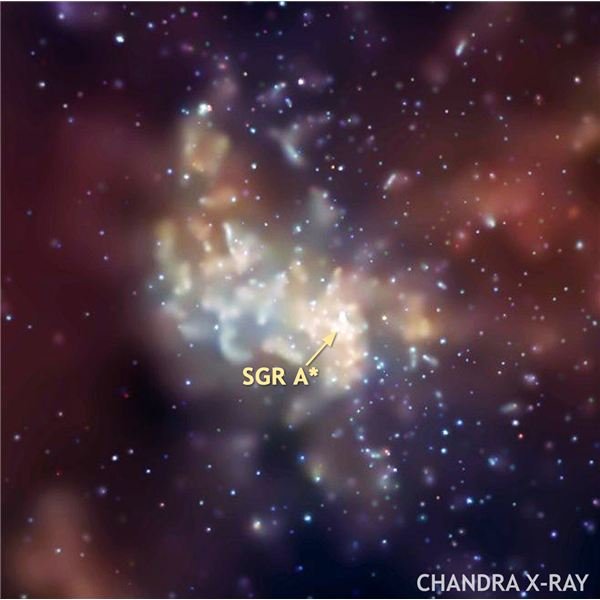
Chandra’s powerful influence on x-ray astronomy is incalcuable. By observing in the X-ray portion of the spectrum, Chandra has been able to peer into corners of the universe where no other spectrum truly penetrates or escapes from, like the very first shock waves of a supernova, quark stars, brown dwarfs, even the sound emitted from a black hole. The examples are endless. X-rays are one of the most useful parts of the spectrum to study, and Chandra makes it all so very possible for scientists. Chandra has even contributed to the mysterious question of dark matter, detecting mass where no other spectrum betrays even a hint of its existence. For more examples of discoveries made through Chandra images, pour through the Chandra photo album, which includes lovely little blurbs on the cosmology and astronomy underlaying every image.
The Future Of Chandra & X-Ray Observatories
The Chandra program was initially only to last five years, but due to its outstanding performance, NASA officials estimated that Chandra would be good for ten, or until this year of 2009. Yet physically, Chandra does not appear to be anywhere near its breaking point, so it’s likely that it will be able to continue on for a good few years yet. As previously stated, repair missions to Chandra are impossible, so once it breaks, it’s broken for good.
There’s another x-ray telescope currently out there, also collecting data—the XMM-Newton. While it has greater collecting area, it doesn’t have nearly Chandra’s exquisite resolution. If Chandra fails, however, it will be a suitable substitute for the time being.
All that being said, there’s another major x-ray observatory in the works, one with even greater resolution or collecting area than either Chandra or the XMM-Newton, the IXO, or International X-Ray Observatory. The proposed launch date is 2020, which will be due time to carry on Chandra’s bright burning torch in the field of x-ray astronomy.
