The First Apollo Lunar Missions
Go for TLI
Frank Borman, Jim Lovell and Bill Anders waited in a parking orbit in Apollo 8 for the words that would send them on a journey no human had ever taken. Finally, on December 21, 1968, they came from Mission Control.
“Apollo 8—you are GO for TLI.”
TLI. Trans Lunar Injection. For the first time in human history, Man was leaving the confines of Earth, and going to another celestial body. A few minutes later, Commander Borman fired the big engine on Apollo 8’s Service Module, and the men were headed for the moon.
This was only a circumlunar reconnoitering and test flight, and the spaceship carried no LEM for landing. But this flight would determine if the Apollo could make the trip to the moon and back.
The three astronauts arrived at the moon two and a half days later. It was a tense time for Mission Control, because to go into orbit around the moon, the Apollo’s engine had to be fired on the dark side of the moon, when the craft was out of communication. If the engine didn’t fire, the spaceship would fly off into space and be lost. Apollo 8 swung around the moon about 67 hours and 45 minutes after launch. Mission Control waited, holding their collective breath.
At precisely the correct second, they heard the welcome transmission—“Houston, we are in lunar orbit.”
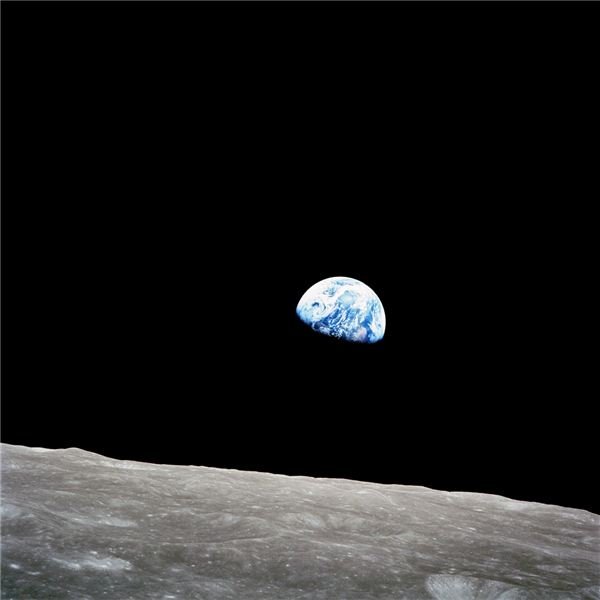
The three astronauts spent a bit more than 20 hours circling the moon, photographing possible landing sites, and getting the first ever photo of Earth rise at the moon. Trans Earth Injection for the return trip required the same stomach knotting backside engine firing, but Apollo functioned beautifully.
After an Earth orbit test of the LEM, and another circumlunar run with the LEM, it was time to set foot on the surface of our satellite.
Small Step or Giant Leap
July 16, 1969. Apollo 11 was carried aloft by SATURN AS506. By now, as there were two distinct spacecraft making up the spaceship—the Apollo and the LEM—the astronauts had reverted to the old Mercury tradition of naming each of them. For Apollo 11, the Command Module was Columbia, and the LEM was Eagle.
Neil Armstrong, Buzz Aldrin and Michael Collins crewed the mission. Armstrong and Aldrin would fly Eagle to the lunar surface. Collins would remain in Columbia in case a rescue in orbit was needed.
On July 20, the two LEM pilots climbed into Eagle, undocked from Columbia and fired the descent engine to begin their fall towards the lunar surface. Their target was a large level plain called the Sea of Tranquility. From orbital mapping photos it appeared smooth and a perfect spot for the first lunar touchdown. But as Armstrong brought Eagle within a few feet of the surface he and Aldrin could see Tranquility was covered in boulders. Armstrong flew the LEM over the surface for almost two minutes searching for a smooth landing site. He finally found one as the fuel gauge read dangerously low.
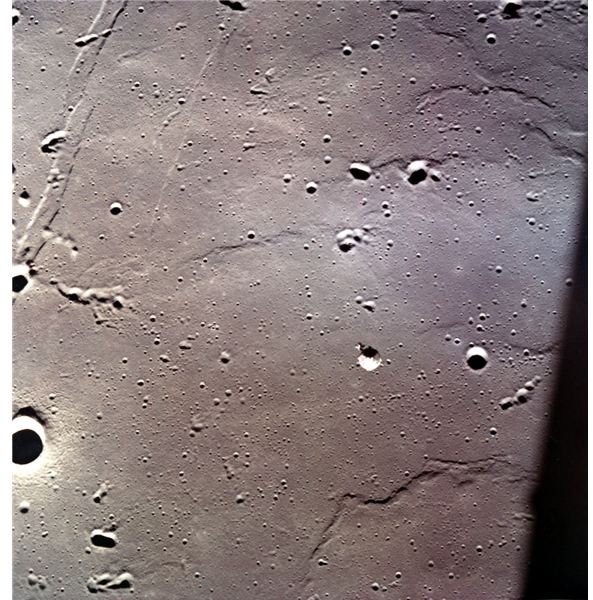
He eased Eagle to the surface. “Contact light,” he radioed to Mission Control.
Then there was silence. For what seemed an eternity back on Earth there was no communication from the moon. Mission Control kept calling up for a response to no avail.
Then finally: “Houston, Tranquility base here. The Eagle has landed.”
Houston called back: “Roger Tranquility…you got a bunch of guys about to turn blue. We’re breathing again.”
Some six and a half hours after landing, Neil Armstrong exited the LEM, and climbed down the ladder to the landing pad. After a few minutes he told Mission Control: “I’m stepping off the LEM now.”
For the first time in history a man set foot on another world.
Officially, Armstrong said, “That’s one small step for a man, one giant leap for mankind.” Actually, in his excitement, he forgot the ‘a’. NASA insists it was covered up by static, but not.
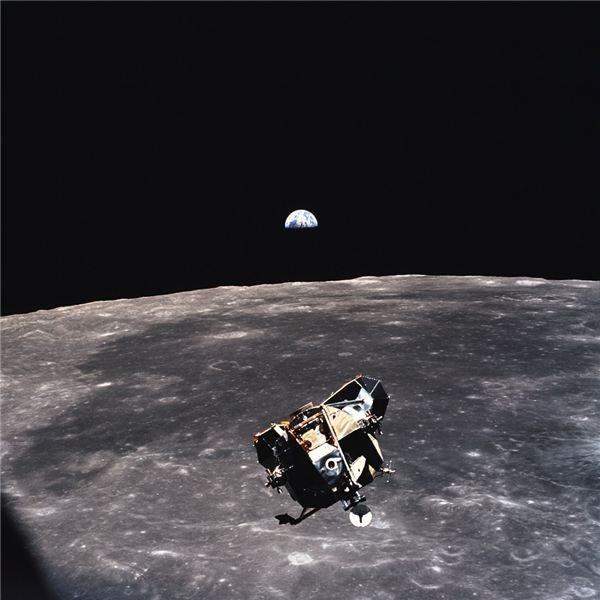
Neil and Buzz spent 2-1/2 hours exploring around the LEM, collecting samples of rocks and dust. All told, they were on the moon for 20 hours. On July 21, Eagle’s ascent stage lifted them towards a rendezvous with the waiting Columbia in lunar orbit.
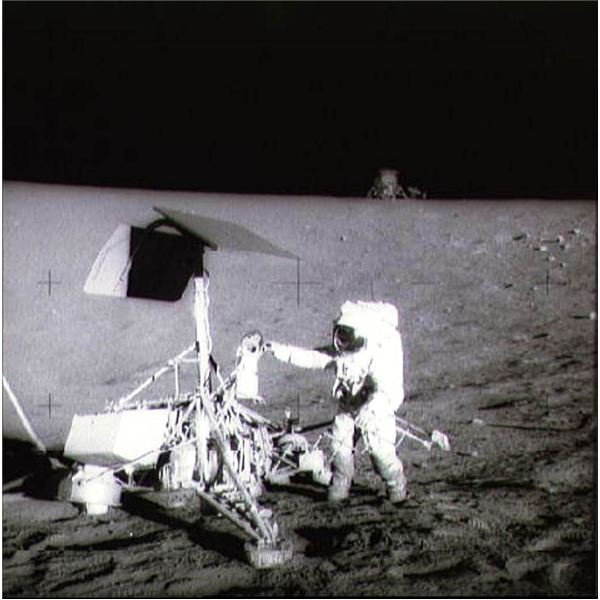
Four months later, Chuck Conrad, Dick Gordon and Alan Bean flew Apollo 12—Yankee Clipper and Intrepid (LEM)—to the Ocean of Storms, obviously a less welcoming site than Tranquility. One reason for this choice was an artifact. One of the surveyor spacecraft that mapped potential landing sites was here. Conrad and Bean retrieved parts of it so scientists could examine the results of exposure to the extremes of the lunar environment.
When Science Fiction Became Real
Jim Lovell, John Swigert and Fred Haise in Apollo 13’s Command Module Odyssey were 200,000 miles from Earth, 56 hours into the mission, when they were startled by a sharp BANG and a strong vibration. Suddenly warning lights on the panel began to flash. The main B bus was showing under voltage, two fuel cells were out, one oxygen tank was empty, and the other appeared to be losing pressure rapidly.
Swigert radioed Mission Control: “Houston, we’ve had a problem here.”
The situation rapidly deteriorated. Within an hour and half it was clear the crew would run out of oxygen within minutes. Both the crew and Mission Control agreed the only solution was to use the LEM, Aquarius, as a lifeboat. The three astronauts powered down the CM—it would be needed for Earth reentry—and entered their lifeboat.
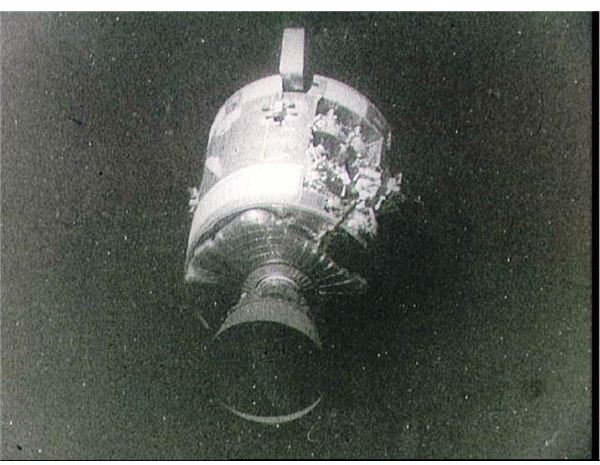
But that didn’t solve all the problems. The LEM, Aquarius, was designed to keep two men alive for 45 hours. It would now have to keep three alive for 90 hours. Oxygen was no problem. The descent stage’s supply was sufficient by itself. But in the closed space of a spacecraft, carbon dioxide builds up and must be scrubbed out of the atmosphere. Aquarius’ scrubbers could not do the job. A day and a half in the lifeboat and CO2 levels had built up to dangerous levels. The crew and Mission Control worked out a way to use the CM scrubbers with the LEM’s using plastic bags, cardboard and tape. The atmosphere problem was solved.
But the Odyssey’s Service Module engine, normally used to return to Earth, was useless. The big descent engine on Aquarius would have to do the job. As the crippled craft rounded the moon, Aquarius’ descent engine fired for five minutes. This not only put them on the path home, but shortened the flight time.
Approaching Earth, the crew returned to Odyssey after firing Aquarius’ descent engine once more to put Odyssey into reentry position.
As the Apollo sped to the atmosphere, Commander Jim Lovell told his crew: “Gentlemen, it’s been a pleasure flying with you.”
Advanced Exploration
Apollo 14—Kitty Hawk and LEM, Antares—reached the moon in January 1971. Our first astronaut, Alan Shepard, commanded the mission. He and Ed Mitchell descended to the lunar surface in Antares while CM pilot Stuart Roosa awaited their return in Kitty Hawk.
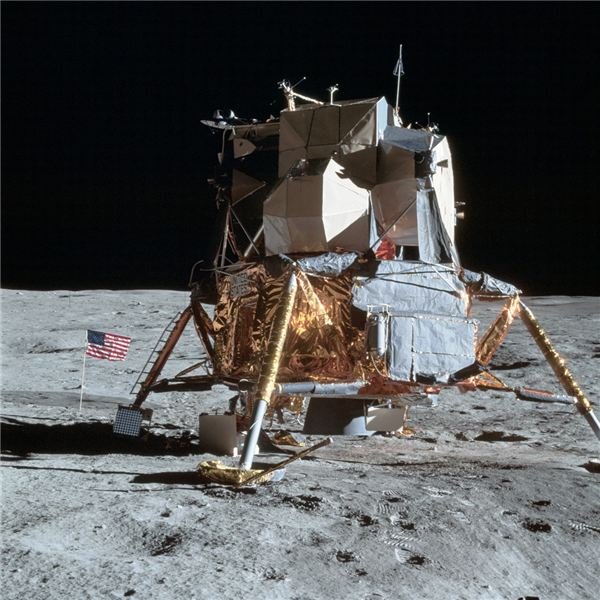
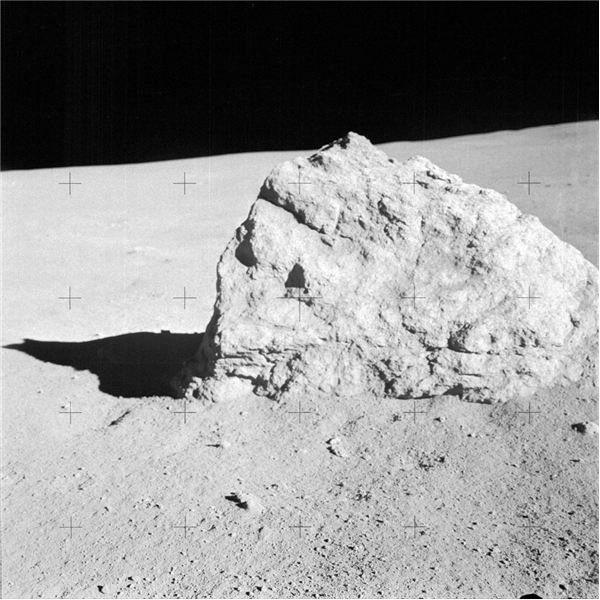
Shepard and Mitchell made two walks on the moon, discovering a huge boulder about five feet long just a short way from the LEM. Shepard, an inveterate golfer, had stowed away a golf club and ball. On their second walk, he brought them out and drove the ball as if on a fairway. They never saw it come down.
Apollo 15’s LEM, Falcon, took an extra piece of equipment to the lunar surface. It carried a moon jalopy for explorers Dave Scott and Jim Irwin to ride –the Lunar Roving Vehicle (LRV). This enabled them to go further afield and learn more in the rocky, mountainous terrain they touched down in.
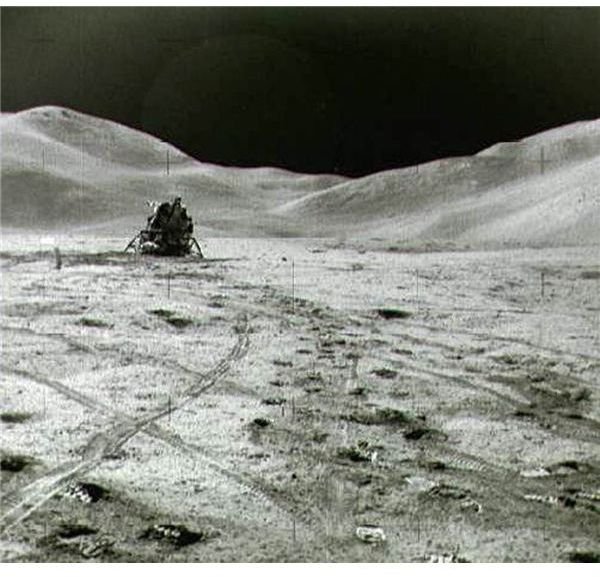
They were in an area known as the Hadley-Apennine region. It gave them much to explore—mountains, craters, boulders. They made three jaunts across the rocky lunar surface in their moon car, and made exciting photos of the region.
On the way back to Earth, CM pilot Al Worden took a short EVA from the Endeavor CM and made photos of the lunar surface.
John Young, Tom Mattingly and Charles Duke settled Apollo 16 into lunar orbit in April of 1972. Young and Mattingly would take the LEM, Orion, into the lunar Descartes highlands, a more risky landing site than previous ones. Once again with the LRV, the two were able to explore far afield from Orion, spending 70 hours on the surface.
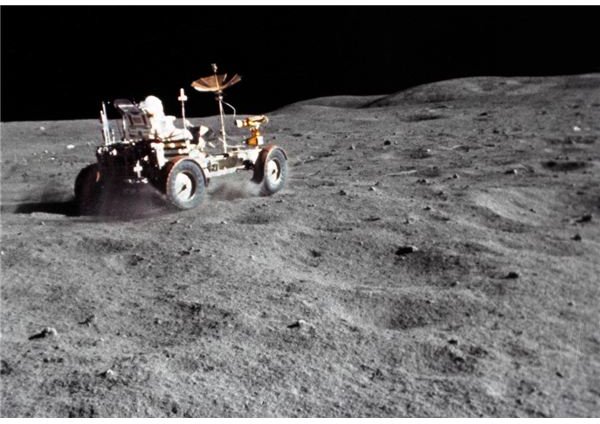
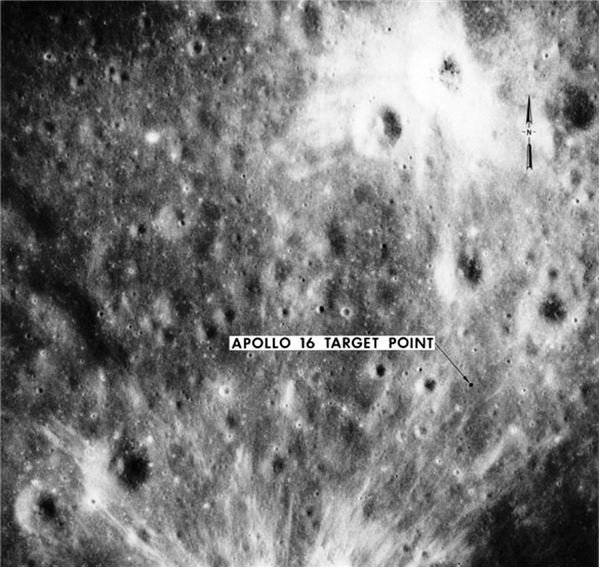
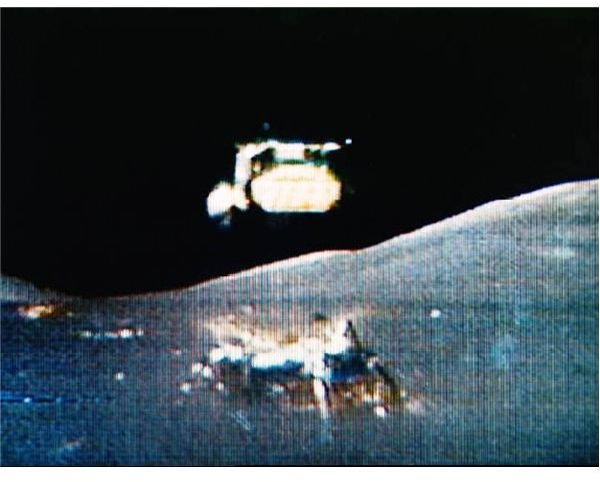
On December 7, 1972, CM, American, and LEM, Challenger—Apollo 17–lifted off from Pad 39A, headed for the Taurus-Littrow area, a highlands and valley site that offered significant geological promise. Along with Commander Gene Cernan and CM pilot Ron Evans was LEM pilot and Geologist Harrison Schmitt, the first bona fide scientist to go to the moon.
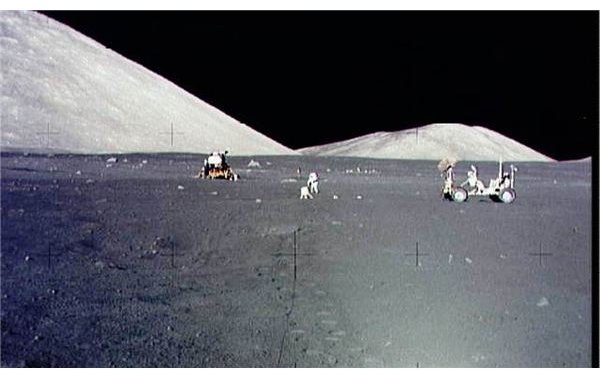
The two lunar explorers spent 75 hours collecting the best geological samples yet returned. They traveled more than 35 miles in their LRV through the highlands and the valley of Taurus-Littrow.
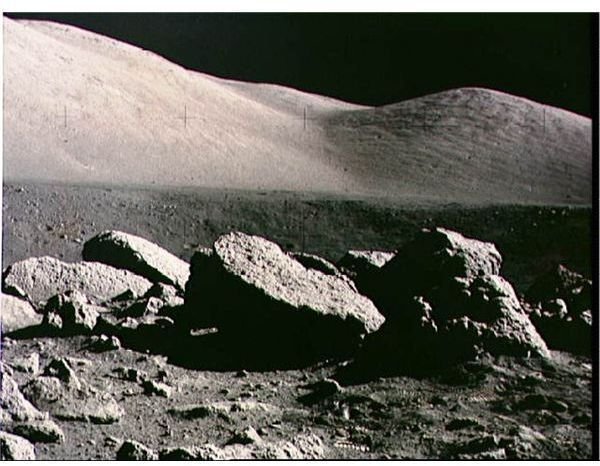
Three more lunar missions had been planned, one to land on the far side of the moon. But Congress, in its wisdom, declined to fund those.
Yet, the Apollo program was not over. Apollo still had work to do.
Credits
All photos: NASA–https://spaceflight.nasa.gov/gallery/images/apollo/index.html
This post is part of the series: The Apollo Program
President John Kennedy gave this country the goal of sending a man to the moon by the end of the 1960s. The result was the Apollo program, which created a new series of spacecraft, launch vehicles, and even ground support equipment.
