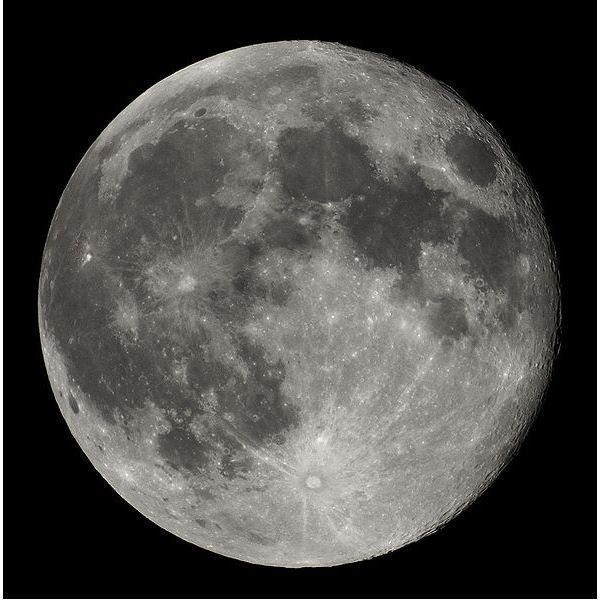
Read about the next X PRIZE targeting space: the Google Lunar X PRIZE, which has the amazing goal of achieving a moon landing and the transmission of HD video back to earth.
An X PRIZE is an incentive prize worth at least $10 million U.S. given to the first privately-funded team to accomplish some goal, set by the X PRIZE Foundation, that will benefit the human race. The first X PRIZE was related to space exploration, and while there are X Prizes in fields such as genomics and automotive technology, the most awe-inspiring X PRIZE currently waiting to be claimed is another space related prize: the Lunar X PRIZE, sponsored by Google.
The Competition
The Google Lunar X PRIZE is a $30 million challenge to land a robotic vehicle on the moon, have that vehicle travel 500 meters across the surface, and have it send data including panoramic photographs and high definition video back to earth. The first team to accomplish these three goals will win $20 million, if they succeed before the end of 2012 (starting in 2013, first prize will drop to $15 million). The second team to do so will win $5 million, and the remaining $5 million is made up of bonus prizes for additional achievements, such as surviving the deep cold of the two-week lunar night. To qualify, a team must obtain at least 90% of its funding from private sources.
Teams had until the end of 2010 to register, and new teams are being formed right now. A total of 29 teams registered to compete.
What’s So Great About the Lunar X Prize?
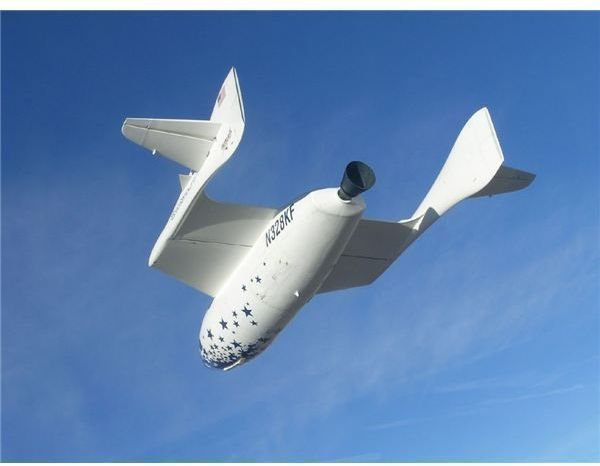
The last unmanned moon landing took place over three decades ago, when the Soviet Union achieved a successful landing with its Luna-24 mission in 1976. Space exploration since then has essentially been limited to low earth orbit. Even the first X Prize, the Ansari X Prize awarded in 2004, asked teams only to travel 100 km above the earth’s surface, approximately the edge of outer space. The Google Lunar X Prize is far more ambitious in its destination, though unlike the Ansari X Prize, it does not require human space travel.
The moon is a tempting target for space travel, and not just for the aesthetic qualities of its austere landscape. According to the X PRIZE Foundation, the moon qualified as a goal for an X Prize because of its unique natural resources, which can be exploited for use on earth. For example, solar cells can be deployed over the lunar surface to collect the sun’s energy during the moon’s long day, and that pollution-free, carbon-neutral energy can be transmitted back to earth.
In the course of achieving the goals of the Google Lunar X Prize, new technology in fields such as fuels for space travel will be developed. Private funding provides an incentive to lower the costs of lunar exploration. And in seeing that the human race has not abandoned the moon will inspire school children to dream about space travel and to study math and science. This competition promises to benefit not just the winners, but all humankind.
References
Google Lunar X Prize, https://www.googlelunarxprize.org/
Universe Today, https://www.universetoday.com/81042/google-lunar-x-prize/
Image Source
Full Moon. (Supplied by Luc Viatour at Wikimedia Commons; GNU Free Documentation License; https://upload.wikimedia.org/wikipedia/commons/d/dd/Full _Moon_Luc_Viatour.jpg)
Wikimedia Commons/Rokits XPrize gallery