Missions in space were once solely government and military agency activities. Now, the private sector has gotten into the action. Does the private sector have what it takes to succeed and make space ventures a solid investment opportunity? Could space tourism be affordable for the private masses?
Reaching for the Stars
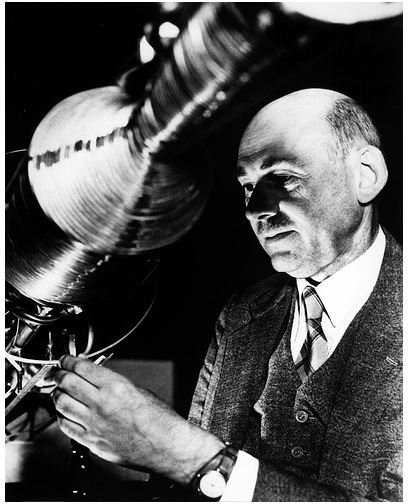
Man has looked to the stars for inspiration since ancient times, creating myths, legends and even science. It was not until the late 19th century however, that space became a more tangible place for thinkers and scientists such as Konstantin Tsiolkofksy, Robbert Goddard and Herman Oberth. The work of these men set the stage for the first real and practical rockets, with the aim of conquering space.
The first developments in rocketry were made by private endeavors – Goddard in the United States and Opel and the German Rocket Society in Germany. Nazi Germany further developed these first rockets into the infamous V2. After World War II German scientists were utilized in boosting the budding US and Soviet Union rocket projects. Both world powers began to take a serious look at rockets, with ample funding and recruitment of the best scientists in the field. The Cold War was about to start and rockets had already proven to be a formidable weapon.
Cold War in Space
The Space Race, fueled by Cold War politics and military needs, culminated in the first manned mission to the Moon. At the same time, it had provided both superpowers with an impressive arsenal of intercontinental ballistic missiles (ICBMs) and the first deployments of artificial satellites that would soon engulf the Earth, primarily providing telecommunications and intelligence for the public and military likewise. The long dreamed about Space Age seemed to be just around the corner. In reality, hard economic factors, the limited and pragmatic uses of space, as well as key events like the fall of the Soviet Union, meant that the space race and age were now officially over. Budgets were cut and projects like moon bases and manned missions to Mars were abandoned. Space, from the point of view of the governments of the United States, Russia, Europe and Japan, was now deemed as a money hole and a very expensive show. The focus was shifted into making a profit by launching civilian telecommunications satellites and caring for the military needs. The International Space Station project was initiated so as not to waste funding that had already gone into the US Freedom and Mir-2 projects.
The Commercial Space is Born
The first government backed private ventures were formed utilizing proven designs and ready facilities such as Arianespace, the European consortium led by CNES and EADS, a practically French company that had evolved for the needs of the European space program. The Europeans were the first to truly commercialize space launches, with the US and Russia slowly following behind by deregulating and privatizing their space infrastructure. Companies like International Launch Services and Starsem offer the Proton and Soyuz vehicles in Russia , and the United Launch Alliance, a Lockheed-Martin and Boeing joint venture, offered launch services with the Delta and Atlas rockets in the US. These major space enterprises utilized technology and practices established and provided by government agencies and funding. They benefited from a 50-year long research program, with proven and capable rocket designs, all products of the Cold War. They were, in essence, government backed, since the majority of their income came from government contracts (mainly the ISS, as well as USAF and NRO launches). Additionally, the US joint venture consisted of the two largest military contractors and aerospace industries worldwide and represented only a small source of the total revenue of these corporations.
Truly Private Space - SpaceX’s Falcon
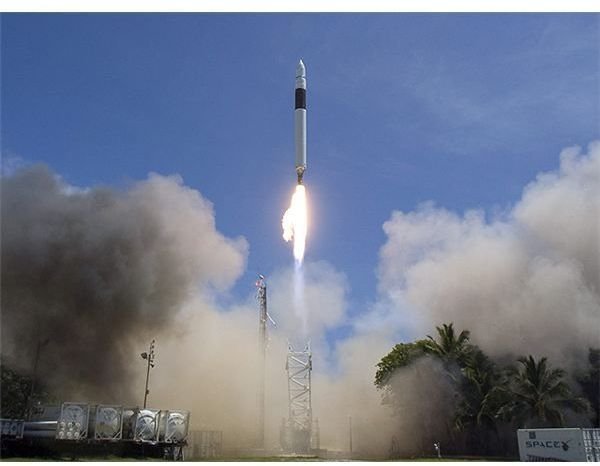
At first the clients of private space companies consisted large corporations and government agencies, which could afford high costs and usually place high value payloads into space. Therefore, even though space launching became a largely private business, it was not really a place for private entrepreneurs, at least not for the common people and smaller businesses. This changed with the Falcon-1.
The successful launch of the Falcon-1 in 2008, after three prior consecutive failures, marked the first completely privately developed and launched space vehicle in history. SpaceX, the company behind Falcon-1 plans to launch a larger vehicle, capable of directly competing with the Delta and Atlas vehicles, in 2009. All of this became possible within a period of 6 years, with an initial funding of $100 million, which proved that space launching services do not have to be that expensive and can offer more affordable access into space. This will likely encourage a wider range of the corporate sector to tap into space and its limitless possibilities.
Virgin Galactic - Book a Ticket to Space
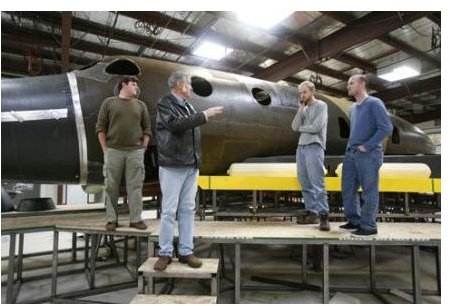
An even cheaper and perhaps more ambitious venture is that of the Virgin Galactic, which utilizes designs and technology created by Burt Ratan’s Scaled Composites, and the now infamous SpaceShipOne. Scaled Composites’ SpaceShipOne was the first privately developed and funded manned suborbital vehicle. Its successor, the SpaceShipTwo , is slated to carry private astronauts on suborbital flights in the future. This move by Virgin Galactic aims to make space tourism a much more affordable experience than the one offered by Space Adventures, dropping the price of a ticket into space by a factor of 100, from $20 million to less than $200,000. Even though Space Adventures offers about a week of weightlessness on board the ISS, it seems that even a few minutes of being in space looks good enough to hundreds of well-off people that have already booked with Virgin Galactic.
Stay in Orbit - Bigelow Aerospace
Another already successful venture is that of Bigelow Aerospace, which has developed and launched the inflatable space habitats, Genesis I and Genesis II. The aim of this project was to mass-produce and sell the BA 330, which is a habitat offering 330 cubic meters of space suitable for manufacturing and tourism. Proposed plans use the BA 330 module as a building block for space trips to the moon or privately built space stations at a fraction of the cost of the ISS. Bigelow (of Budget Hotels) plans to create the first space hotel using the BA 330, named CSS Skywalker. More adventurous minds have even proposed that the BA 330 act as the living quarters for the crew on a future Mars mission, eventually even creating a hotel in orbit around Mars.
Not as Easy as it May Seem
SpaceX, Virgin Galactic and Bigelow are pioneers in their specific segments of the space market. SpaceX can provide launch service up to par with today’s main protagonists at much lower prices. Virgin Galactic will make suborbital and perhaps in the near future orbital flight a reality for common individuals (after 500 flights the cost is supposed to drop to $20,000). Bigelow Aerospace has created an efficient alternative means of remaining in space, either for fun or for research and business purposes.
Space is still a guts and glory affair, though. The Falcon suffered three major setbacks, destroying its payloads in the process before it eventually succeeded and though there are more launches in the pipeline, it still has to prove itself as a reliable vehicle in order to gain market share. Scaled Composites also suffered an industrial accident that cost lives and set the SpaceShipTwo program back by a few months. There is a lengthy program of 50 test flights ahead to ensure safety and convince future passengers and clients to book with peace of mind.
Bigelow Aerospace still has to launch the BA 330 and collect data on radiation levels inside, as well as its real level of protection from micrometeorites and debris. A private orbital lab or manufacturing facility still has to take into account costs and potential profits, as well as launch and operational risks.
Those That Didn’t Make It
For all the little successes, there have been big failures and disappointments. Rocketplane Limited and Kistler Aerospace, initially a promising venture that would result in a cheap reliable reusable spacecraft (exactly what the Space Shuttle should have been), did not produce the intended K-1 vehicle. Kistler Rocketplane, bidding for NASA’s COTS (Commercial Orbiter Transportation Services) program and later announcing its cooperation with Alliant Techsystems as the lead contractor for the vehicle, was eventually terminated from the program. Its future remains bleak and uncertain.
Some private space companies that failed to reach their goals were Beal Aerospace, BlastOff! Corporation and Rotary Rocket, Inc. Some merged or were acquired by more secure companies in the field and others completely abandoned work on their projects. Some smaller upstarts, like t/Space, UP Aerospace and Masten Space Systems are trying to be competitive but lack progress and funding. By the time they do have working vehicles, it might be too late.
Is the Future Any Brighter?
More and more aspiring contenders for a spot in the future of private spaceflight have appeared. The AERA Corporation, Blue Origin, Armadillo Aerospace, EADS Astrium and Canadian Arrow (who has teamed with Romanian ARCASPACE) are in either late development or testing phases, though their scope and funding varies. Still, their eventual success or failure will determine possible mergers and technology exchanges, and those companies more determined and willing to withstand financial pressures and technical setbacks will mean serious business.
Overall, the next few years will be critical for private space ventures. If the time and money investment so far starts yielding profits and fuels more research and development, while at the same time making a profit, sending people into space will prove a profitable business. This will allow the private sector to expand its presence in space and seek new ways to make a profit. If this happens, the private space sector will reap spin-off benefits that no one can really imagine at present.
Credits
References
“The Life of Konstantin Eduardovitch Tsiolkovsky”; Informatics International, Inc.; https://www.informatics.org/museum/tsiol.html
“Making Space Happen: Private Space Ventures and the Visionaries Behind Them”; Paula Berinstein; 2002
“The Next Small Step”; Princeton Alumni Weekly; 2011; https://paw.princeton.edu/issues/2011/04/27/pages/4797/index.xml?page=2&
Photos and Images
Goddard Space Flight Center; NASA (https://www.gsfc.nasa.gov )
SpaceX (https://www.spacex.com )
Scaled Composites; Virgin Galactic (via https://www.flightglobal.com/blogs/hyperbola/ )