Earth's Gravity Field - What is the purpose and objective of the GOCE mission?
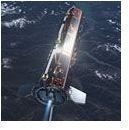
What is GOCE?
The GOCE (Gravity field and steady-state Ocean Circulation Explorer) is developed as part of ESA’s Living Planet Program. ESA is the European Space Agency, and GOCE is the ESA’s first Earth Explorer Core mission dedicated to measuring the Earth’s gravity field and modeling the geoid (The hypothetical surface of the earth that coincides everywhere with mean sea level.) with high precision and spatial resolution. The GOCE is to be launched from the Plesetsk Cosmodrome in northern Russia on 27 October, 2008, at 15:21 CET. It will be launched with the help of a Rockot vehicle, which is a modified SS-19 intercontinental ballistic missile. Flight operations will be monitored and controlled by ESA-ESOC via the primary Kiruna ground station in Sweden and secondary ground station in Svalbard, Norway.
The purpose of the GOCE mission is to provide a better understanding of the physics of the Earth’s interior, including mantle composition and rheology, geodynamics associated with the lithosphere, uplift, and the subduction processes. The data collected from the Earth’s gravity field will also provide insight into the ocean’s behavior and will help in probing hazardous volcanic regions. It will also help scientists track the direction and speed of geostrophic ocean currents by combining the gravity data with information about sea-surface height gathered by other satellite altimeters. The data collected will allow scientists to estimate the thickness of polar ice-sheets and their movement.
Mission Objectives
The main objectives of the 20-month GOCE satellite mission are as follows:
- Determining gravity-field anomalies with an accuracy of 1 mGal (where 1mGal=10-5 ms-2)
- To determine the geoid with an accuracy of 1-2 cm
- To achieve the above with an accuracy of 100 km
The 20-month mission will be crucial for GOCE, as it will be gathering data to map the Earth’s gravity field with high accuracy and spatial resolution.
GOCE Configuration and Mission Instrumentation (Payload):
Configuration:
GOCE is a slim rigid structure having no moving parts. The overall weight of the octagonal spacecraft is about 1050 kg and it is approximately 5m long and 1m in diameter. With an inclination of 96.70 degrees and an ascending node at 18:00, the GOCE will be launched into a Sun synchronous dusk-dawn orbit. The spacecraft will have an altitude of about 250km, after separation from the launcher, with a hibernation currently planned at 270 km.
Scientific instruments:
The scientific instruments of the GOCE satellite mission consist of:
1. Electrostatic Gravity Gradiometer ( EGG)
2. SSTI (Satellite-to-Satellite-Tracking)
3. Laser retroreflector
1. The Electrostatic Gradiometer or the EGG is the main scientific instrument that will measure the gravity field of Earth. The Gradiometer has 3 pairs of identical accelerometers, which form three gradiometer arms and are mounted on an ultra-stable structure. Each pair of accelerometers is separated by a distance of about 0.5 m.
The SSTI instrument delivers so-called pseudo-range and carrier phased measurements, both on GPS frequencies at 1Hz. With an advanced dual-frequency 12-channel GPS receiver and an L-band antenna, the SSTI is capable of acquiring signals broadcasted from up to 12 spacecraft in the GPS constellation simultaneously.
This instrument helps the global network of ground-based stations track the orbit of the GOCE spacecraft accurately, with the help of Satellite Laser Ranging Service.
Conclusion
The data collected from the GOCE satellite mission will certainly improve our knowledge about the physics of the Earth’s interior, as well as ocean circulation. Ocean circulation plays a key role in the change in sea-level, Earth’s interior-processes, and energy exchanges around the globe. The GOCE mission will also help scientists make important developments in geodesy and surveying.
Credits
https://www.esa.int/esaCP/index.html
https://en.wikipedia.org/wiki/Gravity_Field_and_Steady-State_Ocean_Circulation_Explorer
https://ilrs.gsfc.nasa.gov/satellite_missions/list_of_satellites/goce_general.html
Image Reference
https://www.esa.int/esa-mmg/mmg.pl?b=b&type=I&mission=GOCE&start=3
https://www.esa.int/esa-mmg/mmg.pl?b=b&type=I&mission=GOCE&start=4
