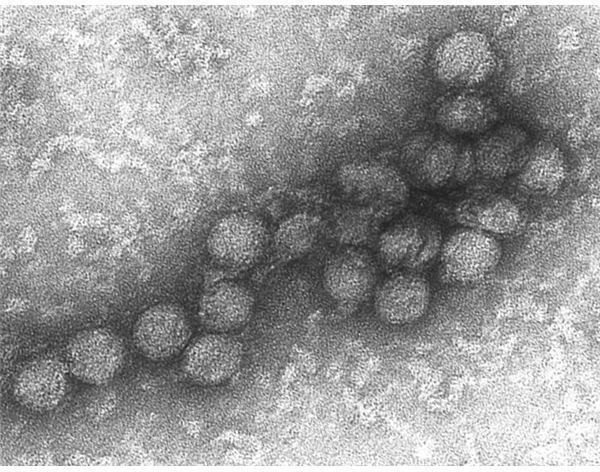
The West Nile Virus is a mosquito-born illness stemming from Africa that has spread worldwide. In the United States, the virus has permeated nearly the entire country since 1999. The best way to identify its presence is with the West Nile Virus blood test.
Preliminary Diagnosis
The first step in screening an individual for a possible West Nile Virus infection is establishing a preliminary diagnosis. This assists medical personnel in making a correct assumption before running a costly and time-consuming blood test. Warning signs include general symptoms as well as places and dates of travel. Mild to moderate flu-like symptoms of West Nile Virus can be apparent, as are more severe clinical features such as tremors, coma and occasionally paralysis. Likewise, if a person has traveled to an area known for infection or in an epidemic, a test may be performed as a precaution.
West Nile Virus Blood Test
A patient suspected of West Nile Virus symptoms will undergo a blood test that measures a sample for antibodies or nucleic acid from the virus. The West Nile Virus blood test is an enzyme-linked immunosorbent assay (ELISA) test. ELISA is a biochemistry technique in which the antigen (virus) is affixed to the surface of the test area and washed over with an antibody, which sticks to the antigen. This is then tested to find the specific immunoglobin M (IgM) antibody corresponding to the virus.
Specifically to the the West Nile Virus blood test, there is certain protocol to follow when conducting these examinations. First, the sample antigen is applied to a microtiter plate, a plate with small wells. The protein adsorbs to the plastic surface, making it immobile. A blocking agent, such as a non-interacting protein, is added to the wells to prevent absorption of unwanted materials. Serum samples from the unknown antigen are then coated on the plate. This is followed by washing with a detergent and adding a detection antibody to bind with the immobilized antigen. All unbound enzymes are removed and a substrate is added to elicit and electrochemical signal. This signal is then viewed to determine if virus-specific IgM is present.
Considerations

In certain cases, a blood test may be forgone for other fluid samples such as cerebrospinal fluid. This is especially useful in cases involving a fatality, in which tissue samples may be compromised.
As of 2009, there are four companies producing West Nile Virus blood test kits, each for use in clinics and labs nationwide. However, the Centers for Disease Control and Prevention recommends follow-up examinations conducted by state health department laboratories in the event of a positive diagnosis. In the case of possible outbreak scenarios, the Division of Vector Borne Infectious Diseases Arbovirus Diagnostic Laboratory offers direct testing via blood samples sent to the lab. Confirmation of infection generally takes four days to two weeks.
References
- “West Nile Virus Diagnostic Testing” CDC
- Image: West Nile Virus. (Supplied by the CDC; Public Domain; http://upload.wikimedia.org/wikipedia/commons/b/bf/West _Nile_virus_EM_PHIL_2290_lores.jpg)
- “West Nile Virus Test for Diagnosis” MedicineNet.com
- “What is ELISA?” MedicineNet.com
- Image: Mosquito. (Supplied by the CDC; Public Domain; http://upload.wikimedia.org/wikipedia/commons/4/46/Aedes _albopictus_2.jpg)