What Exactly is Cancer?
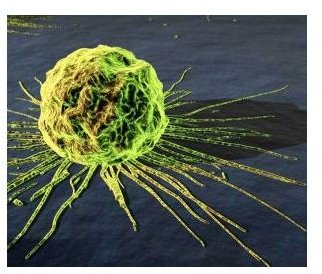
Frequently over dinner or drinks, my non-science friends quiz me on scientific topics. While I am a molecular biologist, not a physician, I’m frequently questioned about cancer. The level of misinformation and fear surrounding cancer has always astonished me, so here I can hopefully illuminate at least the blurriest parts.
The Fundamental Question: What is it?
To many, cancer is a scourge of the old and the unlucky. We are constantly blasted with advertisements about “anti-cancer” foods and drugs that are supposed to help stave off the wretched giant-killer. While these are not necessarily false claims, they have created a perception of cancer as a foreign enemy. In truth, cancer is a traitor, an enemy from within!
If we may take a step backward, remember that your body is made up of cells. Each of these cells acts much like an individual organism: they must take in nutrients to survive and most of them can actually live apart from the body under laboratory conditions. They differ from “free-living” cells in that each one serves a purpose for the body as a whole. If a cell acts “out of turn” or becomes unnecessary, it undergoes a process called apoptosis that leads to its death. For a body cell, this is a normal part of the cycle of life.
Another limit on our cells is how many times they may divide. Division among single cells is akin to reproduction. A bacterium, for instance, will generally try to divide as often as it can in order to propagate itself in as many places as possible. In a highly regulated body, this is undesirable. Each cell has limits as to the number of times it may divide. Once it has used up all of its “turns,” it stops growing and goes into a static phase.
As an example, the cells that make up the distinctive parts of the face replicate constantly for a certain period of time. Once they stop dividing, you’re left with “what you’ve got.” Exposure to UV rays, normal cell death, and other factors eventually begin to erode the number of skin cells. With fewer cells to hold the shape of your face, you get wrinkles.
What does all of this have to do with cancer? Well, remember when I said unregulated growth is bad news for a regulated body? If a cell finds a way to replicate endlessly and grow out of control, that IS cancer. For all intents and purposes, I could end the article here with that definition, but there are a few more important details to work out…
How does it work?
Let’s go back to the wrinkles idea for a moment. If you were a scientist setting out to “cure wrinkles,” you might look at the cause and say “Aha, let’s just make cells that never stop replicating so we can all be young forever.” This has been tried in mice and, unfortunately, the result is cancer. It seems that there is a big stone wall between us and the fountain of youth with the word “CANCER” written across it in bold letters. Why does this happen? What approach SHOULD we take?
There are only two kinds of cells that grow endlessly in humans: cancerous cells and stem cells. Stem cells are the “starter” cells that have the potential to create any of the other types of cells in the body. This quality of stem cells is called being “pluripotent.” Muscle cells, blood cells, immune cells, and brain cells all come from stem cells. What makes them different from cancer cells? That is a complex answer, but essentially stem cells follow a “program” that tells them what to do and when to do it, such as when and where to form a new muscle cell or a new blood cell. They have evolved over an enormous amount of time to do their specific duties. Cancer cells are NOT pluripotent and behave more like a train that has jumped off the tracks.
There are several systems that keep cell growth in check, but a big player is an enzyme called “telomerase.” Each time a cell divides, the process lops off a little piece of the telomeres (the ends of chromosomes). If enough pieces are lost, the cell stalls and cannot divide anymore. To ensure another round of division, telomerase moves in and adds a little piece to the telomere. [Science tip: an enzyme’s name is usually made up of the thing it modifies, plus the “-ase” ending.]
Normally telomerase activity is regulated, but in the event that telomerase becomes permanently turned on or the cell finds a way to circumvent the telomere-shortening process, the cell can continue to divide out of control. In the latter situation, the cell’s genome will begin to deteriorate and even more mutations may occur. There are other ways by which a cell may become cancerous, but understanding a little about telomerase will help you grasp similar mechanisms in the future, should you come across them.
What defenses do we have?
Believe it or not, everyone develops cancerous cells from time to time. Sometimes random mutations cause regulatory genes to malfunction. External sources like UV light (which can break DNA strands and cause incorrect repairs), toxins, or even pathogens can increase the rate at which mutations occur. However it happens, the body DOES have built-in defenses to deal with the occasional appearance of cancer cells.
Most often, the cell’s own systems sense that something has gone terribly wrong and trigger apoptosis, or programmed cell death. This kills the problem cell without disrupting the immune system. If apoptosis fails to activate, the immune system can still detect cancerous cells. Our cells communicate with one another via free-floating chemicals and membrane markers. Immune cells constantly monitor these messages and in the event of cancer, there are mechanisms which can destroy aberrant cells.
Unfortunately, sometimes cancer cells develop the ability to hide from the immune system. In these relatively rare instances, the cell can begin to divide and grow within the body. If left unchecked, a tumor can develop. As they say, “You know the rest of the story…”
Will there ever be a “cure for cancer?”
So where does all of this leave us? In general, we know what cancer is. It’s a lack of regulation in a highly regulated system, or simply put: chaos. Cancer cells get their strength as a disease-causing agent from randomness. Their high rates of mutation make it hard to predict how they will behave. Also, as we grow older, we become more and more prone to cancer, because our cells begin to deteriorate. The immune system also weakens with age, so that also lessens the chance it will detect and destroy cancer cells.
We do have some useful tools to use against cancer, though. Cancer cells are inherently “different” from healthy cells. They express different markers, grow much faster, and require specific resources from their environment. We can use all of these things to our advantage.
Will there be a “cure for cancer?” The important thing to understand is that “cancer” is less a disease than it is the breakdown of a highly regulated process of cell growth control. Each cell that becomes cancerous is different from the next and needs its own specific treatment. For some cancers, researchers have already found a cure. Other cancers cause a great deal of frustration in the laboratory.
As our population’s average age slowly increases, these diseases will become more prevalent and more important. Take heart, though: while there may never be a universal cure, an enormous number of people are working hard to win little victories in the war on cancer.
[Flask image from funny1271 at ToonPool]
