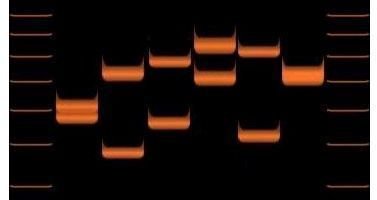
Criminals will have a harder time trying to escape the long arm of the law thanks to a DNA fingerprinting development that can extract valuable genetic material from contaminated samples.
Process of DNA Fingerprinting
For a DNA sample to be of use to forensic scientists it has to be in a reasonably good condition. This means that the DNA sequence must be intact; if the base pairs have been damaged by heat or other environmental extremes then it is said to be contaminated, which in forensic terms is another way of saying “useless.”
Contamination can also occur by other means - pollution. Pollutants such as aluminium (on a drinks can for example) and tobacco smoke can interfere with the process of DNA fingerprinting and contaminate the tests. This is particularly a problem for a forensic scientist who is trying to get at the DNA that’s been left on a cigarette or a soda can. These small amounts are amplified by being subjected to the Polymerase Chain Reaction (PCR), but, pollutants can interfere with the polymerase enzymes and stop them from working.
However, a novel DNA fingerprinting development has come up with an alternative solution to make the job of catching criminals by their DNA a little easier. It appears to have improved the analysis process.
DNA Fingerprinting Recent Development
PCR for forensic analysis typically uses the enzyme AmpliTaqGold which pollutants interfere with. So Johannes Hedman and colleagues at the Swedish National Laboratory of Forensic Science simply decided to make use of different DNA polymerase enzymes to see how well they would perform.
The team selected 32 contaminated samples of saliva from their archive. These contained few cells, small amounts of DNA, and lots of junk and pollutants. With conventional PCR techniques it was not possible to get any meaningful DNA and so researchers employed three different polymerases that are used to process non-forensic samples. These were Bio-X-Act Short, ExTaq Hot Start, and PicoMaxx High Fidelity. The result of this was that out of the 32 samples 28 of them yielded more DNA , with 20 being particularly strong.
To date many of the DNA fingerprinting recent developments that you read about are concerned with the taking and handling of crime scene samples. And much work has been done to improve these processes. However, until the work by Hedman and his colleagues very little has been done to improve the actual processing of dirty and contaminated samples.
Improved Detection
Hedmen suggests that these enzymes could be used in PCR of saliva samples that have not yielded sufficient DNA profiles. He also contends that the enzyme AmpliTaqGold should not be the optimal choice for crime scene samples when PCR is the barrier to getting results. Further research on alternative polymerases should benefit justice by making it easier to catch criminals from contaminated DNA samples.
Reference
Johannes Hedman et al. Improved forensic DNA analysis through the use of alternative DNA polymerases and statistical modeling of DNA profiles. Biotechniques, November 2009.