Archaea Bacteria Overview and a Description of Archaea Cells
Description of Archaea
The Archaea rocked the scientific world in the 1970s because they were an entirely new group of organisms. Dr Carl Woese and colleagues at the University of Illinois were using DNA sequences to study the relationships between prokaryotes. They observed two distinct groups. One consisted of methane producing microbes and those that could survive in extremely high temperatures. Their genetic makeup was vastly different from the other group which consisted of eukaryotes and usual bacteria. So different in fact that Woese proposed the three domain system to classify life on the planet - Bacteria, Eukaryota, and Archaea.
Originally they were known as Archaebacteria but the term was dropped because they aren’t bacteria - they differ from them genetically and biochemically.
Archaea vs Bacteria
It is easy to understand how Archaea went unrecognised for so long - under the microscope they look very similar to bacteria with rod-shaped and spherical forms. Although there are some bizarre exceptions with some square-shaped and triangular-shaped cells. However, under the bonnet so to speak there are some key differences.
Key Differences
- Archaea membrane phospholipids differ in a number of ways such as the lipid tails are different biochemically and the membrane lipids are glycerol-ether not glycerol-ester
- Archaea have three RNA polymerases like Eukaryotes, bacteria have one
- Archaea ribosomes behave more like the ribosomes found in Eukaryotic organisms
- Cell wall lacks peptidoglycan
Key Similarities to Bacteria
- No nucleus and no organelles
- DNA in circular form
Archaea Cells
The Archaea domain can be sub-divided into five recognized phyla - Crenarchaeota, Euryarchaeota, Korarchaeota, Nanoarchaeota, and Thaumarchaeota. However, the classification of Archaea into phyla such is a contentious field. So too, is their classification into species.
Here are some examples of Archaea and the sorts of environments that they thrive in: -
**
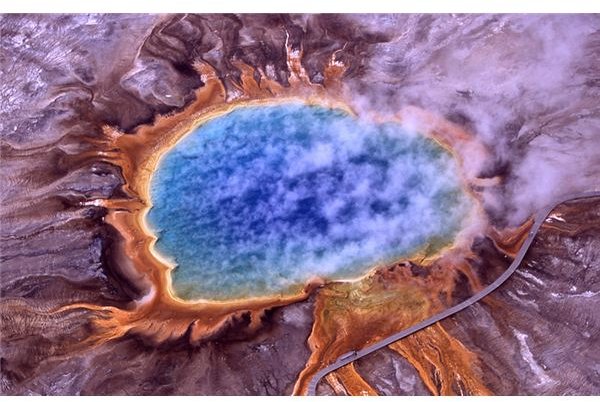
Thermophiles - these are heat-loving organisms that live and grow in extremely hot temperatures that will kill other kinds of organisms - between 45 and 80 degrees Celsius. The sorts of habitats where they can be found include hydrothermal vents and hot springs such as those in Yellowstone National Park. Strain 121 holds the record for the most heat tolerant microorganism. It was discovered in 2003 when it was extracted from super hot water gushing out of hot springs at the bottom of the Pacific Ocean. It is a single-celled organism that lives and reproduces in temperatures of 121 degrees Celsius - hence its name. And it is the only known life form able to survive such extreme heat.
Methanogens - these are anaerobic methane producers that can be found in wetlands and the guts of animals. Some are extremophiles and can be found in hydrothermal vents on the ocean floor and in hot springs.
Halophiles - these thrive in high salt concentrations such as the Dead Sea and the Great Salt Lake in Utah. The salinity can be up to ten times that of ordinary sea water. The first Halophile to have its genome sequenced was NRC-1 in 2000.
