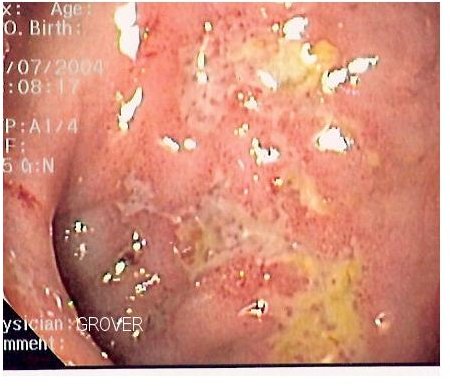
Inflammatory bowel disease has two major types. They are ulcerative colitis and Crohn’s disease. This article focuses primarily on Crohn’s disease - its causes, symptoms, complications and treatment.
Crohn’s Disease
Crohn’s disease or CD, together with ulcerative colitis, are the two major types of inflammatory bowel diseases or IBD. It was first described by Dr. Burrill Bernard Crohn and colleagues in 1932. It occurs worldwide, but is most common in Western developed countries especially among the Jewish population. Prevalence is higher in urban areas compared to rural areas, and more common in northern climates than the southern climates.
Onset usually occurs between the ages of 15 and 30 years old with lesser incidence occurring amongst 60 to 80 year-olds. There is a slightly higher incidence in females than males.
Crohn’s Disease Causes
Crohn’s disease causes are still unknown. Many studies point to a host of factors contributing to the development of the disease. It is said to be caused by an active and uncontrolled immune system targeting the normal bacterial flora of the GI tract. Cigarette smoking, use of oral contraceptive pills and appendectomy were all noted to increase the risk for the development of CD.
Crohn’s disease is also seen in families and relatives of patients suffering from it, implying the role of genetics in the disease process. There is a 7- 9% lifetime risk to children of developing CD when either one of the parents is suffering from it. When both parents are Crohn’s sufferers, children are at a 35% increased risk of contracting the illness.
The NOD2 gene found on chromosome 16 has been linked to Crohn’s disease. It plays an important role in the immune system, but a genetic variant sends the immune system into overdrive when it responds to a pathogen. This induces increased inflammation. The NOD2 mutation is found in about 30% of Crohn’s disease patients.
In July 2009 researchers from Case Western Reserve University School of Medicine identified a link between ITCH (a gene that is known to regulate inflammation) and NOD2. ITCH appears to influence NOD2-induced inflammation.
Symptoms and Complications
The symptoms accompanying the development of Crohn’s disease are variable among patients. There could be mild diarrhea, pain usually on the right side of the abdomen, fever and rectal bleeding. Fatigue and weakness are also seen as well as loss of weight. Some patients may have mild symptoms while others may suffer severely. These would then be followed by weeks or months of disease-free periods or remissions. Then the disease would flare up again for no apparent reason. The chronic course of the disease may complicate into anemia, malnutrition, fistula formation, bowel obstruction and cancer .
Does Stress Cause Crohn’s Disease?
There has been no evidence that physical and emotional stress can cause CD but they are said to initiate the flare ups of the disease or worsen the symptoms in some patients.
Diagnosis
Patient’s suspected of having Crohn’s disease would need a thorough evaluation before a diagnosis is given. Blood test, abdominal X-rays, colonoscopy and tissue biopsies are usually done. The diagnosis of Crohn’s disease would then depend on the pathologic changes seen on tissue biopsies. These changes include ulcerations in the intestines, and evidence of involvement of all the layers of the intestines with patchy areas of inflammations as well as skip areas of healthy tissues in between. The rectum is often spared in CD.
Crohn’s Disease Treatments
CD has no known cure. The management is geared toward the suppression of the inflammatory process thereby stopping the symptoms of diarrhea, fever and pain. Maintenance therapy is then given to prevent frequent flare ups of the disease.
The identification of genetic mutations associated with CD, such as those found in NOD2 and ITCH, opens new doors for pharmacologic research to find new drugs in the treatment of Crohn’s disease.
Reference
National Human Genome Research Institute


