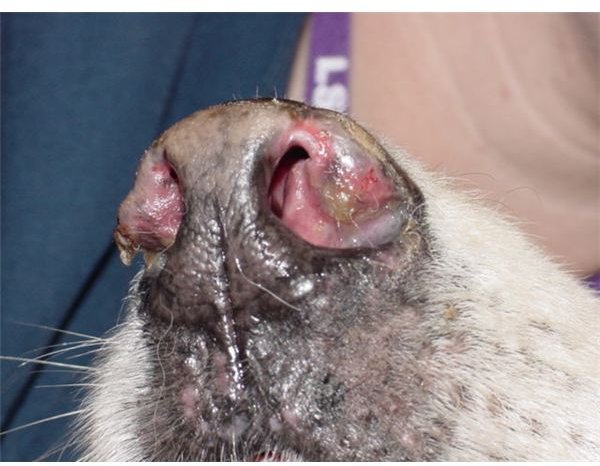
Canine Lupus is an autoimmune disease affecting dogs where the immune system attacks the body. Read on to find out about the two types of canine lupus and their symptoms and treatment options.
What is Canine Lupus?
Canine lupus as the name suggests is the form of lupus erythematosus found in dogs. It is canine counterpart of the lupus disease found in human beings . Lupus is an autoimmune disorder, meaning that the body’s own immune system attacks the body cells and tissues. It does not recognise them as self and behaves as if they are antigens or foreign pathogens. In fact the name “lupus” is actually the Latin word for wolf. The label is apt as lupus is a cunning disease where the body is tricked into sabotaging itself.
Types of Lupus
Lupus in dogs is classified into two types
1. SLE (systemic lupus erythematosus)
2. CLE (cutaneous lupus erythematosus)
Cutaneous & Systemic Lupus
Systemic Lupus Erythmatosus
The SLE version is pretty rare in dogs. The dogs possess unusual antibodies that target many different kinds of proteins in the cell nucleus and this affects multiple organs including the heart, kidney, lungs, and joints. The condition causes arthritis, joint pain, kidney disease and various skin diseases. Symptoms include shifting lameness, painful muscles, weakness, nasal scarring and hair loss. Since SLE affects several parts of the dog’s body diagnosis can be a difficult task, involving multiple biopsies and histo & immunopathologic evaluations.
Cutaneous Lupus Erythmatosus
CLE or cutaneous lupus erythematosus has a much higher prevalence in dogs than SLE. Certain breeds of dogs - the German Shepherd, Collie, and Siberian Husky are among the most vulnerable. Unlike SLE, cutaneous lupus erythematosus typically attacks the nose and face regions. The disease usually begins with loss of pigmentation around the dog’s nose, leading to a smooth surface. This change is brought about by the destruction of cells or tissues; advanced conditions may cause inflammation and scaling as well as lesions on the ears.
Prevention & Treatment
In both of the lupus conditions, the disease can be aggravated by exposure to UV radiation. In fact CLE becomes prevalent more commonly in the summer and in hot regions of the world. Using sunscreens on dogs during summer and avoiding excessive exposure to the sun should considerably reduce the effects of lupus.
Treatment for SLE involves chemotherapy with strong doses of steroids. It is generally possible to control the disease in dogs with proper medication for several years. Similarly CLE is also treated with steroids, but with mild doses and also with vitamin E and fatty acid supplements. As is the case with humans, lupus has a genetic background; multiple genes are likely to be involved as well as environmental triggers.
Image Credit
Image Courtesy : https://en.wikipedia.org/wiki/File:Canine _discoid_lupus_3.jpg
Released under GNU Free Documentation License