The Discovery of Messenger RNA: A Key Step in Protein Synthesis
Messenger RNA
Messenger RNA, also known as mRNA, are RNA molecules that carry genetic information from the DNA in the cell nucleus to the protein-making machinery in the cell cytoplasm. For some time after the discovery of DNA’s genetic role (by Oswald Avery) and the deciphering of its double-stranded structure (by Crick and Watson), researchers remained perplexed about how exactly the genetic information was conveyed from the genes to the cytoplasm to produce the proteins required for cellular functions.
Ribosomes and Protein Synthesis
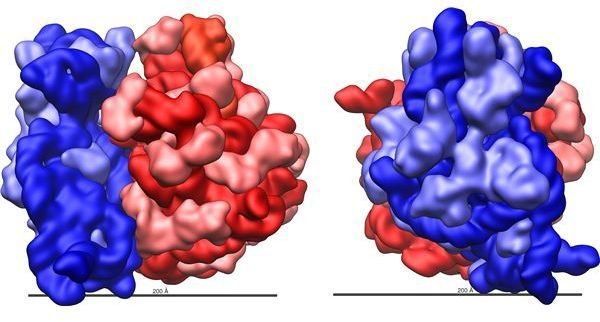
Research in the matter pointed towards RNA involvement in the protein synthesis process. The discovery of ribosomes shed a further illuminating light on how proteins are formed. Ribosomes are ribonucleoprotein cell particles found in the cell cytoplasm, and their RNA comprises the majority of the RNA in a cell. Since they are so numerous, researchers thought that it was likely that they were responsible for the synthesis of different proteins and thereby genetic diversity. They assumed that one gene passed on its genetic information to one ribosomal RNA molecule, which then synthesized one type of protein. Many genes passing on information to many ribosomal RNA molecules would then lead to the production of a variety of proteins and therefore, as mentioned, diverse genetic traits.
The problem with this theory was that it did not conform to experimental evidence. If the ribosomal RNA did encode information from the DNA and then carry it to the cytoplasm, there would be a distinct correlation between the DNA and RNA base compositions. Comparison studies of the DNA and RNA base compositions of various different microorganisms, however, showed that different microorganisms have different DNA base compositions while the RNA base composition for all remains pretty much similar.
DNA-like-RNA - What Does Messenger RNA Do?
There was, however, a minor, short-lived type of RNA that did show a correlation with the DNA base composition and was similar to it. This variant RNA was first noted by the American researchers Elliot Volkin and Lazarus Astrachan. While studying bacteriophage infection in bacteria at the Oak Ridge National Laboratory in Tennessee, they had observed how the infection halted bacterial protein synthesis and initiated phage protein synthesis. When this happened, while most of cellular RNA remained the same, the base composition of a small fraction of RNA was seen to mimic the base composition of the viral DNA and correlate with it. Volkin and Astrachan called this variant RNA “DNA-like-RNA” in a paper ‘Phosphorus Incorporation in E. Coli Ribonucleic Acid After Infection’that they published in the Journal of Virology in 1956.
Volkin and Astrachan did not get the significance of their finding, but, based on their research, other researchers like Sydney Brenner, Francois Jacob, Jacques Monod, Matthew Meselson, Francois Gros, James Watson and Bruce Spiegelman were able to figure out that these “DNA-like-RNA” were the molecules that encoded genetic information from the DNA and carried it to the cytoplasm to form proteins. Since, in conveying information from the nucleus to the cytoplasm, they acted as messengers, they became known as messenger RNA.
The French biologists Francois Jacob and Jacques Monod received the Nobel Prize in Physiology or Medicine for their part in this research in 1965.
Resources
https://www.science-projects.com/hybrid.htm
https://www.ornl.gov/info/ornlreview/v37_3_04/article12.shtml
https://www.people.vcu.edu/~elhaij/bnfo301-09/Units/Intro/mRNA-Belozerskii-090131.pdf
