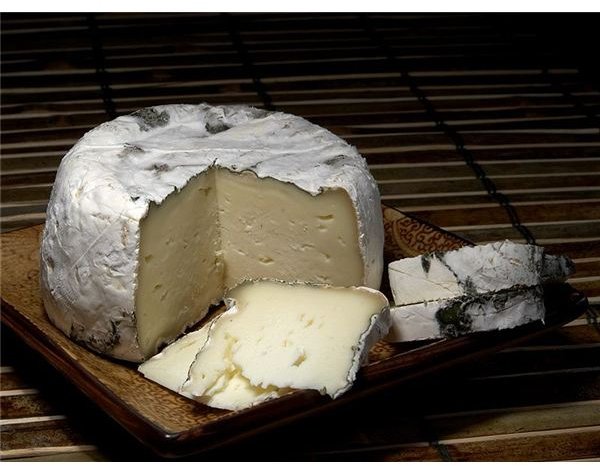
Geneticists have found that a specific protein within the DNA of cows has a major effect on the quality of the cheese. This is combined with additional research into microbes that turn milk sugars into lactic acid and allows the industry to continue expanding.
Cheese Consumption
Since 1980, cheese consumption has increased dramatically in the United States. According to the American Dairy Science Association, per capita consumption of natural cheese rose from 17 pounds annually in 1980 to 30 pounds annually in 2004. In response, production from American cheese makers, particularly in the western states, rose from 3,984 million pounds per year to 8,598 million pounds during the same time. This means that most plants need to handle over 8 million pounds of milk each day.
While Cheddar, Swiss and Mozzarella are the most common cheese types, a number of other varieties have moved into the industry over time. In order to facilitate these new cheese making concepts, a number of geneticists have become involved in the study of cows. Most notably, they have found that a number of genetic mutations in the chromosomes of cows are responsible for the quality and volume of cheese that can be made from milk.
Cheese Production Process
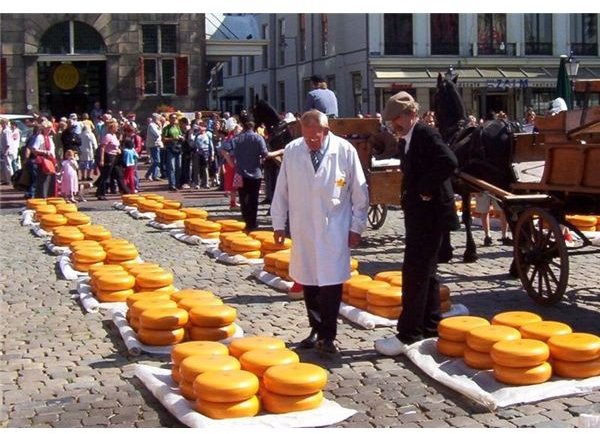
The first part of cheese making is known as curdling. Milk is separated into curds (solid parts), and whey (liquid). In order to do this, the milk is soured using either vinegar or a bacterium such as Lactococci, Lactobacilli or Streptococci. This converts milk sugars into lactic acid. Geneticists have been able to make adjustments to the bacteria so that they work more efficiently with the cow’s milk. To make Swiss, Propionibacter shermani is used. This produces the carbon dioxide gas bubbles during the aging process.
Hard cheeses are heated between 35-degrees and 55-degrees Celsius (100-degrees and 130-degrees Fahrenheit). Some soft cheeses are ready to serve, while most semi-soft cheeses are aged.
Genetics of Cows in Cheese Making
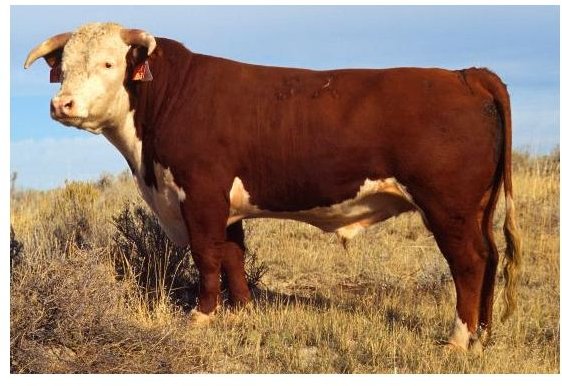
With over 100 different types of cows, it is necessary for cheese makers to identify which breeds will produce the best milk for cheese production. While there are a number of traditional ways, most makers now make use of genetic analysis to determine the best combination of cow and bacteria to produce the desired quality and type of cheese.
One such animal scientist, K.F. Ng-Kwai-Hang at McGill’s Macdonald campus, determined that a specific protein within a cow’s DNA directly impacts the level of protein and fat in milk. It is known as the kappa-casein, and small changes and mutations in the protein can create higher yields and better quality. Over the course of a 25-year study on cow genetics, Ng-Kwai-Hang has identified the variant in the protein that produces the most desired cheese. Known as the B-type of kappa-casein in the Holstein cow, this variant can be bred into other cows by simply using Mendelian rules of inheritance . Studies have also identified an additional 50 proteins that impact different aspects of milk from cows, affecting everything from color to texture. These genetic variants are being studied for possible application to the making different types of cheese.
Benefits of Genetics in Cheese Production
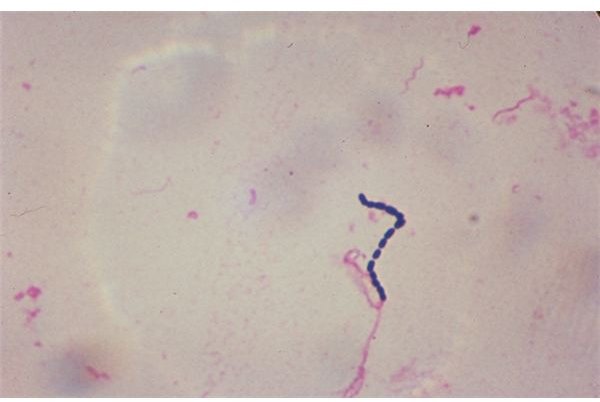
According to the Center for Dairy Research at the University of Wisconsin, these breakthroughs in the genetics of cows can be combined with adjustments to the microbial additives. In the 1970s, the University of Minnesota created a new version of Lactococcus capable of increasing the rate of acid development by limiting bacteriophage infection. By utilizing the combination of type B kappa-casein and this microbe, cheese can be produced at a faster rate and larger volume. This enables cheese makers to fulfill the ongoing demand for natural cheeses.
Additional Resources
Image Sources
Cheese. (Supplied by Jon Sullivan at Wikimedia Commons; Public Domain; https://upload.wikimedia.org/wikipedia/commons/6/6c/Cheese _39_bg_053006b.jpg)
Cheese Market. (Supplied by Johi at Wikimedia Commons; Public Domain; https://upload.wikimedia.org/wikipedia/commons/5/55/Kaasmarkt2 _close.jpg)
Hereford Cow. (Supplied by the U.S. Department of Agriculture; Public Domain; https://en.wikipedia.org/wiki/File:Hereford _bull_large.jpg)
Streptococcus. (Supplied by the U.S. Department of Agriculture; Public Domain; https://upload.wikimedia.org/wikipedia/commons/8/8a/Streptococcus.jpg )