Botulinum Toxin, Symptoms of Botulism and Botox Treatment

What is Botulinum Toxin?

While it is the deadliest poison known to science, botulinum toxin is used in small quantities as a medication to treat muscle spasms and as a cosmetic. It is so powerful that it has been estimated that 1 teaspoon of the poison has the potential to kill 1.2 billion people.
This bacterium is commonly found in improperly handled meat products, and for this reason was described as “sausage poison” in 1817 by Justinus Kerner. The German physician also first identified the possible uses of botulinum toxin as a therapeutic product. The source of the poison wasn’t known until the end of the nineteenth century when Emile van Ermengen identified Clostridium botulinum as the causative organism.
Above left: Botox structure. (Supplied by Lacy, D.B., Tepp, W., Cohen, A.C., DasGupta, B.R., Stevens, R.C. at Wikimedia Commons; Creative Commons Attribution ShareAlike 2.0; https://upload.wikimedia.org/wikipedia/commons/5/5b/Botox-structure.png)
Above right: Justinus Kerner Altersbild. (Supplied by Wikimedia Commons; Public Domain; https://upload.wikimedia.org/wikipedia/commons/a/ac/Justinus_Kerner_Altersbild.jpg)
Effects of Clostridium Botulinum

Botulinum toxin is a two-chain polypeptide that shares pairs of electrons in a disulfide bond. It acts as an enzyme that attacks neuromuscular proteins. It prevents vesicles in the cells from attaching to the membrane, thereby preventing the release of neurotransmitters. This causes the paralysis of muscles and is most commonly known as botulism.
The most common form of contamination comes from ingestion of food contaminated by spores. Canned foods with an anaerobic environment allow the germination of the bacteria. Clostridium botulinum will then produce the toxin. Refrigeration prevents its growth, however high heat does not.
The effects of ingesting or becoming exposed to the toxin is usually lethal. Paralysis begins in the face and spreads to the limbs. Soon, respiratory failure takes place and the infected person is killed. Although these cases are rare, they are always treated as public health emergencies to prevent the spread of the toxin.
Treatment for exposure includes the administration of antitoxins and artificial respiration until the neurotoxins are metabolized. If the emergency is caught in time, the survival rate is approximately 85 percent. However, recovery time takes several weeks to months.
Above left: Neuromuscular junction. (Supplied by the National Institutes of Health; Public Domain; https://upload.wikimedia.org/wikipedia/commons/2/23/NMJ.jpg)
Botox Treatment
In the late 1960s and early 1970s, Dr. Alan Scott worked at the Smith-Kettlewell Institute and tested botulinum toxin type A in various experiments. In 1980, he performed the first human trials to treat, Strabismus, a condition in which the eyes are not properly aligned. After the U.S. Food and Drug Administration (FDA) approved the drug for various muscle spasms, researchers in Canada began to test botulinum in a dermatological capacity. The FDA then approved the chemical to improve the appearance of wrinkles in 2002.
The first company to release the material was Allergan Inc. under its Botox brand. It must be stored in cold temperatures of between two and eight degrees Celsius.
Genome of Clostridium Botilinum
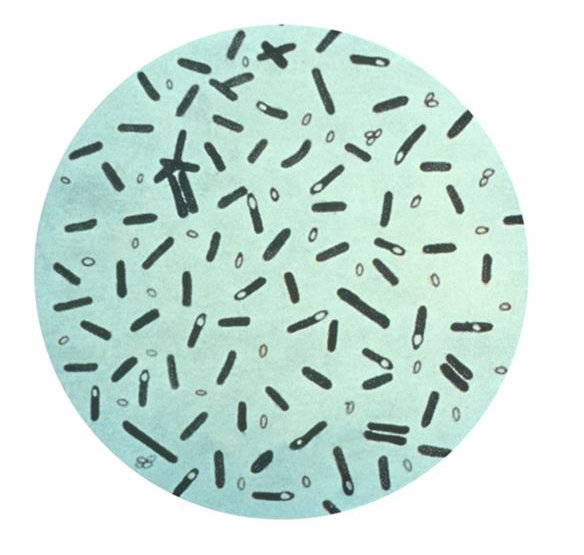
Clostridium botulinum consists of a single chromosome that carries 3650 genes and a plasmid with 19 genes. The majority of the genes are encoded with information involved in the metabolism of amino acids. According to researchers, the bacterium can survive in a variety of conditions including soil and water. The botulinum toxin is its means to kill a wide range of species in an effort to gain access to nutrients. Its other enzymes are released to soften and destroy tissues.
Above left: Clostridium botulinum. (Supplied by the Centers for Disease Control and Prevention; Public Domain; https://upload.wikimedia.org/wikipedia/commons/5/58/Clostridium_botulinum_01.png)
Resources
American Academy of Dermitology: https://www.aad.org/public/publications/pamphlets/cosmetic_botulinum.html
This post is part of the series: Most Dangerous Bacteria
The genetics of the most dangerous bacteria are complicated. Some examples of these include Clostridium botulinum, staphylococcus aereus, and E. Coli. Staph infection symptoms, symptoms of botulism and ecoli bacteria can be harmful, despite the use of botulinum in Botox.
