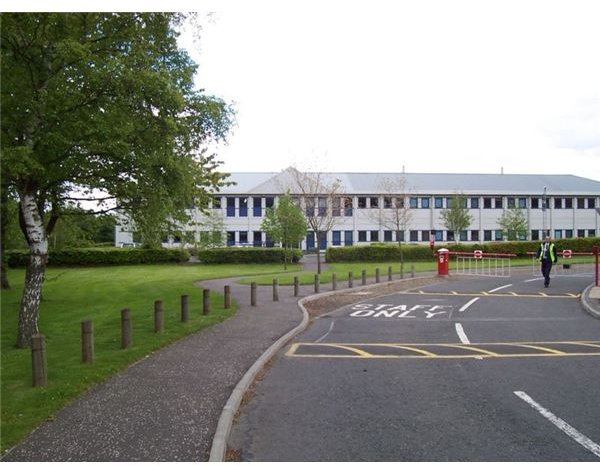
The Roslin Institute is a Scottish research lab working primarily on animal sciences and veterinary technology. The most famous experiment it conducted was the cloning of Dolly the Sheep on July 5, 1996. Roslin continues to explore the parameters of genetic research in a variety of ways.
The Roslin Institute in Scotland
Located in a village in Midlothian, Scotland, the Roslin Institute is one of the foremost scientific research labs in the world. It is sponsored by the Biotechnology and Biological Sciences Research Council, a public organization that supports scientists and scientific research. Roslin is also a member of the Easter Bush Research Consortium.
Much of the focus of the Roslin Institute is to study the various issues involved with the health and welfare of animals. It attempts to isolate the benefits of animal sciences for application in human and veterinary medicine. It also searches for ways to improve the security and the general situation of the livestock industry.
Roslin will open a new research center on the University of Edinburgh’s campus in 2011. The $96 million dollar facility will accommodate 500 scientists and incorporate the work of the Scottish Agricultural College.
Above: Roslin Institute. (Supplied by Jonathan Riddell at Wikimedia Commons; GNU Free Documentation License; https://upload.wikimedia.org/wikipedia/commons/d/d9/Roslin-institute.jpg)
Dolly the Sheep
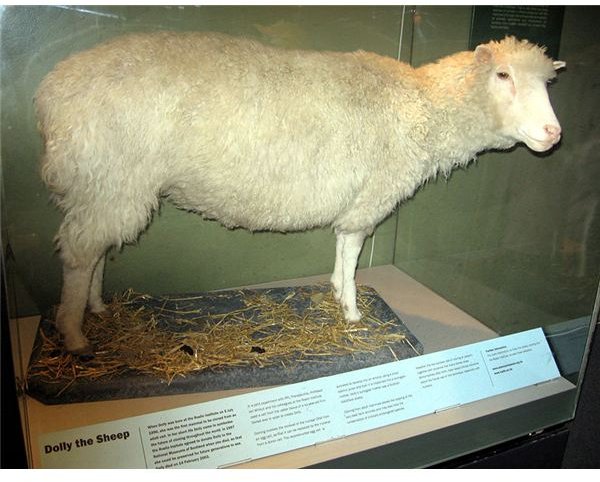
One of the most famous genetic research events was the birth of Dolly the Sheep , created at the Roslin Institute in Scotland, July 5,1996. Using an adult somatic cell, researchers were able to clone a sheep, marking the first time an advanced mammal was created in the lab. Scientists extracted the DNA from an unfertilized egg and replaced it with the DNA from a donor sheep’s mammary gland. The cell was then placed in the uterus of a female sheep and birthed normally.
A year later, Roslin cloned two more sheep named Polly and Molly. Like Dolly, Polly and Molly were cloned from somatic cells. However, the DNA in these two examples was altered using genetic materials from other species. Called recombinant DNA technology , the researchers introduced the human blood clotting factor IX into the sheep genome. The goal was to demonstrate the ability to produce proteins that could have both pharmacological and therapeutic advantages to humans.
In 2007, a team at the Roslin Institute made another breakthrough in genetics. This involved the creation of genetically modified chickens that could lay eggs containing specialized proteins in the egg whites. These proteins were an antibody called miR24 and had the potential to treat a type of skin cancer known as malignant melanoma. This demonstrated the ability of chickens to act as factories for producing a number of anti-viral and disease-fighting treatments.
Above: Dolly the Sheep. (Supplied by Tim Vickers at Wikimedia Commons; Public Domain; https://upload.wikimedia.org/wikipedia/commons/d/dc/Dollyscotland _(crop).jpg)
Ian Wilmut and Other Key Figures
The most prominent figure who conducted scientific research at the Roslin Institute was Ian Wilmut . He is an embryologist who led the research group that cloned the first mammal, Dolly the Sheep. For his research, he was given the Order of the British Empire in 1999 and knighted in 2008. Today he works at the Queen’s Medical Research Institute at the University of Edinburgh as an embryologist.
Another member of the team, Prof Keith Campbell was instrumental in much of the research that made Dolly possible. His research helped to identify the stages of the cell cycle within the somatic cells and eggs. Campbell also worked heavily on genetically altering skin cells for further experiments. In 1999, he transferred to the University of Nottingham.
Resources
Roslin Institute (https://www.roslin.ac.uk/)
“Cloning Dolly the Sheep” Animal Research (https://www.animalresearch.info/en/medical/timeline/Dolly)