What is the Cause of Kawasaki Disease? The Search for the Pathogen that Triggers Kawasaki Disease Symptoms
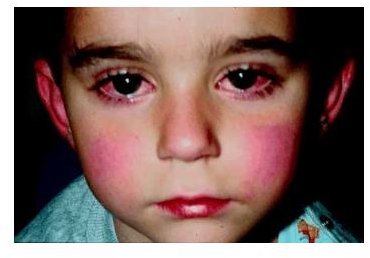
Symptoms
Kawasaki disease is primarily an illness that affects children, with up to 80% of patients being younger than 5 years old.
First observed in Japan in the 1960s Kawasaki disease symptoms, at least in the early stages of infection are not so different from other infectious diseases or indeed an allergic reaction. Patients can experience red, bloodshot eyes, a red rash on parts of the body, including the groin area, red cracked lips, tiredness, vomiting, joint pain and swelling, and irritability. But the symptom that does stand out is a high and prolonged fever that can last for several days. Left untreated Kawasaki disease can cause damage to the coronary arteries and heart.
The symptoms can usually disappear within 10 days even without treatment. That is the experience of most children with the infection. However, according to the patient support group Patient UK, 1 in 100 children who have the disease and are not treated die of heart complications.
Treatment usually involves aspirin and gammaglobulin, and administered early reduces the chances of heart complications. Without treatment some patients can develop aneurysms. Other treatments involve the administration of plenty of fluids, and making patients as comfortable as possible during the fever stage. Most children go on to make a full recovery.
Is it Contagious?
Kawasaki disease is not contagious. It is rare for people who come into contact with infected individuals to be similarly affected. This argues that it is more than just a viral or bacterial infection and current thinking is that the disease is caused by the immune system’s reaction to a pathogen. However, this tiny invader has not yet been found and so research has been focused on the genetic reasons as to why some people are more susceptible to this infection than others.
Genetics
An entire genome search has been conducted by an international research team, including scientists from UC San Diego School of Medicine Department of Pediatrics, and the UK’s Imperial College. They were looking for, and found genetic variants common to Kawasaki patients that may explain why they became susceptible to the disease. The researchers discovered 40 SNPs (single nucleotide polymorphisms) across 31 genes. Some of these genes were involved in cardiovascular and inflammation responses. However, according to the scientists involved in the study this does not necessarily mean that these genes are functionally important to the progression of the disease as other variants may also be to blame. What they have shown are some significant differences between Kawasaki patients and controls in several genes that could be involved in Kawasaki. The next stage of research is to find out how these genes function. The work was published in the open access journal PLoS Genetics.
There is also a large body of research in Japan that strongly hints that susceptibility has a genetic basis. The incidence of Kawasaki disease is much higher amongst the Japanese, and since 1970 nationwide studies have been conducted every two years.
Better Diagnostics
It would be useful to identify the pathogen that kicks off the chain reaction that leads to the development of Kawasaki disease - and then work out how to defeat it. Finding out why some people become victims will aid the development of better diagnostics to spot the disease earlier, so as to offer treatment far sooner.
References/Further Information
Kawasaki Disease Foundation, https://www.kdfoundation.org
Kawasaki Disease - UK NHS, https://www.nhs.uk/Conditions/Kawasaki-disease
Burgner D, Davila S, Breunis WB, Ng SB, Li Y, et al. 2009 A Genome-Wide Association Study Identifies Novel and Functionally Related Susceptibility Loci for Kawasaki Disease. PLoS Genet 5(1): e1000319. doi:10.1371/journal.pgen.1000319
