Things to Consider Before Signing a Business Contract
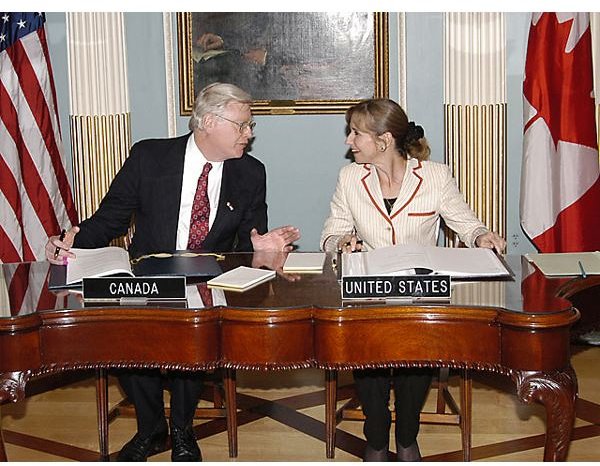
A business contract, as commonly understood, is an agreement that legally binds two consenting parties for an exchange of product and/or services for monetary considerations. Other types of business contracts may not involve any transfer of goods or services but instead are agreements between two companies for business collaboration.
A contract is meant to be acted upon by both the signatories, and a breach of contract will entail legal proceedings in a court of law with the resultant payment of damages by the defaulting party. The one assured way to avoid possible litigation is for the two consenting parties to carefully study all the agreement clauses and satisfy themselves that they are all capable of fulfilling their promises.
Is There a Valid Need for Contracts?
Business contracts are generally signed in situations such as:
- Contracting the services of an outside contractor who may be either an individual or an organization
- Buying or selling goods or services
- Sales agreements particularly if the transaction pertains to buying/selling of real estate
- Lease agreements when land, a building or machinery is leased out by the owner
- Selling or buying a running business with all assets and liabilities
- Partnership companies/ joint venture companies among the partners
- Appointment of franchisees/commission agents for business promotion
Apart from the scenarios cited above, there are many other occasions when the need for a contract may arise.
Oral and Written Contracts
There are essentially two types of business contracts: oral and written. Quite often for regular business transactions and short-term projects, an oral contract will suffice. In all such cases, an oral contract is deemed as valid as a written contract. An oral contract is also admissible in courts of law, but because of its very nature, it could be subject to infirmities and it can be difficult to establish the truth in courts.
Written contracts are much safer and any breach by either party can be well established in law courts. Written contracts are made out on paper or in this computer age, they are also created electronically. Lawyers are happier arguing in courts based on a written business contract rather than an oral contract because it is much easier for the courts to uphold the disputant’s claims when things are unambiguously written down on paper.
What Are the Pros and Cons?
Contracts need not contain incomprehensible jargon. The language should be precise, and that the draft is forthright and free from ambiguities. State the terms and conditions categorically without leaving room for misinterpretations later. You may want to refer to law books while writing a business contract. Local and regional regulations as well as federal laws must be kept in mind while drafting the contract. When in doubt, it is preferable to take the help of a business attorney.
Invest the time to read carefully and to understand every line and word of the contract that appears in the fine print. Finally, before signing and sealing the contract, show it to some trusted lawyers to ensure there will be no future problems.
E-Contracts and Signatures
Electronic contracts and signatures are recognized as legally valid under the Electronic Signatures in Global and International Commerce Act, 2000. There is e-contract software available in the market in the standard format, and one can send and receive written contracts online with the parties sign electronically. Though e-contracts are legally binding, many businesses still prefer to have written contracts with physical signatures because e-signatures can be dubious. The fact is people want to be overly cautious when it comes to business contracts and do not wish to leave anything to chance.
Validity
For business contracts to be valid and sustainable in law courts, both the consenting parties should initial each page of the agreement, and finally affix their full signatures and date the last page. In most cases, the agreement will also have to be signed by two witnesses (one from either side) to lend further credence.
References
- Larson, Aaron, “Contract Law - An Introduction,” http://www.expertlaw.com/library/business/contract_law.html
- Image: Dobriansky kergin by Andre Engels under Public Domain
