What are the Tax Advantages of a Limited Liability Company (LLC)?
What is a Limited Liability Company?
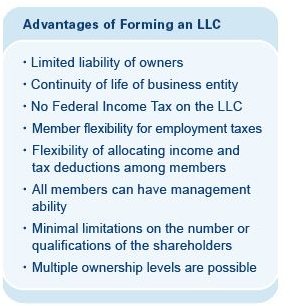
As per the US jurisdiction, a Limited Liability Company, or LLC, is a legal type of business structure that provides limited liability to the owners. This business entity has certain characteristics of both a partnership and a company. Similar to a company, the owners can have limited personal liability in the case of debts. The partnership advantages in a Limited Liability Company are management flexibility and benefit of taxation. The owners of the Limited Liability Company are called members and include individuals, corporations, other Limited Liability Companies, or foreign entities.
The most important characteristic of a Limited Liability Company is the limited liability feature, which specifies that members of the Limited Liability Company are not personally liable for debt and obligations. The limited liability feature is similar to liability-protection of corporate shareholders and partners in limited partnership. The profit distribution of a Limited Liability Company can be done in a flexible structure unlike partnerships, where profits are distributed equally among all partners. The Limited Liability Company business structure does not require it to keep any formal minutes or records of any minutes like some other types of corporations.
Another characteristic of a Limited Liability Company is avoidance of double taxation, that is, corporate tax and individual tax. A company can live forever, whereas a Limited Liability Company gets dissolved when a member dies or is bankrupt. A disadvantageous characteristic of Limited Liability Company is that it requires plenty of paper work - unlike a partnership venture.
Tax Advantage for Limited Liability Company
For income tax purposes, the Limited Liability Company is treated just like a partnership. The owners need to fill an IRS Form 1065. Under some circumstances, the members of the Limited Liability Company are taxed like a company, that is, taxation of the entity’s income is carried out before distributing profits or dividends and then of the income that is received by the members. However, for most normal cases, starting a Limited Liability Company can help in saving more income from taxation. Read on to know more:
Exemption from Double Taxation: Self employed individuals are required to incur both employer federal taxes and employee federal taxes. This means that these individuals are double taxed. However, for a Limited Liability Company, the owner can choose to operate as a partnership, sole proprietor, or like a company.
The profits or losses of a Limited Liability Company can be listed on the members’ personal income tax returns that can result in large tax savings. Moreover, the members can choose how the profits must be divided. This is not possible in a partnership where profits are divided equally among all partners. This permits flexibility in profit division for taxation purposes.
There is no additional tax that is levied on the Limited Liability Company as an entity. This is because all members file their taxes individually and there is no separate tax form to be filled for a corporation.
The LLC members can choose to have their business taxed just like a company. This can prove to be beneficial when members have certain assets that they want to protect or keep private. The corporation can also write of the complete amount of the health care premiums that are paid to employees and owners.
A Limited Liability Company can also file as an S Corporation, which could be advantageous when the member is actively involved in the business and also withdraws a salary and earns majority of the profits. By filing as an S Corporation, the member can distribute profits to the company shareholders on a tax free basis for Medicare taxes and Social Security.
References
LLC Advantages retrieved at: https://www.limitedliabilitycompanycenter.com/llc_advantages.html
Image Courtesy of https://centerpointcorporate.com/info_limited_liability_company_llc.asp
This post is part of the series: Building your Business
This article series aims to help you with information on activities related to business management. The information includes fast strategies to promote your business, dealing with business partners, and debts etc. If you need more help on business management, feel free to contact us.
