10 Best Career Choices for High School Graduates
The list of ten best career choices for a high school graduate, furnished in this article, includes information about future career prospects with higher earning opportunities.
High school graduates should realize that competition for unskilled workers is also stiff, and the likeliest candidates to qualify are those that possess some level of computer literacy and aptitude for apprenticeship training. That way they will have more chances of landing a job and of moving forward to higher career goals.
Otherwise, one would tend to drift from one odd job to another, without actually gaining a solid background In terms of work experience. Find below career choices for a high school graduate that could provide the best foundation for future professional careers:
(1) Cashier
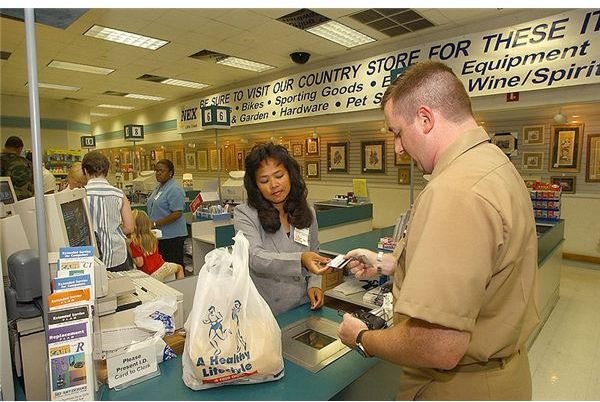
As a cashier, one is expected to be friendly, helpful, and meticulous with details as well as organized in her or his work area. Store managers prefer someone with good interpersonal skills as well as a pleasing disposition and appearance because out of all other store personnel, the cashier has the most opportunity and occasion to interact with customers.
Due to their large exposure to customers, most cashiers find subsequent work as a customer relations representative or as a bank teller. Some others surveyed have become a certified nurse assistant (CNA). Initially, they find advancement by finishing at least an Associate Degree in Business or in Arts. Upon pursuit of a bachelor’s education in business, most career paths lead to supervisory and managerial positions in large department stores or other merchandising and retailing industry, or in banks and hospitals.
The average hourly compensation paid for the job is from $7.41 to $9.00, plus some average share in tips, from $0.26 to $1.26, and average hourly pay rate of $9.49 to $14.02.
(2) Customer Service Representative (CSR)
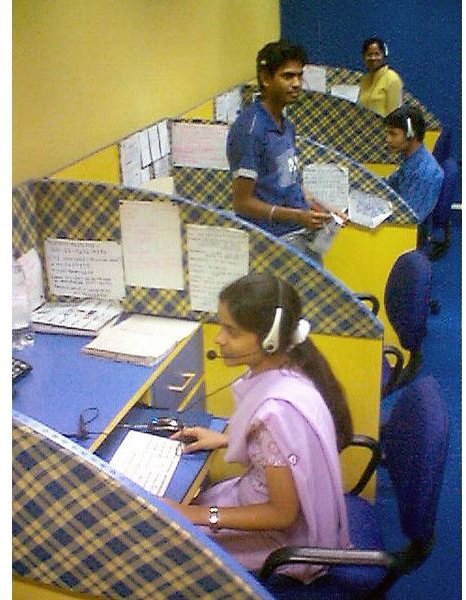
A high school graduate who demonstrates excellent verbal communication skills and knowledge of phone etiquette can immediately find work as a customer service representative. In addition, abilities to solve basic problems, computer literacy for some data entry jobs, and the ability to work in a team environment are plus factors to land this type of job even as a fresh high-school graduate.
An Associate’s of Arts or Associate of Applied Science Degree can lead to advancement as a Senior CSR or Administrative Assistant. Continuance of college education leading to the completion of a bachelor’s degree in any discipline of arts or sciences will broaden the CSR’s career opportunities to become a future executive secretary, executive assistant, or office manager.
Top employers belong to the insurance industry, which pays an average hourly rate ranging from $10.98 to $15.21, while other top industry hirers include banks ($10.70 to $14.79), retail/department store outlets ($10.22 to $14.26), and call centers ($9.59 to $12.83).
(3) Retail Sales Associate

Young minds are often attuned with the latest and current trend; hence retail industries look for youths who are intuitive about consumer preferences and market influences.
The retail sales associate’s objective is to furnish the item that the customer is looking for and to spur customers’ interests toward other available merchandise related to his or her current purchase, but with just the right touch of subtlety. That way, customers will leave the store, not only with total satisfaction for their purchases, but with plans of coming back for more.
In large retail outlets that serve as the marketing arm of a manufacturer or technology developer, career advancement opportunities initially start by becoming a market leader, then as a store leader, and eventually as a store manager. In–house trainings will enrich the retail sales associate’s knowledge about the store products but career advancements for store leadership will require a bachelor’s degree in business administration or business management. Areas of concentration should of course focus on the industry field of the current job occupation held.
The future of the health care industry is expected to grow; hence, it may interest retail sales associates aspirants to pursue college courses pertaining to health services, biotechnology, and specialized therapist courses.
(4) Construction Laborer or Technician
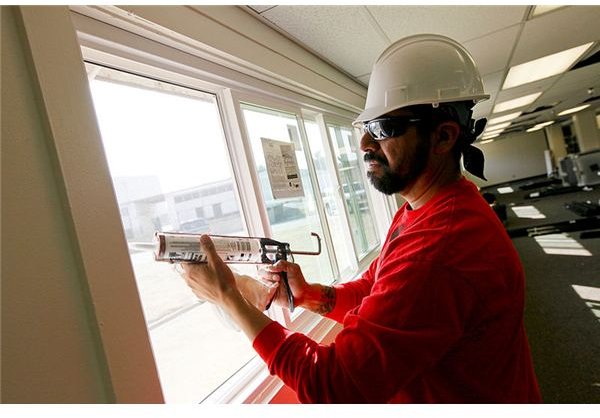
What are the best career choices for a high school graduate w ho does not have the gift of gab, as others do? Others posses the physique or build and the stamina to start off their careers as construction laborers or technicians. The main objective in landing a job at a construction site is to gain actual experience in specific skills that lead to higher-paying jobs.
However, a fresh graduate who is less than eighteen years old will have to secure the Department of Labor’s approval as far as the safety of the work and workplace is concerned.
The idea is for the youth to manifest a particular skill in order to get on-the-job training and gain know-how. That way, he can elevate to other construction jobs instead of being confined to laborious construction work related to ground preparations and improvement or as a materials mover.
In line with this, it would be best to initially embark on skills-enrichment courses related to construction projects, like carpentry, masonry, electrical, plumbing, landscaping, welding, and fabrication. Those who are seriously considering this as a career choice have future plans to become house contractors.
The construction laborer’s average hourly rate ranges from $10.74 to $17.62 with potential for increases, depending on the worker’s acquired skills. The abilities to follow instructions and pay attention to details are qualities that will elevate the laborer to an apprenticeship in special construction work.
(5) Welder, Lead Hand
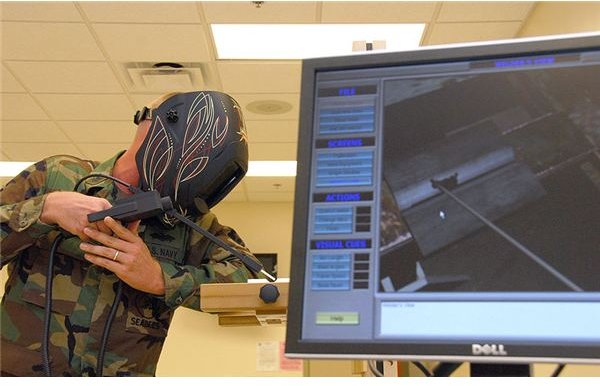
As a construction worker, the high school student who shows relative aptitude can gain apprenticeship jobs as a “welder lead hand.” However, those under eighteen will also require a work permit from the Department of Labor.
In the meantime, the high school graduate can take enrichment courses to enhance one’s welding skills with the aim of becoming a certified welder. This will qualify the aspiring welder to land a job as a “welder lead hand.”
In gaining experience and accreditation as a certified welder, job opportunities can elevate to occupations like welder, cutter, solderer, or brazer and earn as much as $19.71 to $29.27 an hour from the previous hourly salary rate of $15.98 to $22.26, earned as a welder lead hand.
Future professional careers for which the apprentice welder can aim include Welder Supervisor and Welding Inspector. Attaining a college degree as a Welding Engineer can open new avenues and higher compensation in the (1) automotive manufacturing and dealership industries ($61,058 to $82,763), (2) oil and gas companies ($65,660 to $94,208), (3) manufacturers of fabricated metals ($61,656 to $84,426), and opportunities to participate in bidding for government infrastructure projects. However, there is not enough data for annual earnings for the latter.
(6) Fabricator
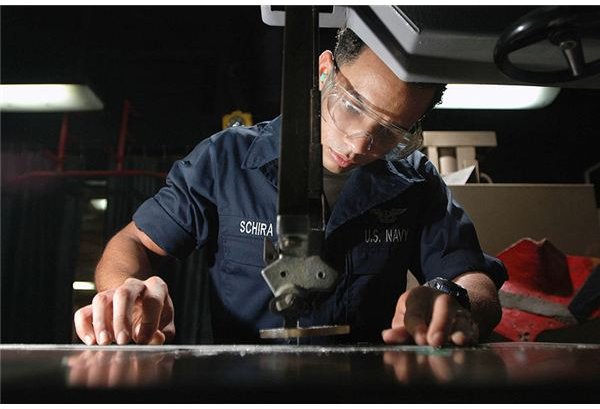
A fresh graduate who enriches his high school welding experiences can also enhance his basic skills by training as an apprentice in a metal fabrication industry. Fabrication has lately become a form of artistic tool. Nevertheless, youths below eighteen will have to secure prior approval from the Department of Labor.
Skills-enrichment courses for blacksmithing, forging, ironwork, and ornamental metal work can broaden the range of industries where he can find work. Job opportunities in the plastics industries, in laser optics, aerospace, electronics, and automotive shops or dealership outlets as a fabricator will become available to him by the time he reaches the legal age.
Setting one’s goals into becoming a Custom Fabricator by acquiring (1) an associate’s degree in fabrication technology or fabrication engineering technology, (2) an accreditation certificate, and (3) years of experience as a metal or sheet fabricator will allow him to transition into this professional career with considerable ease.
A BS degree in Metallurgy Steel can further enhance his computer and mathematical skills to become a topnotch Custom Fabricator who can conceptualize original designs. According to the Bureau of Labor Statistics, the average annual salary of a Custom Fabricator may range from $40,000 to $65,000 but will depend on the fabricator’s experience.
Others even venture into self-employment by taking on sub-contractor jobs in fabricating steel gates, railings, stairs and staircases or railings, and door and window grills for home constructions.
(7) Data Entry Clerk
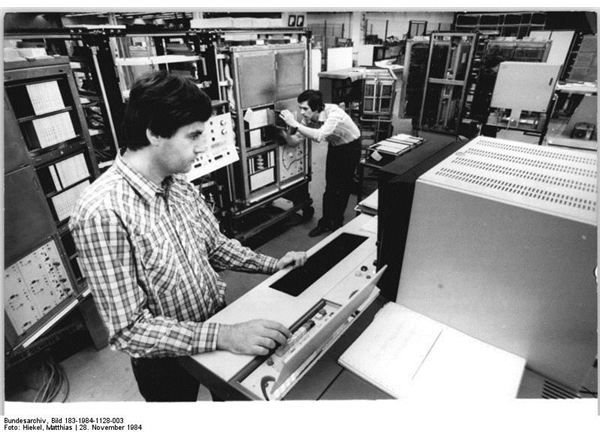
A data entry clerk is simply tasked to input lists, records, and other data into an electronic format; hence basic computer skills and literacy are required. The high school graduate can have an option to find work at home or in an office environment.
The latter choice of course poses more opportunities for career advancement, especially if the fresh graduate embarks on a two-year associate’s degree in business or in applied science courses like computer information systems. Future jobs within the office environment may include work as executive secretary or administrative assistant.
Additional computer knowledge gained by finishing a degree course in BS Computer Science, or Computer Information Systems or Information Technology, will include potential the career profession and compensation as IT Specialist.
(8) Hotel Housekeeping Aide/Attendant/Assistant
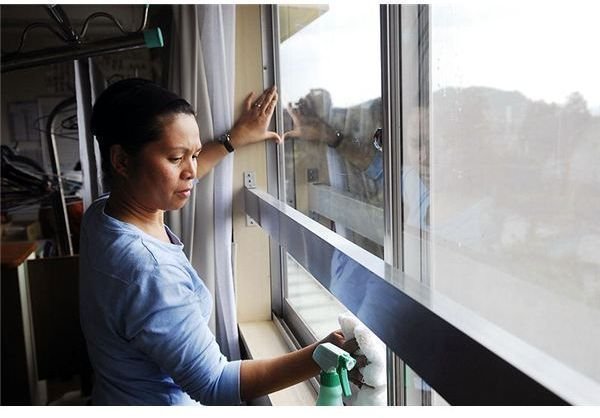
This type of job does not require special skills but will require aptitude for additional training since the worker will be required to perform the cleaning duties and maintain order in accordance with the hotel, restaurant, or hospital standards. Duties mostly involve making the beds, replenishing the linen, and cleaning and vacuuming the rooms and hallways.
Job advancement includes work as general duty housekeeper which entails an increase in hourly salary rates, from $8.51 to $14.24, or as housekeeping supervisor, earning salaries that range from $10.01 to $14.36. An associate’s degree and an accreditation as a certified housekeeper will enhance the assistant housekeeper’s eligibility for promotion.
Career goals shouldn’t stop there. Becoming well-rounded and experienced in hotel work plus achieving a Bachelor’s Degree in Hotel Management increases one’s chances of landing higher-paying jobs in hotels, recreational establishments, and cruise ships.
(9) Food Service Workers (Kitchen)
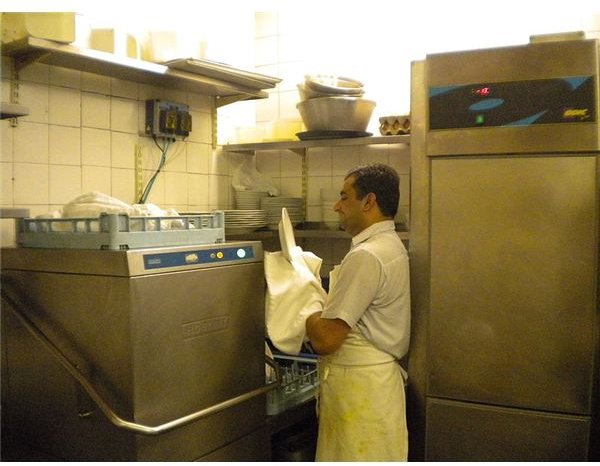
The job requires very little skills at first since workers are tasked to keep the kitchen spic and span, by washing the dirty dishes, pots, pans, and utensils. The kitchen’s head cook or hotel chef will assign work like washing fruits and vegetables properly, mixing cooking ingredients, preparing orders for coffee or tea, and other cooking assistance jobs.
Cooking tasks may include setting up the equipment, making sandwiches, cooking French fries, and mixing the salad dressing. High school students can have their pre-training for this job by volunteering for work in community centers and non-government charitable organizations. Attention to detail and sharpness in following the cook’s instructions will pave the way for possible apprenticeship jobs with the hotel and restaurant chefs.
Starting with (1) an Associate’s Degree in Culinary Arts, or (2) an Associate of Occupational Studies-Culinary Arts/Restaurant, or (3) an Associates Degree in Culinary Arts and Restaurant Management, will make the kitchen worker eligible for higher job positions like kitchen manager, head chef, or cook. This is in addition to his enhanced culinary skills.
A Bachelor’s Degree in Arts or Hotel Restaurant Management will likewise add to a former kitchen worker’s qualifications as Restaurant Manager ($29,661 to $45,864) or Executive Chef ($40,906 to $67,265).
(10) Travel Clerk Jobs

As the last of the ten best career choices for a high school graduate, training and experience will furnish a travel clerk with wide exposure to the laws and regulations pertaining to foreign and domestic travel.
Enhancement of one’s knowledge and experience can be acquired via an Associate Degree in Liberal Arts and would make one eligible for career advancement as a travel agent. The latter position will entitle him or her to earn average annual salaries that range from $27,679 to $41,437.
A future professional career as a corporate travel consultant requires a Bachelor’s Degree in Travel and Tourism. As a Travel Consultant, average annual salaries range from $37,495 to $51,896 but have great potential for earning additional income in the form of commissions from airlines, hotels, and recreational establishments like resorts and cruise liners.
Looking for more options? Check out the rest of Bright Hub’s collection of career guides and profiles.
Reference Materials and Image Credit Section:
References:
- Payscale.com Degree with High School Dilploma https://www.payscale.com/research/US/Degree=High_School_Diploma/Hourly_Rate
- Cashier– https://samsclub.jobamatic.com/a/jbb/job-details/408678
- Education Portal.com –Starting_a_Career_in_Metal_Fabrication.html
https://education-portal.com/articles/Metal_Fabricator_Job_Outlook_and_Requirements_for_ - Updated: 9 Dec 2010–https://www.payscale.com/research/US/Country=United_States/SalarySalary Survey for Country: United States
Image Credit:
- Brunswick High School graduates...
- [cashier counters inside the Navy Exchange](https://commons.wikimedia.org/wiki/File:US_Navy_020807-N-0872M-515_A_Shopper_pays_for_hi s_purchase_at_one_of_the_cashier_counters_inside_the_Navy_Exchange_located_at_Naval_Bas e_Little_Creek.jpg) …
- An Indian call center
- Modena, Omagh, January 2010
- [Aviation Structural Mechanic Airman Cesar Schira,](https://commons.wikimedia.org/wiki/File:US_Navy_061120-N-1332Y-103_Aviation_Structural_M echanic_Airman_Cesar_Schira,_from_New_York_City,uses_a_band_saw_to_fabricate_a_shelf_i n_the_airframes_shop_on_board_USS_Kitty_Hawk(CV_63).jpg)…
- [Construction worker installs new energy-efficient windows in Bldg. 519](https://commons.wikimedia.org/wiki/File:US_Navy_100809-N-8863V-043_A_construction_worker _installs_new_energy-efficient_windows_in_Bldg._519_at_Naval_Surface_Warfare_Center.jpg) …[](https://commons.wikimedia.org/wiki/File:US_Navy_061120-N-1332Y-103_Aviation_Structural_M echanic_Airman_Cesar_Schira,_from_New_York_City,uses_a_band_saw_to_fabricate_a_shelf_i n_the_airframes_shop_on_board_USS_Kitty_Hawk(CV_63).jpg)
- [Lt._Lelanie_Aratea,_from_San_Diego,_cleans_windows…](https://commons.wikimedia.org/wiki/File:US_Navy_090301-N-9610C-048_Lt._Lelanie_Aratea,_f rom_San_Diego,_cleans_windows_in_the_common_room_of_the_Kibono_Ie_nursing_home_in_Saika i-cho_town_during_a_community_service_project.jpg)
- Punjabi pakistani cook and dishwasher
- Tanzania East Africa tour operators congema safaris l
