Using Pointillism in Graphic Design - Let the Viewer's Eye Create the Colors and Effects
Overview of Pointillism
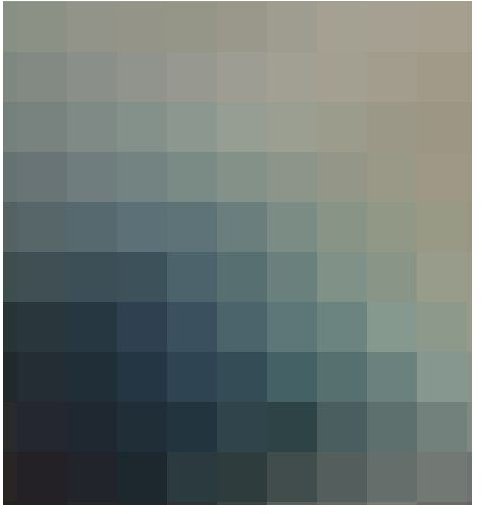
When most people think about art or the act of painting, they imagine the colors being mixed beforehand on a palette of some sort and then applied to canvas (or other materials) in a continuous brush-like motion. In contrast to this, pointillism is a different style of painting in which images are depicted by a collection of individually-colored dots that the human eye visually combines to “see” a wider range of colors.
Since raster images are really composed of a large number of individually-colored pixels (or dots), the concept of pointillism translates quite naturally to digital graphic design. Just like with digital photos, when pointillism images are viewed from a distance, the eye blends the points of color together to create a picture that seems smooth and continuous with “natural” tones and shaded areas. However, when viewed close up, you can see the actual dots used to create this effect.
One major difference between hand-painted and computer-generated artwork is that computers are capable of producing hundreds of dots per inch. So, while it may be extremely difficult for the naked eye to detect the individual pixels that make up a photograph without a large zoom factor, it’s usually not so hard to see the points used to create a hand-painted work that incorporates the pointillism technique. In general, as the colored points become smaller and closer in proximity to one another, it becomes harder to distinguish the individual dots.
In graphic design, pointillism can also be used to achieve texture and depth effects in an image by varying the size, shape and spacing of the individual points. Even if the base drawing is more traditional in nature, you can add pointillism to selected areas of the artwork to create the illusion of shadows and other effects that can really bring the drawing to life.
Beginnings of Pointillism
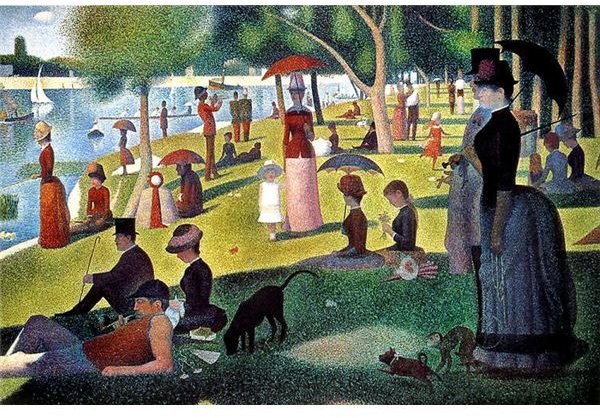
The technique of pointillism was theorized and developed by the French artist Georges Seurat (1859-1891), who approached art from a more scientific standpoint than many of his peers. Seurat was particularly interested in color theory – basically believing that artwork would be richer and more beautiful if colors were “blended” with the human eye rather than mixed with a painter’s brush and palette.
One of the most celebrated paintings depicting the pointillism style is Seurat’s A Sunday Afternoon on the Island of La Grande Jatte, which was first exhibited in May 1886. Seurat’s preparation work for the 81.7 in x 121.25 in painting began in May of 1884 and included a large number of painted studies. The work of art is currently housed at the Art Institute of Chicago.
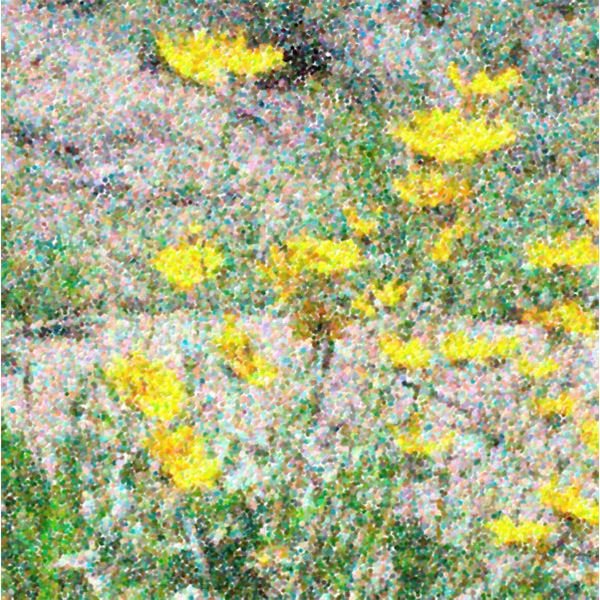
Although this highly technical form of art does not have many practitioners, it’s interesting to note that there are several software applications that have been developed to mimic the style. That is, there are a number of image editing tools designed to transform digital photographs into images resembling hand-painted works. Not only do these tools include the more traditional oil painting and watercolor effects, but many also include some type of pointillism effect as well. One example of such an application is Alien Skin’s Snap Art 2 – a photo editing plug-in compatible with Photoshop and Paint Shop Pro.
When you look at the thumbnail of the flowers, the dots are small enough and close together enough that you can easily comprehend the picture. If you click on the thumbnail to enlarge it, the picture is less recognizable. After enlarging it, step back about eight feet or so from your monitor and look at it again. It is recognizable again, and this will give you a much better idea of the virtues of pointillism and the glow of the pointillism effect.
