There’s an old saying in photojournalism, the secret to getting the shot is “F8 and be there.” The saying dates back to the days when newspaper photographers would drive around with the pre-focused camera set to F8 and a shutter speed set by the “sunny 16 rule” so they could grab it and shoot.
Introduction
There’s an old saying in photojournalism, the secret to getting the shot is “F8 and be there.” The saying dates back to the days when newspaper photographers relied on Twin Lens Reflex cameras (TLRs) and would drive around with the camera set to F8 and a shutter speed set by the “sunny 16 rule” since autoexposure didn’t exist. The lens would be pre-focused so everything from about six feet to infinity would be in focus. The idea was that if you came upon something worth photographing, you could just grab the camera and shoot, a necessary ability since often the subject of the photography might not have wanted to have their picture taken.
Image information
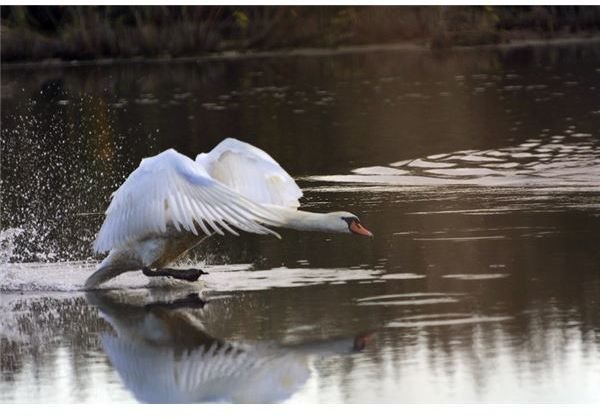
I was walking down a trail after finishing a sunrise shoot. As usual, I had my camera set for proper exposure and was holding the motor drive grip in my right hand with the camera balanced on my chest pouch. I walk this way so that I’m ready to just lift the camera and shoot. Suddenly, I heard a squawking to my right. As I looked up I was already lifting the camera to my face and pointing it in the direction of an angry swan who was taking off to challenge an intruder. Triggering the camera’s motor drive, I fired off a three-shot burst with the image accompanying this article being the best of the three.
The technique
For the average hobbyist, children and pets rank high on the list of attractive photographic subjects. Each can be challenging to capture naturally, and opportunities for natural, “magic” images can be very fleeting. All too often, you see something cute, run to grab your camera, come out and start focusing and setting exposure and the moment is lost because your potential subject has stopped what they were doing and are instead watching you play with your camera.
One habit worth developing is that any time you pick up your camera, the first thing you should do is set it for your expected shooting conditions. Here’s a handy checklist to begin with:
- ISO – set it to what seems like the best choice for expected conditions (don’t rely on “auto”)
- Exposure mode – what’s appropriate for your shooting situation (don’t just choose the exposure mode, but also consider the likely input you’ll need)
- Focus mode – one shot or continuous focus
- Pre-focus the lens – preset the lens focus point to where you think it’s most likely needed to be (see my article on pre-focusing for better photos )
- Set flash – if you expect to be using your flash, then attach or activate it and set it as appropriate (including deciding whether you’re bouncing it or using a light modifier)
- Ready position – put your camera in the “ready position” with your right hand on the grip and your finger poised over the shutter button
You should walk into the shooting environment ready to just lift your camera to your eye and start shooting. Often you’ll only have time for one or two photos before your subject realizes what you’re doing and the moment is lost. Sometimes you don’t even have time for bringing the camera up to your eye. I’ve gotten more than one grab shot just by lifting the camera and pointing it at the subject and shooting. I’ve gotten keeper images that way too because my camera was already set up to get the shot.