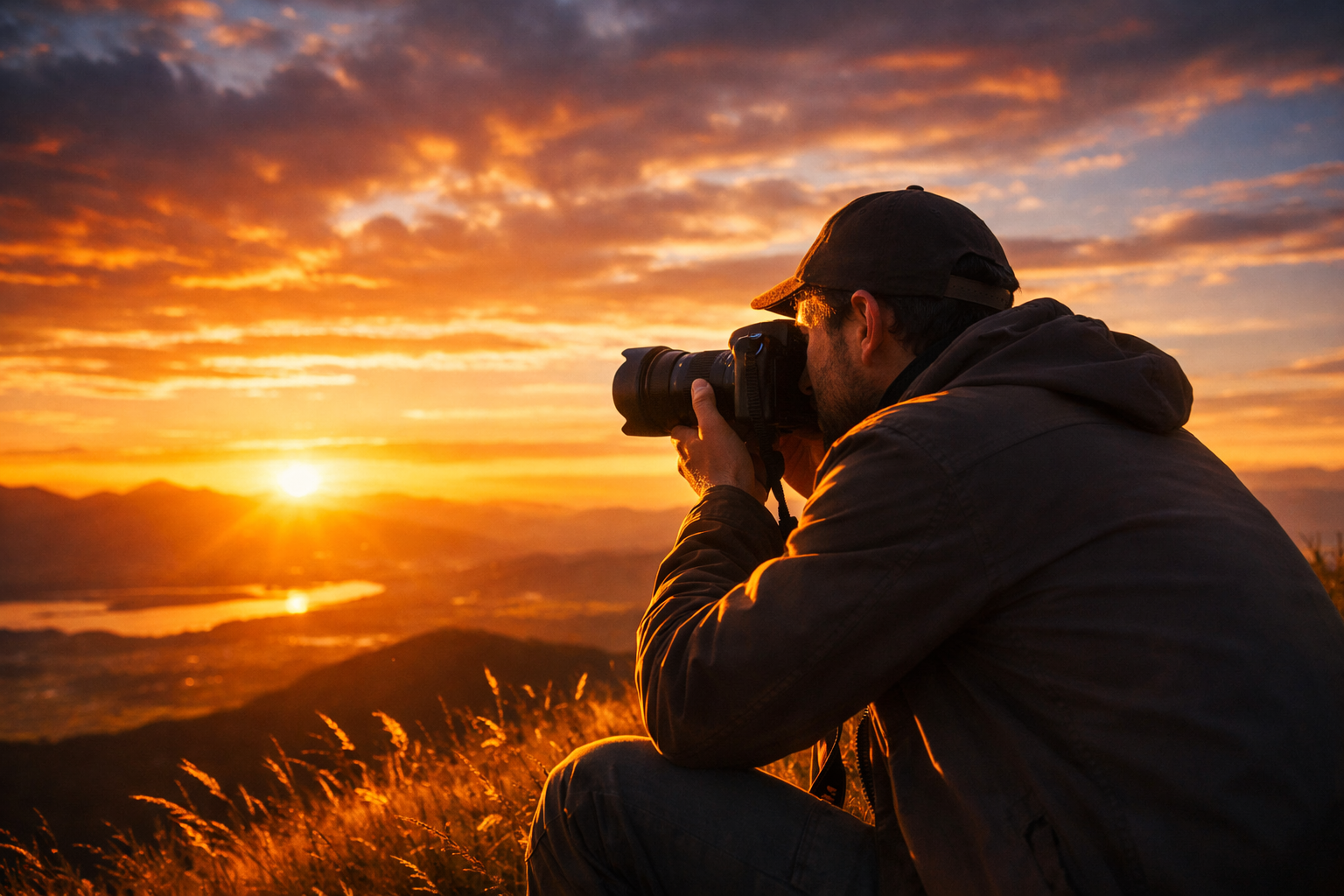
With warmer weather now here, you should be out there getting your share of outdoor sports photos. Golf is one of the world’s premiere outdoor sport activities and here we examine tips and techniques on how to photograph golf. Included are other outdoor sports like racing and track & field.
Golf Photography Tips & Techniques
There are quite a number of activities which fall under the realm of outdoor action sports you might consider for getting some attention-grabbing digital images which make viewers feel like they are actually there witnessing the event live. One of the USA’s top sports is golf, with more than $60 billion being spent on golf-related items each year by some 57 million professional and amateur golfers alike. As soon as the last frost lifts, many of the world’s 30,730 golf courses open and greens are trampled hordes of “duffers” every weekend and holiday. Golf is indeed a lucrative market in many respects.
Golf Photo Shooting Tips: When hitting the links for golf action digital photography, remember to respect the golfers, professionals or not. Most players take their game quite seriously so using the following golf shooting tips will help you show them proper respect and avoid any interference of their game. Remember, in golf photography, position is everything.
· If you can turn off the sound of your camera you should do so.
· Use a telephoto lens to keep well away from the golfers and avoid spoiling their concentration.
· Use a lens hood to help minimize any possible sun flare or reflection off your camera lens.
· Don’t move or distract players in any way, especially when they are about to tee off, putt or take a shot.
· Use a wide aperture (f5.6 or more) and tight depth of field to focus on one competitor
· Stay low for short game golf shots like pitching and putting.
· Time your camera settings to catch the beginning or end of the golfer’s swing.
· For good putting digital images, position yourself behind or to one side of the golfer with the hole flag in view, you can also position yourself with the flagged hole in the foreground and the golfer behind if using a telephoto lens.
· Best golf action shot positions are at hole tee-off points or near the greens and flagged hole.
Photography of Other Popular Outdoor Sports
As a sports photographer, you might also want to consider other outdoor action sports such as:
· Car racing (F-1, Stock cars, Funny cars, Monster Trucks and Hot Rods)
· Motorcycle racing
· Motor Cross
· Roller Skating
· Bicycle Races and Tours
· Beach Volleyball
· Airplane Races and stunt flying
Outdoor Sports Photography Tips: As with most sports, your knowledge of the rules and action will help to determine how well you can anticipate the action to get the best position for getting great action shots. During any competition NEVER use a flash, as this not only may cause the performer or athlete a problem but could easily get you thrown out of the event by officials, event staff, or fans. Always respect the concentration and performance of the athletes and competitors.
Note: Remember to “move your body” when photographing outdoor action sports. Don’t just shoot standing up. Wear jeans, sneakers or other comfortable clothes so you can bend, kneel, squat, lie down, twist, turn, sit on the ground (or other surface) crouch, climb and otherwise alter your height and shooting angle of the subject or action.
Track and Field Photography
From spring through late fall, an assortment of track and field events take place in many parts of the world. Events from your local marathon to major league, college and even high school sporting events are welcome fodder for the action sports photographer. Some examples of these types of outdoor sports include:
· Marathons, Ultra-marathons and half-marathons
· Cross Country
· Sprints, relays and Hurdles
· Pole Vault, long jump and high jump
Track and Field Photography Tips: For events in which competitors go up, focus on the cross bar or landing areas to get digital images at peaks in the action. Even a closely-framed digital image of a “frozen” high jumper or pole vaulter in the air will convey a strong sense of movement. Zoom in for facial expressions when possible too. Use a wider aperture (f5.6 or wider) and high shutter speed (1/500th or 1/1000th second) to aid in “stopping” excessive motion in the shot.
Photographing Animal-Related Outdoor Sporting Events
Depending on where you live, you may also be privy to some added kinds of sporting events during the course of the year. These can also provide plenty of subject material for sports action photography. For races on circular, oval or curved raceways, remember to position yourself at or near a turn or curve where the pace of the action can radically change. It’s easier to get well-focused still shots as the action can be headed towards or away from you, effectively “slowing” the relative speed of whatever animal-based event you’re photographing.
· Horse Racing
· Steeplechase
· Dog racing
· Camel races
· Elephant races
· Bullfights
· Rodeos
Photo Shooting Tip: When shooting animal-based sporting or racing events, you’ll almost certainly need to set a very fast shutter speed (1/500th or 1/1000th second or faster) to help “stop” or “freeze” the action. If you’re photographing a particular animal and rider, you should use as a wide an aperture (f8, f4 or f5.6 or wider) as you have and worry less about the depth of field a smaller aperture would offer. When shooting multiple competitors however, you’ll definitely want to “stop down” using the smallest aperture you think you can get away with (f11 or f16). Be sure to try to time the shot at an action peak – the apex of a jump or a change of direction or motion – to help “stop” or “freeze” the action for sharper, clearer digital images.
Outdoor Sports Photography
What are you waiting for? With such a plethora of photo opportunities during the warmer months, you should be out there as often as possible getting your fair share of outdoor sports photographs. So point, shoot and smile.
This post is part of the series: Sports Photography Tips & Techniques
In this series, we’ll look at how to photograph various types of sports. Camera settings, lighting and equipment are just a few elements that will vary depending on which sport you are trying to photograph. Learn tips and techniques that will help you capture the best action sports photography!