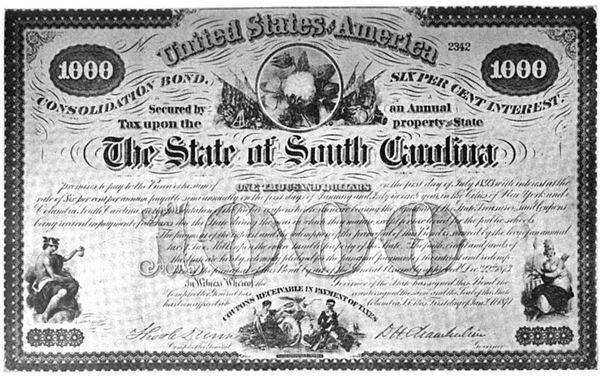
One of the challenges that small investors often face is the limits on how much they can invest. Mini bonds put municipal bond offerings within the reach of everyday investors while helping states, counties and cities raise money. This tax-exempt investment option is generally unrated.
Bonds for Small Investors
Bonds are used to fund government projects such as repairs and maintenance to state and federal parks, bridges, government buildings and more. On a state level, bonds are issued to keep schools in good repair, fix roads and for other state infrastructure projects.
In most cases, the minimum bond size is out of the reach of most investors if they are not institutional investors. Bonds are sold at par (e.g., at face value), below par (e.g., below face value) or above par (e.g., above face value).
Unfortunately, bonds are not always within reach of the individual investor. In some states, bond issues have been put within reach of the smaller investor using a classification called mini-bonds. These bonds can have a face value of as little as $25.00 although typically they are in the $500 range, making it easy for more small investors to purchase them.
Mini bonds are not without controversy (e.g., in May of 2011, California Assembly Bill 1408 ) nor are they available to all investors. In order to take advantage of the tax-exempt status of these bonds, they must be purchased by those who reside in the state that they are issued.
These bonds are generally unrated by bond rating agencies like Moody’s and other bond rating agencies even though they are backed by the full faith and credit of the issuer. One of the challenges with these bonds, however, is that when a state (or municipality) is facing budget problems, these bonds may be more difficult for them to sell to residents.
Not Always Government Projects
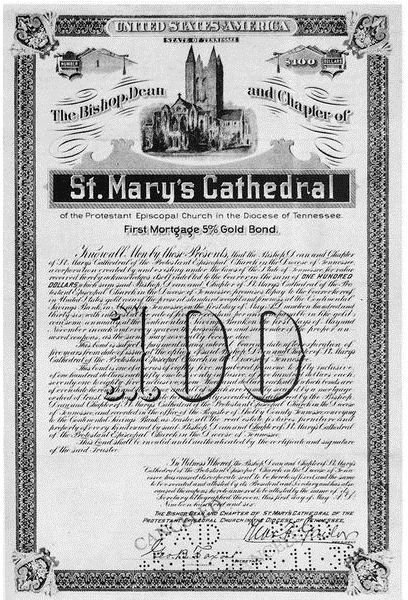
As more localities offered mini bonds, the potential of these bonds became evident and more companies elected to use them for short-term financing needs. These mini-bonds were used by companies like Verizon, which has had a very stable history.
However, other risk-takers such as housing and resort developers began offering these bonds as well. In addition, municipalities sometimes worked with schools, nursing homes and other facilities to help ease their financing needs by offering these mini-bonds.
Many investors also will recall the problem that occurred when Hong Kong was found to be holding a substantial number of Lehman Brothers mini bonds when Lehman closed. There is still ongoing discussion as to what percentage of these holdings the investors will recoup.
All types of investments carry risks with them and municipal bonds are not any different. Mini bonds may carry different risks than the more traditional bond offerings since they are often unrated and they have different issuing requirements.
As with any other type of investment, it is imperative that all of the conditions of the offering are reviewed carefully and the risks associated with these investments are reviewed. If these types of bonds are good for your current financial standing, they may be a good long-term investment option.
Tax Implications of Bonds
For taxation purposes, not all bonds are created equal. If a mini bond issue is for a municipality, it is more than likely tax exempt or tax free on the state level. This means that there can be tax benefits to these types of investments.
The bond holder will still have to claim the interest earned on their federal taxes. Mini bonds that are issued by corporations may not have any tax exempt benefits, and federal bonds may be exempt from federal tax but may incur a state tax.
Taxes on bonds are reported on a form 1099-INT and reported to the Internal Revenue Service by the entity that pays the interest. Even bonds that are considered “zero coupon” (e.g., they do not pay a quarterly or annual interest payment) still require the investor to report implied interest on their investments.
Since many who invest in bonds are high-worth investors, a tax accountant may be needed to assist in properly claiming bonds on annual tax filings for both state and federal tax filings. Mini bond holders who have other assets such as stocks or mutual funds may also need assistance with tax preparation.
Smart Investment Decisions
Mini bonds may be a great addition to a long-term investment strategy for small investors. As with any other type of investment, it is important to review all of the documentation that is available on any investments and find out if they fit your overall investment needs.
Making smart investment decisions can be challenging, and there is never a guarantee that an investment will provide the returns that are anticipated. Mini bonds may be a good option for small investors who wish to help fund local projects.
Not all municipalities offer these bonds, and those that do generally do so as a way of encouraging local investments. Because these bonds are not limited to municipal projects but may be offered by other projects, it is important to know who the issuer is, what their credit rating is and how likely they are to be able to fulfill the terms of the issue.
Resources
Additional Reading
Business Week, John Duce and Stephanie Tong Lehman Hong Kong Minibond Holders Offered Higher Settlement https://www.businessweek.com/news/2011-03-28/lehman-hong-kong-minibond-holders-offered-higher-settlement.html
Sources:
- New York Times By JONATHAN FUERBRINGER Published: September 22, 1992 Credit Markets: New York City to sell Mini Bonds https://www.nytimes.com/1992/09/22/business/credit-markets-new- york-city-to-sell-mini-bonds.html
- SMARTMONEY Russell Pearlman MAY 9, 2011 The Growing Impact of “Mini Muni” Bonds https://www.smartmoney.com/invest/bonds/the-growing-impact-of-mini-muni-bonds-1304609147041/
- Investopedia: Mark P. Cussen, December 4, 2010 Taxation Rules For Bond Investors https://www.investopedia.com/articles/tax/08/bond-tax.asp#axzz1RnSoSJXX
- IRS Publication P1212: Guide to OID Instruments https://www.irs.gov/pub/irs-pdf/p1212.pdf
Image credits
- Image: Municipal bonds: Google Books - Roland Mulville Smythe (1911). Obsolete American Securities and Corporations, Illustrated with Photographs, p. liii. R. M. Smythe by unknown author under Public Domain
- Image: St Mary’s Cathedral Bond by St. Mary’s Cathedral under Public Domain