Consequences for Failure to File Federal Tax Returns
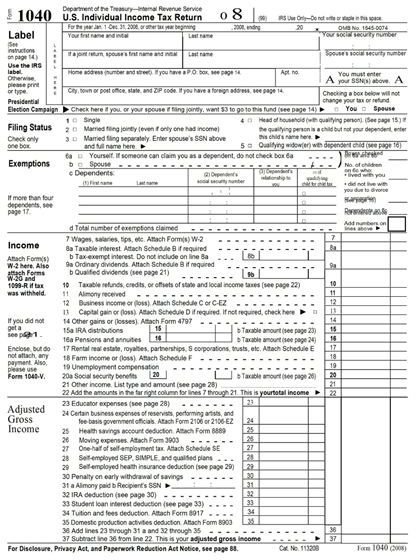
Failure to file federal income tax returns and pay rightfully owed taxes has snared prominent figures in the United States from gangsters to movie stars. Many otherwise honest individuals don’t file federal tax returns simply because they believe they can’t afford to pay taxes owed. This is a mistake. The penalties for not filing tax returns are much harsher than those for not paying. The IRS offers alternatives for taxpayers who cannot afford to pay their entire federal tax obligation.
This article describes general circumstances concerning federal income tax and is not intended to be specific tax advice. Please consult an attorney or accountant who specializes in federal income tax for individual advice.
Notification for Failure to File Tax Returns
Taxpayers who voluntarily fail to file tax returns or fail to respond to IRS notices face a number of penalties. In some instances, the IRS will file a return for the taxpayer. This IRS-generated return rarely works in favor of the taxpayer. Often, the IRS will not include deductions or other factors that would otherwise allow the taxpayer to reduce his or her tax burden. The IRS will also initiate action to collect any money owed, such as placing liens on bank accounts and other property owned by the delinquent taxpayer.
The IRS first provides notice of failure to file tax returns with the Proposed Individual Tax Assessment, also known as a 30-day letter. This notice provides the taxpayer with 30 days to submit either a completed federal tax return accompanied by a cover letter, a completed Consent to Assessment and Collection form, or a letter stating why a tax return is not required. If there is no response to the 30-day letter, the IRS sends the taxpayer a Notice of Deficiency, also known as a 90-day letter. The 90-day letter imposes an additional 90-day deadline upon the taxpayer to submit one of the documents requested by the 30-day letter.
IRS Tax Penalties
The IRS also imposes a penalty of one-half of one percent of unpaid taxes for each month or portion of a month that taxes go unpaid, up to a maximum of 25 percent of total unpaid taxes. For taxpayers who obtain an extension to file and who pay at least 90 percent of taxes owed, no penalties are imposed if a return is completed by the extension due date and all remaining taxes due are paid with the return.
The IRS imposes even harsher penalties on taxpayers who fail to file a timely tax return. For every month the return is filed after the deadline, the IRS adds a penalty of 5 percent of the unpaid taxes for each month or fraction of a month the return is late, up to a maximum of 25 percent of the total tax due.
For taxpayers who file more than 60 days past the deadline, the minimum penalty is $135 or 100 percent of the total tax due, whichever is smaller. These penalties are imposed in addition to the penalties for failure to pay taxes owed. However, if penalties apply for failure to file a return and failure to pay taxes, the penalty for failure to file a return is reduced by the amount of the penalty for failure to pay taxes.
Alternatives for Delinquent Tax Filers
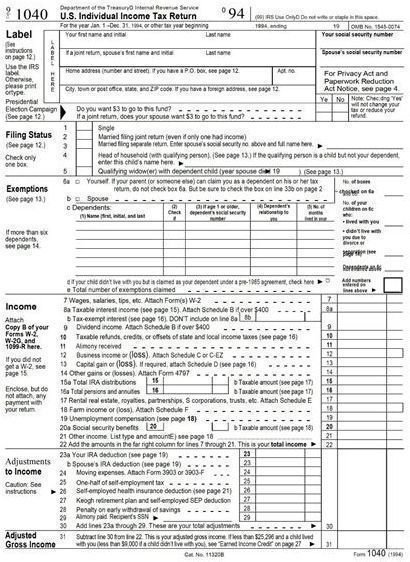
For taxpayers who cannot afford to pay their tax obligations in full, the IRS offers several alternatives for settling tax obligations. Taxpayers may request a monthly installment plan by contacting the IRS by telephone or completing an Online Payment Agreement available at the IRS website. Taxpayers may specify which day of the month from the 1st through the 28th that they wish to submit payment. The IRS generally responds within 30 days, either to approve or reject the proposed payment plan or to request additional information.
If the IRS approves the installment plan, the taxpayer must pay 105 dollars to set up payment by check or 52 dollars to set up electronic payments. Taxpayers with income at or below 250 percent of the poverty guidelines set by the Federal Department of Health and Human Services may apply for a reduced user fee of 43 dollars.
Another option is to seek an Offer in Compromise, which is an agreement between the taxpayer and the IRS to settle the tax obligation for less than the total amount. Such agreements are typically granted only when the taxpayer demonstrates a likely inability to ever be able to pay the full amount or when full payment imposes an undue hardship. Legitimate doubt about the liability of the taxpayer also constitutes valid grounds for an Offer in Compromise. The fee for applying for an Offer in Compromise is 150 dollars, which is applied to the final payment amount. Low income taxpayers may petition to have the application fee waived.
Taxpayers who cannot afford to pay anything should contact the IRS directly and be prepared to provide financial information such as pay stubs and recent bills. In such cases, the IRS may mark the account as uncollectable, although the taxpayer is still ultimately liable for unpaid taxes.
Income Tax Evasion

Simply being delinquent about filing federal tax returns is not enough to establish a charge of income tax evasion. The 1965 Supreme Court case Sansone v. United States established a three-part test for federal tax evasion: tax delinquency, a willful attempt to evade paying taxes and an affirmative act such as diverting assets to another person or payment in cash to avoid generating pay stubs or receipt.
Because of these strict requirements, income tax evasion is a difficult charge to prove. Nonetheless, the IRS can and will pursue income tax evasion charges when it believes such charges are warranted. Notorious gang leader Al Capone was snared by income tax evasion charges and went to prison for it. On the other hand, actor Wesley Snipes escaped felony federal tax evasion charges, although he was convicted in 2008 of three counts of failure to file a tax return. He began serving a three-year term in 2010. Snipes claimed to be the victim of bad tax advice, including influence by the founder of a tax-protest group who promoted arguments questioning the legitimacy of federal income tax regulations that have long been rejected by the IRS.
References
- Criminal Tax Manual: Attempt to Evade or Defeat Tax, at https://www.justice.gov/tax/readingroom/2008ctm/CTM%20Chapter%208.htm
- The Free Legal Dictionary: Tax Evasion, at https://legal-dictionary.thefreedictionary.com/Tax+Evasion
- IRS.gov: Anti-Tax Law Evasion Schemes – Talking Points, at https://www.irs.gov/businesses/small/article/0%2C%2Cid=106509%2C00.html
- IRS.gov: Frequently Asked Questions for Past Due Return Filers, at https://www.irs.gov/businesses/small/article/0,,id=122721,00.html
- IRS.gov: Next Steps for Filing Your Past Due Tax Returns at https://www.irs.gov/businesses/small/article/0,,id=171846,00.html
- IRS.gov: Nine Things You Should Know About Penalties at https://www.irs.gov/newsroom/article/0,,id=205326,00.html
- IRS.gov: Prior Year Forms, Instructions and Publications at https://www.irs.gov/formspubs/article/0,,id=98339,00.html
- IRS.gov: Tax Topics – Topic 202 – Tax Payment Options, at https://www.irs.gov/taxtopics/tc202.html
- IRS.gov: Understanding Your Notices Regarding Past Due Filing, at https://www.irs.gov/businesses/small/article/0,,id=171838,00.html
- IRS.gov: What Is an Offer in Compromise?, at https://www.irs.gov/businesses/small/article/0,,id=104593,00.html
- IRS.gov: What Will Happen If You Don’t File Your Past Due Return or Contact the IRS at https://www.irs.gov/businesses/small/article/0,,id=108330,00.html
- Sansone v. United States, 380 U.S. 343, 85 S. Ct. 1004, 13 L. Ed. 2d 882 (1965), in Findlaw, at https://caselaw.lp.findlaw.com/cgi-bin/getcase.pl?court=US&vol=380&invol=343
- The Associated Press. Wesley Snipes Ordered to Federal Prison for Tax Evasion, in Today/MSNBC.com, retrieved at https://today.msnbc.msn.com/id/40456311/ns/today-entertainment/
- The Associated Press. Wesley Snipes Acquitted of Federal Tax Fraud, in Today/MSNBC.com, retrieved at https://today.msnbc.msn.com/id/22955757/ns/today-entertainment/
Photo Credits
- IRS F1040 – 2008 – Audrey F. Henderson
- IRS F1040 – 1994 – Audrey F. Henderson
- Judge Betty Lou Lamoraeux, 1980, in Orange County Archives, retrieved at https://www.flickr.com/photos/ocarchives/3128752362/
