The Federal Reserve impacts the bond market heavily by setting rates. Because inflation is a prime component to the ultimate pay-out of the bond market, an adjustment in rates can cause the value of a bond to adjust either positively or negatively.
The Federal Reserve uses a dynamic adjustment method to affect the bond market in the U.S. by adjusting rate settings. These adjustments are made by the Federal Reserve’s Open Market Committee and represent a long-term strategy to control the economic well-being of the nation. To lower interest rates, the Fed buys bonds which in turn increases the demand for bonds and causes their prices to rise. To raise interest rates, it sells bonds which increases supply and pushes prices lower. This is the main method the Fed uses to maintain liquidity throughout the market.
Bonds are generally issued with a set price which means that the purchase price, interest gained and final cash-out time are pre-determined. Investors in this market understand this, so they attempt to hedge against this volatility. When the Fed lowers interest rates on the discount rate or the Fed funds rate, the possibility of inflation exists. This will affect the overall return the investor gets from the bond. This means that an investor can finance a 30-year Treasury bond and end up with less money upon maturity because of inflation.
This creates an environment in which traders of the T-notes adjust the overall value of the bond. The bond’s value changes from day-to-day. The Fed attempts to control this by using its rate settings powers, however, the private market for bonds ultimately decides the overall value of longer-term securities.
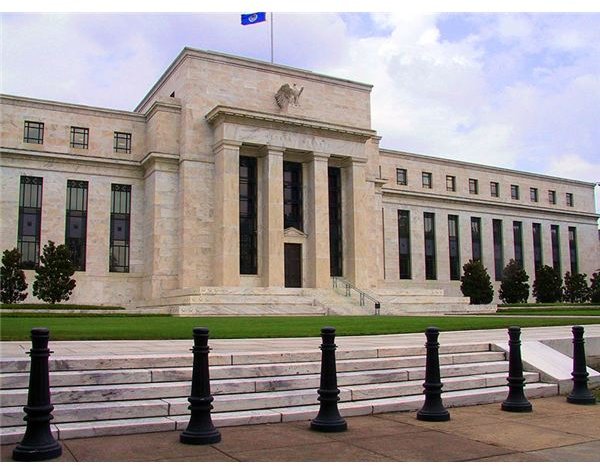
Above: The Federal Reserve Building (Image credit: Rdsmith4 at Wikimedia Commons, https://en.wikipedia.org/wiki/File:Federal _Reserver.jpg, Creative Commons Attribution ShareAlike 2.5.)
Economist’s Views of the Fed’s Actions
As the Fed attempts to stimulate the economy by making borrowing cheaper, it risks making the bond market far more volatile.
Depending on where in the business cycle in which the economy is, these rate adjustments can have great effect on the economy as a whole.
According to most economists the full implications of a rate adjustment takes at least six months to begin being seen.
Foreign Influence
The Fed must also attempt to control the influence of foreign investors. As the dollar trades against other currencies, the value of bonds is volatile. The Fed is able to adjust the rate using this knowledge, however, the challenge is timeliness. With the volume of money being exchanged across borders, the Federal Reserve must make decisions with the economies of other countries in mind as well. This means that the Fed has to pay close attention to the government bond markets in other countries and its relation to domestic T-notes.