How Global Warming Affects The Great Barrier Reef
Great Barrier Reef
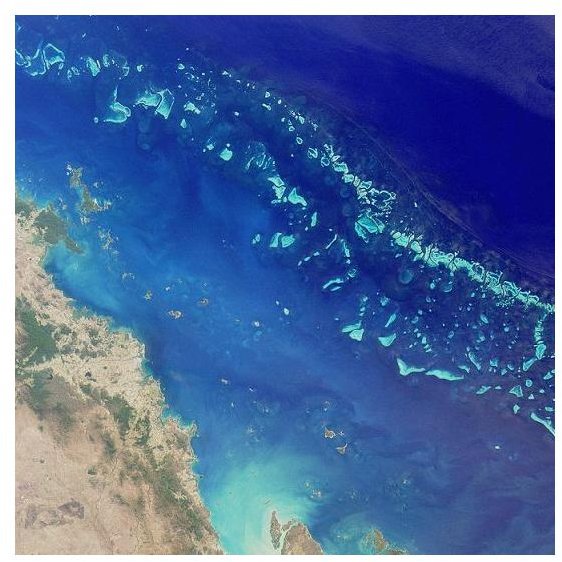
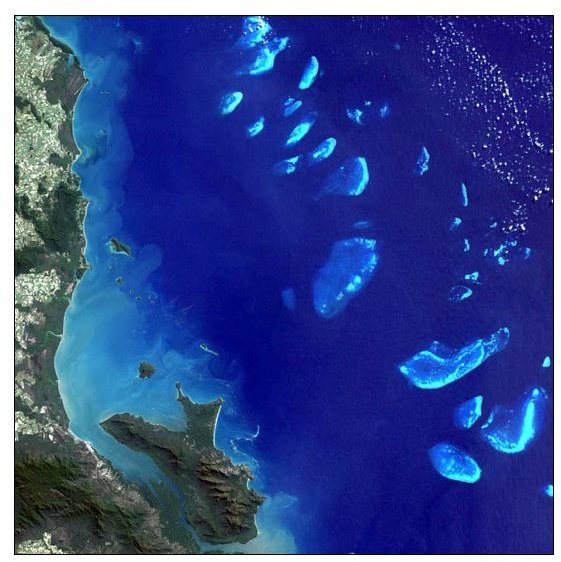
The Great Barrier Reef is an ocean ecosystem that can be seen from space. Estimated to have existed for 250 million years, the Great Barrier Reef and its multitude of marine life are immersed in a challenge that has the entire system on the brink of extinction. Coral reefs are living organism that support other life forms. Corals are animals, tiny polyps with individual genetic identity.
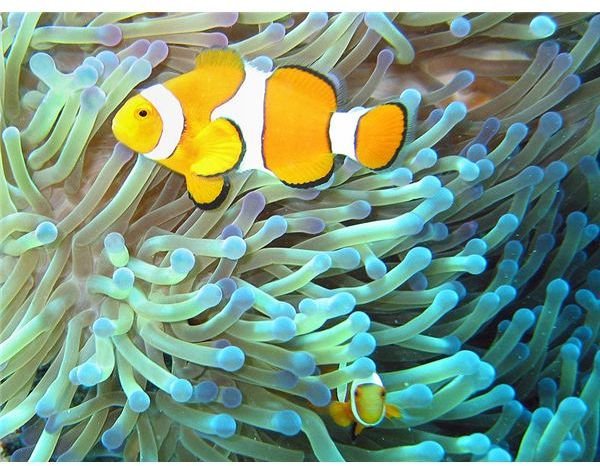
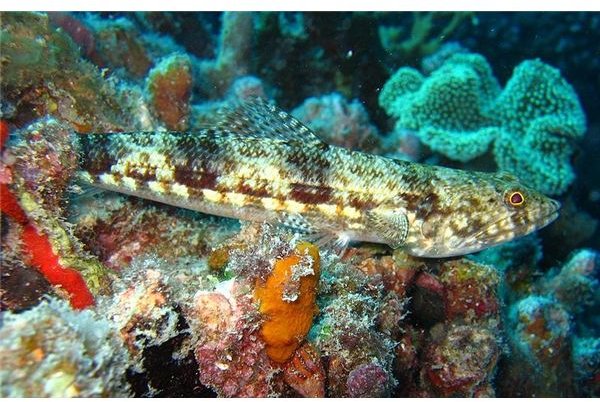
According to Daily Galaxy, corals defend, and kill and eat plankton. Corals secrete calcified deposits that are the basis of more coral reefs. The process takes enormous periods of time. A coral ecosystem can host over 4000 life forms. According to Daily Galaxy, the Great Barrier Reef is a complex ecosystem with more than 2900 reefs. According to National Geographic, the reef’s shallow coastal waters are the the tropical home to biodiversity rivaling the world’s tropical rainforests. But the world’s reefs, like the world’s rainforests, are declining. The Great Barrier Reef is not the only coral ecosystem endangered. All of the world’s coral reefs are struggling to survive. The Christian Science Monitor reported in early 2009 that growth of the coral in the Great Barrier Reef is slowing. Calcification, necessary for coral growth, is falling, according to a study published in the journal, Science (2009).

Global Warming and the Great Barrier Reef
Corals expel algae when under stress. This expulsion leads to coral bleaching, a phenomenon currently occurring in all of the planet’s coral ecosystems. National Geographic reports that bleaching occurs when ocean temperatures become abnormally high, are exposed to unhealthy levels of ultraviolet light, and experience changes in salt content (salinity). Daily Galaxy cites Australian Institute of Marine Science scientist, Charlie Veron. The former head scientist reported at a London conference that the Great Barrier Reef is experiencing such degradation from warming sea water that “it will be unrecognizable within 20 years.”
As if Veron’s prediction is not sufficiently dire, here is the bad news. The tipping point has passed. It is almost certain death for the Great Barrier Reef. Veron claims to have the support of “every coral reef scientist.” The reality could not be more grim. The Christian Science Monitor cites another scientist from the Australian Institute of Marine Science, Glenn De’ath: “The decline is severe, sudden, and is unprecedented in at least 400 years.” Dr. De’ath’s research team admits more research is necessary to pinpoint the specific causes of coral bleaching. However, the team maintains that warming oceans temperatures and acidification are at the top of the list.
Future
According to National Geographic, coral bleaching is not permanent if the cause of bleaching is reversed. Coral can return to its natural pink, which makes it possible to thrive and host marine life. If increased ocean salinity and warming oceans are caused by global climate change, coral’s future is, at best, uncertain. In case the reader thinks that this is a terrible situation, but is unrelated to human life, think again. The Great Barrier Reef is enormous. The rest of the world’s coral reefs are compromised in the same ways. Shell-forming marine life are threatened by the inhibited growth of coral reefs. Shell-forming marine life play essential roles in the marine life food chain. These are only on group of species threatened along with coral reefs.Human beings eat from the marine life food chain.
According to Monga Bay, degraded or ruined coral reefs will have global implications. (Note that scientists cannot state with certainty what the future holds for a world without coral reefs). Regions near reefs exist largely from some form of reliance upon coral reefs. Economic and food shortages could create “ecological refugees.” Coral reefs protect shorelines and coastal regions from erosion, the effects of hurricanes and other tropical weather systems. Coastal lands may become compromised if coral reefs die. While it may seems unrelated, every person can make an effort to save the Great Barrier Reef. Put pressure on local and national governments to implement radical changes to thwart global climate change. Educate and renovate. For ideas, see An Inconvenient Truth (online).
Resources
Life at the Edge: Great Barrier Reef Could Be World’s 1st Global Ecosystem to Collapse
Ocean Acidification, Global Warming, and the Great Barrier Reef
National Geographic Great Barrier Reef (Interactive)
