This article details the life of porcupines. It discusses what they eat, mating, habitat and behavior.
About the Species
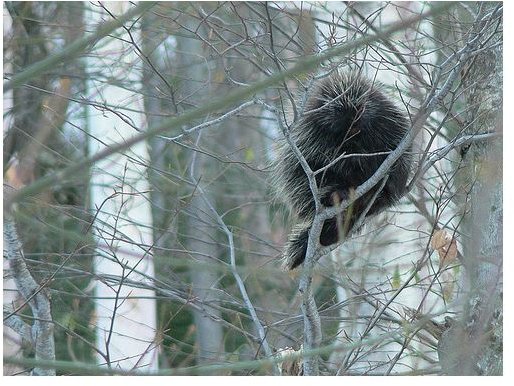
A porcupine is a rodent with fur that ranges from black in color to brown/yellow in color. They also have short legs that are very strong and hairless feet that allow it to climb trees. They also have small, round bodies and small heads.
Most people recognize porcupines by their quills, which are hairs that have barbed tips on the end. Porcupines can have up to 30,000 quills and these quills are longest on its backside and shortest on its cheeks with no quills on its stomach. The quills are used for defense in the wild. The porcupine will turn its back towards the predator, raise its quills and start lashing its tail. The quills that come in contact with another animal will embed themselves and if these quills hit an artery or other vital organ or area the animal may not survive. Porcupines are not naturally vicious and will only attack when they feel threatened.
Habitat & Diet
Porcupines are most often found in Canada as well as the western part of the United States down to Mexico. Other areas of the United States have porcupines as well and these areas include the New England states, Wisconsin, New York, Pennsylvania and Michigan. Most porcupines in Canada and select states in the U.S. live in areas that are deciduous, coniferous and in mixed forest areas. In the western area of the United States, porcupines usually live in scrubby areas.
Most porcupines are herbivores surviving on green plants such as clover and skunk cabbage and other things like twigs and leaves. During the winter, they may eat bark. Porcupines will often climb trees in search for food and they are typically nocturnal, but will occasionally hunt for food during the day.
Reproduction & Social Behavior
The porcupine mating season spans from late summer to early fall and male porcupines will often fight over females. It takes seven months for a female to give birth and when she does it is to a single baby. Baby porcupines are born with soft quills that will become hard about an hour after they are born and they will begin to find their own food after only a few days, but will stay with their mother for about six months after birth.
Porcupines are typically solitary in nature though they may share a den with other porcupines during the winter months. Their dens are typically caves or they may make their own dens in hollow trees or logs that are decaying. They do not hibernate during the winter, but they do usually avoid leaving their dens when the weather is bad. Porcupines spend a large amount of time in trees when the weather is nice, but they are also good swimmers and can sometimes be found in water.
Photo Credit
https://www.flickr.com/photos/dvs/58288557/