Effects of Wildfires on Human Health: Air Pollution Caused by Wildfires
Causes of wildfires
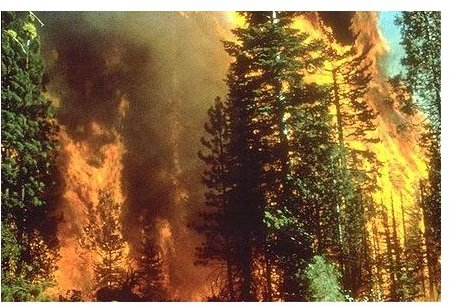
According to the USGS wildfires are a natural hazard that occurs when human development comes in close contact with native ecosystems. There is however nothing natural about the devastation caused by the November 2008 wildfires to Southern California. Not only were homes and livelihoods destroyed but looming in the smoke was another threat. Many species in an ecosystem depend on wildfires to improve the habitat, therefore land management agencies light fires to manage the balance. These are prescribed wildfires and are lit under controlled conditions. The rest of the devastating wildfires are either started by lightening (only 10 percent), while the remaining 90 percent are started by humans (Statistics from the National Oceanic and Atmospheric Administration (NOAA)). This was the case in the 2008 southern California wildfires.
Pollution from Fire is worse than Pollution Caused by Traffic
Homes can be rebuilt and ecosystem reestablished, but the wildfires leave an ominous cloud; the potential health threat of the encroaching smoke. During a fire event there is a significant increase in particulate matter. In a USGS study conducted in 2007 after the Grass Valley and Harris wildfires, the researchers found that the ash from the fire contained caustic alkali metals (arsenic, lead, zinc and copper) and the deposition of the alkali ash in ambient water grossly affected the water quality. In another study led by Constantinos Siotas, an air pollution specialist, the researchers analyzed in detail the particulate matter collected from the same wildfires. Sioutas and his research team from the University of Wisconsin-Madison and the National Institute of Health and the Environment of the Netherlands, found that potassium and levoglucosan which are used as biomarkers for biomass burning, were twice the normal amounts. They also noted elevated levels of water-soluble organic carbons (organic acids, inorganic ions and anhydrous sugars). The study concluded that there was a significant increase in particulate matter (PM) after a fire event when compared to PM from normal traffic pollution.
Human Health Effects of Wildfire Smoke
Burning brush contains many different chemicals but the chemicals that can have an adverse health effect are carbon monoxide, aldehyde gases and particulate matter (PM). PMs are the most worrisome since they can travel great distances away from the fire site unlike CO and other gases that are only found in close proximity to the fire. Larger PMs that are 5 to 10 microns in size are deposited in the upper respiratory tract whilst the smaller PMs that are 2.5 microns travel deeper into the respiratory system. These PMs settle in the alveoli where the body is incapable of removing them. People with compromised respiratory systems such as the young, elderly, and people with lung diseases are particularly at risk of having their condition exuberated. Initial exposure symptoms from inhaling small PMs include headaches, dizziness, nausea and shortness of breath, with irritation in the eyes and in the throat. PMs from wildfires are usually the smaller particles 2-5 microns. The findings of the Siotas’s study are key in handling public health during a wildfire event. According to Sioutas, staying indoors may not be enough protection from the PM, as the fire’s PMs are small enough to penetrate indoors. He recommends staying in location that has an air condition which recycles air versus drawing air from the outside.
