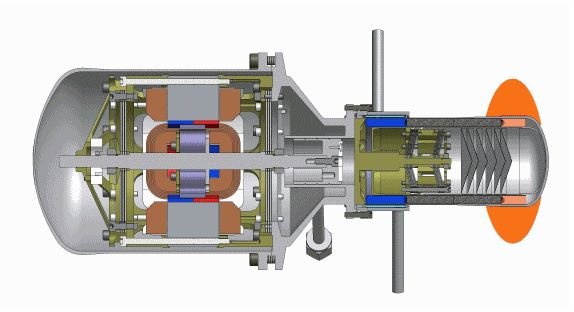
Can solar energy be tapped in an amount so as to run a mechanical engine? Infinia Corporation has built one such solar generator that not only runs on solar energy, but also provides high efficiency.
Introduction
Solar energy has been used in variety of applications. However, the range of power acquired from it has always been a matter of incertitude. There are many appliances present in the market for harnessing solar energy, but hardly any of them have been able to get the maximum energy out of the sun’s rays.
For this reason, Infinia Corp. has invented a solar generator that uses the energy from the sun to run a mechanical engine for extracting the maximum energy from the sun. Stirling generators, as these engines are known, provide green energy and are zero maintenance engines without the requirement of any lubrication. These free piston engines convert the thermal energy of the sun into usable electric energy.
Stirling Engines
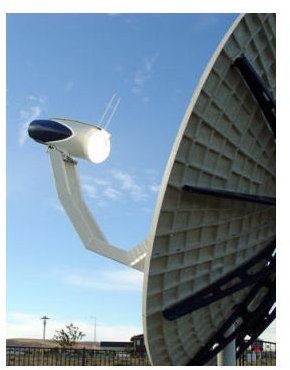
The arrangement of Stirling engines consists of a parabolic dish, similar in shape to a satellite TV antenna, which focuses the sun’s energy into the engine, which then works on the principle of the sterling cycle. The sterling cycle consists of helium as a working fluid. It is kept enclosed in a closed cylinder with a free piston. The arrangement is such that the solar energy is focused on one end of the cylinder that is filled with helium. The piston inside the cylinder moves when helium gets heated from sun’s rays and expands to generate pressure waves that push the piston forward. Helium cools down after compression, and the piston returns to its original position. This compression and expansion process of helium provides a continuous piston movement. The piston is then connected to a generator to convert the mechanical energy into electrical. The generator is usually a linear alternator which helps in reducing the number of moving parts and linkages that are required in a conventional generator arrangement. Moreover, the gas bearings provide a non-contact frictionless surface for the piston, thus eliminating the need of maintenance.
Moreover, the same system can also be used in a reverse way. The generator can be used as a motor that drives the piston. When used in the reverse way, the helium expands on the opposite end of the cylinder and the rest of the process takes place in same manner. However in this cycle, the expansion and contraction of the fluid gives rise to a cooling effect. Thus this system is known as Stirling cooler.
Main feature
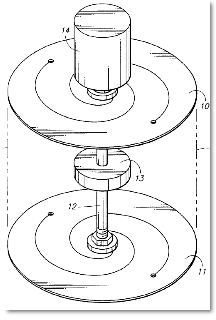
The main aspect of Stirling generators is the flex-spring technology, an integral part of the sterling generator. The flex spring technology consists of a stack of flexible rings having holes at the periphery. The rings are fixed at the edges and have holes at the center where the piston can be accommodated. When the piston moves as a result of the compression and expansion of fluid, the rings flex by few millimeters in both the directions. Thus the rings provide perfect flexibility and support for the movement of free piston without creating any obstruction.
Apart from this, the arrangement also consists of an alternator and inverter, also without any moving parts. Moreover, the materials used for constructing the system are environmentally friendly and do not create any kind of pollution. It is also proposed that the engine creates twice the energy in one-third of the space required by a conventional photovoltaic arrangement. Thus, because of characteristics such as simple arrangement, fewer parts, zero maintenance and absolutely environmentally friendly, the Stirling engines are sure to be the best solar energy tapping devices ever built.