What are Solar Thermal Power Plants?
Concept of Solar Thermal Power Plants
Thermal power plants using coal as the fuel are used to generate large amounts of electricity fulfilling the needs of entire city and even the state. Very few people know that large amounts of power can be generated from solar energy also. Solar thermal power plants can generate power that can fulfill the needs of thousands of homes during any time of day and year.
The principle of working solar thermal plants is the same as conventional thermal power plants; only the fuel used to generate steam from water is different. In a conventional power plant fuel like coal is used to convert water to steam, in a solar thermal power plant, solar energy, a form of renewable energy, serves this purpose.
In the US there is a solar thermal power plant having the installed capacity that can fulfill the needs of almost 3, 50,000 people, which is almost equal to the power produced by 2.3 million barrels of oil annually. The plant is located in California’s Mojave Desert, where sunlight is available abundantly. There is another solar thermal power plant located in California which is a prototype generating 10MW power for commercial purposes.
Solar Thermal Power Plant Technologies
Three types of technologies are used in solar thermal power plants:
-
Solar thermal plants using parabolic trough: In these solar thermal plants a parabolic trough is installed. It consists of the long array of curved mirrors that form the trough and focus the sun’s rays on pipe through which the fluid, usually water, flows. Due to focused sunrays the fluid gets heated and its steam is formed. The steam flows through the conventional generators to produce electricity. The solar thermal plants using parabolic troughs are the most commercialized of the lot. As per the estimates, at present there is more 350MW of produced by the parabolic trough plants in California.
-
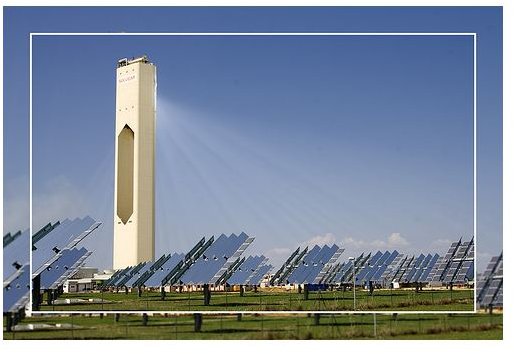
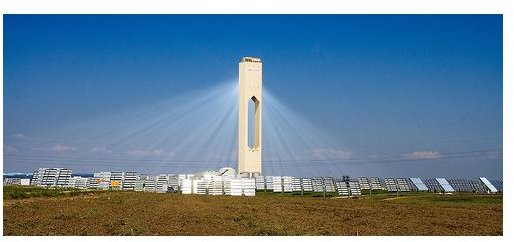
Solar Power Towers: The Solar Power One was the first project in US that began in 1982 aimed at producing electricity from solar energy on a large scale basis. In the solar power tower a field of mirrors is used to reflect the solar energy towards the central tower in which there is a fluid, usually water. The fluid gets heated and converted into steam, which turns the turbine as is done in conventional power plants.
See figure: Solucar PS10, the first solar thermal power plant based on tower in the world that generate electricity in a commercial way.
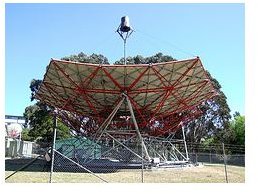
- Solar thermal power plants using solar parabolic dish: The parabolic solar dish comprises of the parabolic shaped concentrator that has a similar shape to a satellite dish. The reflectors are installed on their inner surfaces that reflect the solar energy at the focal point at the center where the receiver is mounted. In the receiver the heat engine is installed that generates the electricity.
The only problem with solar thermal power plants is that they can produce electricity only during daytime and when the skies are clear. Some of the solar thermal power plants are based on hybrid technology. During daytime and clear sky days sunrays are used to heat water and generate steam. During night time and cloudy sky days natural gas is used to boil the water so that non-stop electricity is generated.
Solar Power Tower and Parabola