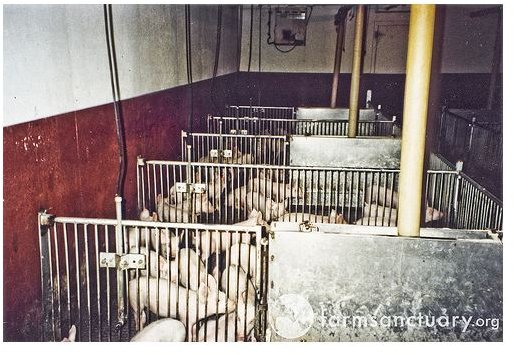
The non-therapeutic use of antibiotics in farm animals has been an almost universal practice in industry farms since the 1940s to promote growth and feed efficiency. Controversial legislation has been proposed to ban antibiotic use in healthy animals. This article offers both sides of the arguments.
The subject of prophylactic antibiotic use in farm animals is one in which there are supported and learned arguments on both sides, for and against the practice among factory farm, non-organic producers. The discussion has reached an increased pitch in the United States of late due to proposed legislation that threatens to ban the use of non-therapeutic antibiotics in farm animals such has been done in the European Union and Canada. This article will present arguments from both sides, the reasons for the proposed ban and the arguments for the continued practice, for a more comprehensive look at this important public health issue.
Proposed U.S. Legislation and Current FDA Draft Guidance
In March, 2009, the late Senator Edward Kennedy (D-MA) and Senator Olympia Snowe (R-ME) introduced to the Senate the Preservation of Antibiotics for Medical Treatment Act (PAMTA), H.R. 1549/S 619 that would eliminate the use of non-therapeutic, medically important antibiotic drugs in livestock production. The bill was introduced to Congress by Representative Louise McIntosh Slaughter, and has been sponsored by 118 House Democrats as of July, 2010.
H.R. 1549/S 619 is considered to be important due to the increasing risks of antibiotic resistant bacteria to human health. FDA approval of the use of prophylactic, or preventative, use of antibiotics would be withdrawn without a reasonable certainty that its use will not contribute to antibiotic resistance with subsequent harm to human health. It does not restrict the therapeutic use of any antibiotics for the treatment of sick animals under veterinary supervision and it is limited in scope to classes of drugs used in human treatments of disease that include penicillin, sulfonamides, and tetracyclines. Non-therapeutic use is defined as the administration of antibiotics in the absence of disease for the purposes of weight gain, growth promotion, feed efficiency, or routine disease prevention.
On June 28, 2010, the FDA issued a guidance draft to farmers to voluntarily cease the use of non-therapeutic antibiotic use for poultry, cattle, hogs, and other livestock. FDA principal deputy commissioner, Joshua M. Sharfstein cited this call for voluntary compliance as a first step to address this “urgent public health issue,” further stating that new regulations, legally within the scope of the FDA, would be issued should the industry not respond voluntarily.
FDA attempts to limit agricultural non-therapeutic antibiotic use since 1977 have been met with successful opposition from farm lobby and drug industry efforts. This latest attempt at voluntary compliance has been criticized by both farming interests and public health groups. Industry representatives that include the National Cattlemen’s Beef Association and the National Pork Council state the need for additional evidence demonstrating that current antibiotic uses in livestock production are contributing to antibiotic resistance issues in humans. Public health and environmental groups argue that the voluntary guidance to industry doesn’t go far enough.
Arguments Supporting the Ban
Antibiotics are the “miracle drugs” of modern medicine that are taken for granted by most in this age due their ready availability and ability to cure many of the diseases that were once fatal. The widespread, indiscriminate use of these drugs, however, has resulted in bacterial strains that have evolved resistance to them, creating a global “public health problem of potentially crisis proportions,” according to a 1995 study by the American Medical Association.
The mechanism for the creation of antibiotic resistant bacteria is well understood. Simply put, a person or animal infected with a pathogen is treated with an antimicrobial agent. Most of the bacteria are destroyed, allowing the person or animal to survive. Some of the bacteria also survive, immune to that particular drug, allowing them to reproduce offspring that are likewise immune, or resistant to successful treatment with that particular antibiotic.
When that strain of bacteria infects others, the patients will not respond successfully to treatment with the antibiotic that was previously used, since that strain is now immune to the effects. A different antibiotic is chosen for a successful outcome. It kills most of the bacteria, leaving behind bacteria that become resistant to that antibiotic, producing a strain of bacteria that is now resistant to both of the antibiotics. In time, bacterial strains develop that are resistant to treatment from many known antibiotics, such as currently seen in tuberculosis (TB) in which strains that are resistant to as many as nine antibiotics are being observed.
Many antibiotic resistant bacterial strains dangerous to humans are created in hospital environments and from the overprescribing of antibiotics to humans, often for viral infections such as colds or flu for which antibiotics are ineffective. There is also supported alarm for the practice of the routine overuse of antibiotics in livestock and fish, used for purposes other than treating disease, which may account for some 70 percent of all antibiotic use in the United States. Since the drug data collected by the FDA comes only from manufacturers and not from users, the exact quantity used in agricultural applications is not known, so it is not available for study.
Low doses of antimicrobial agents are added routinely to feed and water of healthy livestock to enhance feed efficiency, promote faster and increased growth, and to prevent infectious diseases. Scientific experiments have demonstrated that chronic exposure to low doses of broad-spectrum antibiotics quickly leads to resistant bacterial strains in the host animals treated. Moreover, these strains spread to others of their species in the environment as well as humans working on the farms. When antibiotic supplementation is stopped, there is a demonstrable decrease in resistance among the populations.
Arguments Supporting the Proposed Ban, cont.
There is evidence that overuse of antibiotics in farm animals is resulting in antibiotic resistant bacteria having deleterious effects on human health. The Centers for Disease Control (CDC) reports on a drug resistant Salmonella subtype, S. Typhimurium, that has been present in the United Kingdom since 1984. Associated with severe illness in humans, U.K. studies show the presence of these antibiotic resistant bacteria in farm animals and pets that are transmitted to humans both directly and from the consumption of poultry, beef, and pork. This bacterial strain has been found in the U.S. recently, with the threat to public health being assessed.
The American Academy of Pediatricians (AAP) supports the arguments that the addition of antibiotics to livestock feed and water in low doses over a prolonged period of time contributes to human health dangers. Resistant pathogens are disseminated through the food chain as well as through environmental reservoirs of water and soil. There is also a direct human pathway through farm workers and their families. The AAP report cites evidence linking resistance of two major foodborne pathogenic species, Salmonella and Campylobacter, and the Enterococcus opportunistic pathogen, to the agricultural overuse of antibiotics.
The April 2008 Pew Commission on Industrial Farm Animal Production recommends increased regulation, enforcement, and monitoring of the use of antibiotics in large-scale livestock operations, along with veterinary oversight that is not currently required. The commission cites added health care costs of $17 – $26 billion per year due to increased resistance that results in more severe and long-lasting infections that are difficult to treat as well as increased deaths.
Drug-resistant infections result in the deaths of many thousands of people every year. They are particularly deadly to the most vulnerable, including children, elderly, and those with weakened immune systems, such as cancer patients undergoing chemotherapy and those with HIV/AIDS. According to the CDC, there are 76 million cases of foodborne illnesses in the U.S. with 5,000 deaths each year. Existing evidence has been strong enough for the CDC to conclude that the dominant source of antibiotic resistance in foodborne pathogens is the routine overuse of antibiotics in food animals.
Additionally, the World Health Organization, the Union of Concerned Scientists, the Animal Welfare Association, the American Medical Association, Centers for Disease Control, FDA, and FDA’s Center for Veterinary Medicine, have as a matter of policy concluded that the continued, routine use of antibiotics in farm animals for non-therapeutic purposes is unsafe for the public’s health. They join over 350 health, environmental, and consumer organizations in the U.S. in support of the proposed PAMTA legislation.
Arguments for the Benefits of Using Growth Promoting Antibiotics in Farm Animals
In the 1940s it was discovered that antimicrobial drugs fed to livestock resulted in a measurable benefit to growth promotion and production. The mechanism for exactly why this happens is still largely unknown. It is believed to be the result of influence on bacteria present in the animal gut, allowing the animal to achieve its natural growth potential, since germ-free animals exhibit no such growth response when given antibiotic supplements. During the subsequent 50 years, supplementing the diets of livestock and fish with low-dose antibiotics has become an essentially universal practice. This enables producers to grow larger animals with increased feed efficiency, meaning growing larger animals with less food due to the animals’ increased efficiency in digesting feed and metabolizing nutrients.
The routine use of antibiotic feed additives is also a preventative measure to reduce disease outbreaks. With livestock being raised in close environments, infectious diseases can spread quickly through the populations. Prophylactic antibiotic use decreases death and disease among animals and reduces the potential for these infections to spread to humans through direct contact, consumption of contaminated food, or environmental proliferation of pathogens. Called “zooinotic infections,” life-threatening pathogens can be transmitted to humans from animals resulting in infection. Examples of zooinotic infections include leptospirosis, tuberculosis, toxoplasmosis, salmonellosis, brucellosis, and E. coli, among many others. It is believed by some that the preventative use of antibiotics in farm animals has a direct human health benefit that is greater than the risk of the development of antibiotic resistant pathogens.
Studies show that antibiotic drug therapy is effective in reducing the magnitude of septicemic salmonellosis in pigs and reducing the duration of the shedding of pathogens. Without treatment, the increased shedding infects other healthy animals. This increases the risk of contamination through the food chain at slaughter. Therapeutic antibiotic use effectively reduces the spread of zoonotic infections in cattle, such as leptospirosis, that can spread through milk and water, creating disease risks for humans. Other food borne pathogens associated with contaminated meat products, including Campylobacter fetus,Streptococcus suis, and E.coli, are demonstrably reduced by antibiotic drug therapy for infected livestock. The benefits of the therapeutic use of antibiotics in farm animals are unquestioned.
Arguments for the Benefits of Growth Promoting Antibiotic Use, cont.
The animal production industry argues that low-dose, subtherapeutic use of antibiotics improves both animal health and economic productivity. Studies show an increase of 1 to 15 percent in feed efficiency and performance in such measurable factors as growth and egg production in animals where feed is supplemented with low dose antibiotics over animals that do not receive supplementation. The variations in response are influenced by stress, diet, cleanliness of pens, stocking rates, and the duration of the use of the drugs.
Surveys at slaughter of pigs and cattle have shown that those routinely treated with antibiotic feed supplementation show a decrease in health problems. Subclinical issues, or health issues not visually apparent in animals and thus not treated therapeutically, result in rejection at slaughter, costing the industry millions of dollars. As an example, the Council for Agricultural Science and Technology reported in its 1981 summary that the use of antibiotics in cattle feed significantly reduced the incidence of liver abcesses, lowering the weight of these cattle as compared to the weight of cattle without such abcesses.
In the 2004 review of published data by the British Society for Antimicrobial Chemotherapy, it was concluded that the banning of the use of growth-promoting antibiotics will not result in beneficial effects on human health and may, indeed, result in adverse effects of increased human zooinotic infection. The authors argue that risk analyses are largely unsupported due to the lack of data. Noting that drug-resistant salmonellae and campylobacters do add to human incidences of disease, the case cannot be made that the drug-resistance is a result of the use of antibiotics in farm animals since the same antibiotics are used in humans and can be equally implicated in the rise of resistant bacteria.
The American Veterinary Medical Association also opposes the proposed legislation, arguing that banning non-therapeutic antibiotics would result in increased animal disease and death without proof of benefit to human health. The AVMA position states that this broad-based ban is not risk-based and would harm efforts of disease prevention. Currently, there are multiple levels of protections, including FDA approval requirements and public and private monitoring of the emergence of resistant bacteria, to ensure the health of livestock while protecting human health.
Conclusion
The learned arguments both in support and in opposition to the proposed legislation have merits that should be strongly considered based on a solidly scientific approach to the issue, with considerations both for human and animal health and welfare. It is agreed upon by those on both sides of the issue that judicious use of antibiotics is necessary to ensure the effectiveness of available drugs by reducing the risks of antibiotic resistant bacteria. This problem is not being dismissed by those who oppose the ban.
What needs to be noted in this discussion, however, is that the premise for the need of non-therapeutic antibiotic use is based on current agricultural practices of animal production in which animals are subjected to the stresses of overcrowding and inadequate sanitation. It is without question that the subtherapeutic use of antibiotics offers economic benefits to producers in order to allow these practices to continue without change.
Studies have shown that improved livestock management, including thorough cleaning of facilities and pasture management, achieves the same results without the need for antibiotic supplementation. This is evidenced by the fact, noted earlier, that such supplementation does not have any effect on the growth of healthy animals, but does have significant effect on the growth of animals in highly stressed, overcrowded environments that exacerbate the spread of pathogens.
Organically raised animals and those with Animal Welfare Approved certification are humanely raised and healthy, managed without the need for non-therapeutic antibiotics. Herd health is maintained through vaccination, hygiene, outdoor access, reduced stress that weakens animal immune systems, and therapeutic antibiotic treatment only when diagnosed with illness. This clearly demonstrates that antibiotic use for growth purposes is unjustified except for the purposes of continuing unhealthy factory farm practices.
Organic meat products and animal products such as organic milk and organic eggs do at present cost more due to higher production costs and lack of availability with respect to increasing demand. The passage of the proposed legislation would increase the prices on consumers of currently non-organic products from an estimated $5 to $40 per person per year, according to the report in the Oxford Journal, with negligible impact on increased cropland demand. This appears to be minimal in cost considering the impact of increased risk of emergent drug resistant bacteria. Passage of the legislation would also demand more humane and healthy husbandry practices on the part of producers, eliminating overcrowded and unsanitary conditions if they want to stay in business.
References
“Industrial Animal Farms and Antibiotic Resistance ,” The PEW Charitable Trusts, February 2010.
Lindsey Layton, “FDA seeks less use of antibiotics in animals to keep them effective for humans ,” The Washington Post, June 29, 2010.
Jorn Sonderholm, “Use of antibiotics in food animals ,” Center for Global Development, Independent research & practical ideas for global prosperity, June 30, 2008.
“Food-Animal Production Practices and Drug Use ”, 1999 National Academies Press, Advisers to the Nation on Science, Engineering and Medicine Center for Global Development, Independent research & practical ideas for global prosperity.
Preservation of Antibiotics for Medical Treatment Act H.R. 1549/S.619, “Protect Animal and Human Health by Ending the Excessive Use of Antibiotics in Agriculture ,” Animal Welfare Institute.
Kathrine M. Shea, MD, MPH Committee on Environmental Health, Committee on Infectious Diseases, “Nontherapeutic Use of Antimicrobial Agents in Animal Agriculture: Implications for Pediatrics ,” American Academy of Pediatrics.
“FAQ about Antibiotics ,” Centers for Disease Control, Department of Health and Human Services, National Antimicrobial Resistance Monitoring System (NARMS).
Congressional Legislation , American Veterinary Medical Association, AVMA-CAN Government Action Center.
“Does the use of antibiotics in food animals pose a risk to human health? A critical review of published data ,” Journal of Antimicrobial Chemotherapy, 2004.
“Preservation of Antibiotics for Medical Treatment Ac t,” Union of Concerned Scientists, Citizens and Scientists for Environmental Solutions.
“Prescription for Trouble: Using Antibiotics to Fatten Livestock ”, Union of Concerned Scientists, Citizens and Scientists for Environmental Solutions.
Photo attribution: “Pigs in Metal Pens ” by Farm Sanctuary , from Flickr.