The word “recycled” brings to mind visions of conservation, ecology, and saving the world, but is that word really ecologically friendly when it’s put on a product like recycled rubber edging and mulch? Experts say that recycled rubber may not be healthy for our yards or our families.
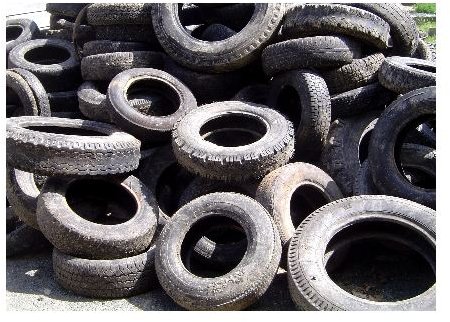
Millions of tires are disposed of every year, so recyclers are always looking for ways to reuse them. The latest, but not necessarily the greatest, method of recycling old tires is recycled rubber mulch products. Recycled tires are sold as loose, spreadable rubber mulch pellets and rubber mulch lawn edging and tree rings.
Purported Benefits of Recycled Rubber Edging and Mulch
At first glance, recycled rubber lawn edging and mulch looks like it would be the perfect solution to the mountains of used tires being disposed of every day. The benefits touted by the industry are:
- Doesn’t float away, blow away,or sink into the ground
- Doesn’t decay, lasts many years
- Doesn’t smell, mat or mold
- Doesn’t feed house insects
- Impedes weed growth while allowing water and nutrients to permeate
- Improves landscaping
- Safe for flowers, plants and pets; doesn’t burn plants
- Saves time, money and your back
- Twice the cushioning effect on playgrounds, safe for children
- Cost effective
The Truth About These Claims
Rubber mulch does decay, and the bacteria that break it down also release the toxic chemicals found in the rubber into the ecosystem.
The toxic chemicals in the tires kill beneficial predatory insects that would normally control pests. It also kills beneficial microbes that prevent disease and kill harmful insects.
Most users have found that when it grows hot, rubber mulch emits a strong stench. Toxic gasses are released such as VOC’s and PAH’s that not only irritate nasal and respiratory passages, but have been found to cause such maladies as central nervous system damage, dermatitis, depression, kidney damage, headaches, eye damage, dizziness and nausea. Ground rubber products should never be used in enclosed areas, or indoors.
Mold is regularly found on tires used in the construction of boat docks and piers, as well as those used as planters. Mold and mildew with grow on almost any moist surface that isn’t toxic enough to kill them.
Water will run through the recycled rubber mulch, but the chemicals it carries with it kill everything beneficial underneath it. Earthworms cannot survive without decomposing organic matter, so the soil structure they create and support, along with the microbes in it, will disappear, creating anaerobic soil (without oxygen). Every serious gardener knows that lack of soil oxygen is a perfect environment for root rot pathogens.
Studies and Research on Recycled Rubber Lawn Edging and Mulch
Research at Texas A&M University found that due to the biological properties and microorganisms found in bark mulch, recycled rubber mulch provides no meaningfully better erosion protection.
Studies found that recycled rubber mulch and edging was less effective in controlling weeds than raw wood chips, straw, and other fibers; in fact, sawdust performed better.
The fact is that several studies have shown that rubber tire mulch kills many species of desirable as well as undesirable plants, due to metal toxicity and heat buildup.
Research has discovered that recycled rubber mulch absorbs chemicals from fertilizers and pesticides, thus reducing their effectiveness. Nutrients cannot reach hungry plant roots.
Once the soil is impacted by the death of all organic life underneath the mulch, the water cannot penetrate and will runoff into water systems to be carried into the water supply. Studies at Bucknell University found that this leachate is capable of killing entire aquatic communities of fish, algae, snails, and plankton. Reproductive problems and precancerous lesions were detected even at low levels of concentration. Marine life is also damaged buy these chemicals, ranging from plankton to seaweed.
Toxic Minerals in Recycled Rubber Mulch
The chemicals used to produce tires are zinc, cadmium, sulfur, chromium, selenium, aluminum, molybdenum, copper, manganese and iron. Recycled rubber lawn edging and mulch contain extremely high levels of zinc. Plants grown in rubber mulch have been shown to accumulate enough zinc in their systems to kill them. USDA research warns against the use of ground rubber on any garden soil, agricultural soil, compost, or potting media. Still, some companies are using tire chips and crumbs as a bulking agent for compost (no wonder it doesn’t work!).
Long term exposure to these leachates can lead to cancer and genetic mutation. Research shows that the toxicity of the leachates increases as the rubber mulch breaks down.
Is Using Recycled Rubber Edging and Mulch Worth the Risk?
Is the long life, designer colors, or saved time and money worth the health of your yard, your family, your animals, or our environment as a whole?
Knowing what you now know, will you be using rubber mulch or letting your children play in playgrounds that use it? Many people are saying no. The choice is up to you.
Sources: Nature’s Way Resources: Rubber Mulch - Beware (PDF)
Photo Credit: funny_p / sxc.hu