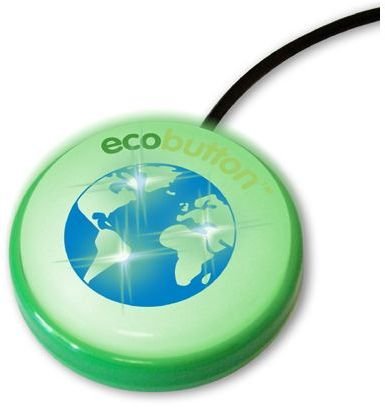
Help save the environment by purchasing the ecobutton! But wait! That’s not all! Whenever you leave your computer, simply press the ecobutton and, just like magic, your computer instantly goes into “ecomode”, saving you money and energy. Hold up! Just like a bad infomercial, not all is as it seems.
What is an ecobutton?
The ecobutton is an “environmentally-friendly” button that plugs into the USB port of your computer. When you leave your computer for any length of time, say, to go to the washroom, answer the phone, or attend a meeting, simply press the ecobutton and your machine will go into “ecomode” – the company’s frilly marketing term for “sleep” or “power saving mode”. The company boasts that the ecobutton not only serves as a visual reminder to power down your machine when not in use, you can also save money, energy and the environment by using their product.
Sound good? Here’s why you’re better off saving your money and leaving the purchase of the ecobutton to, well, sad individuals who don’t know any better.
The initial cost of the ecobutton
The cost of the ecobutton is £14.99 plus shipping and handling. Converted to USD, that’s roughly $22.73 (after shipping, it’ll cost about $27.18 USD). The company’s website claims you can save about £50 a year – per computer - by using the ecobutton. Okay, sounds good so far; that’s about a £35 savings in electricity in 12 months, after you consider the initial cost.
The ecobutton’s long term cost for you and the environment
Now, I have to wonder how much the ecobutton will cost the average user and the environment.
1. When your computer is put into “ecomode”, the ecobutton software kicks in, recording how much power, money and carbon you’ve saved by clicking the ecobutton. The manufacturer claims that ecobutton’s “ecomode” uses less energy than ordinary sleep or hibernation mode. While I don’t see how this could be correct, I do not have an ecobutton and so could not put the claim to the test.
2. The ecobutton has an “eye-catchy” design to serve as a reminder to put your computer into “ecomode” whenever it’s not in use. How does the ecobutton manage to stand out? It’s constantly illuminated - and that means unnecessary energy consumption.
3. The ecobutton folks encourage you to use their product, no matter how long you’ll be away from your computer, so that includes 60 second bathroom breaks. Now, I’m not claiming to be an expert, but I have to wonder how much energy it takes to click the ecobutton to send your computer into “ecomode” and then a minute later, power your computer back up. Would I not maybe be better off leaving my computer for such a short period of time?
4. The ecobutton’s website, though seemingly informative, uses Flash on nearly every page. For a company that paints the picture of how every little bit counts towards making a difference, don’t you think they’d take the environment into consideration when designing their website? Flash increases your computer’s energy consumption and though the consumption is small per computer, think of what it adds up to with each person who visits the site.
5. Product manufacturing, packaging and transportation are, as you probably know, bad for the environment. The packaging will end up in landfills and the creation and transportation of products means CO2 emissions and fuel consumptions.
The ecobutton alternative
If you want to make a difference, reduce your carbon footprint and save money on your energy bill, there are more effective methods you can follow:
-
Educate yourself on how much energy your computer uses .
-
Learn how to set your computer’s power saving options .
Advertisement -
Reduce energy usage with power management settings .
-
Reduce phantom energy consumption .
Advertisement -
Use a green search engine .
…and, of course, get into the habit of turning your computer and monitor off when you aren’t using it.
Sure, the ecobutton looks cool and does a good job at advertising to your friends and co-workers that you are environmentally-friendly, but a more cost-effective, eco-friendly method would be to follow the advice provided above, make a t-shirt that says “Save Our Planet” and, if you must have a shiny cool thing on your desktop, stick an energy-saving light bulb up your rubber chicken’s butt instead.
If anyone from ecobutton reads this article, I welcome any comments you have!
The Bottom Line
Not every product that claims to be environmentally-friendly really is. For some companies, being seen to be green is simply a marketing tactic. Yup, there are indeed some great green products on the market, but you need to choose carefully.