Who Makes the Best HDMI Cable? Monster HDMI Cables vs. Generic HDMI Cables
A Monster Price
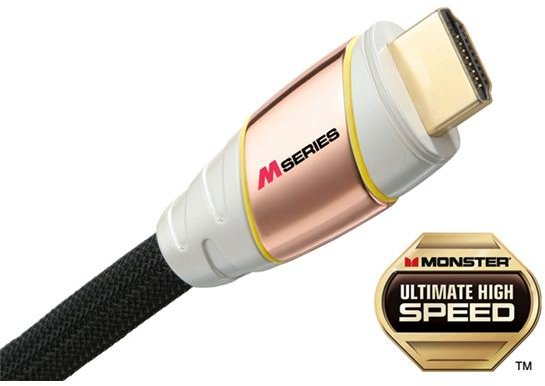
Walk into a major retailer like Best Buy or Fry’s and it’s easy to take away the impression that HDMI cables are expensive luxury products meant only for those who can afford a $1500 dollar HDTV. The description of the typical Monster cable includes such expensive sounding features as 24k gold-plated connectors and low-loss nitrogen gas-injected dielectric. These premium products cost as much as $100 dollars for a 6 foot length of HDMI cable.
On the other hand, there are online retailers who sell HDMI cables for prices that seem criminally low. The cables sold online have less features listed, but they also cost as little as $4 dollars for a 6 foot length. That means online retailers can sell you the same amount of HDMI cable for 96 percent off the price that would be paid to the brick-and-mortar store. So, which cable is the best? Does the premium price net the premium product?
What Matters In HDMI Cables What Matters In HDMI Cables
While 24k gold-plated connectors and nitrogen gas injection sounds fancy, they’re not what is important about an HDMI cable. What is important is how the cable stands up to the specifications set down for HDMI.
The most important specification of an HDMI cable is the version of the HDMI specifications it adheres to. Currently, the latest HDMI specification is HDMI 1.3c. However, 1.3 was a major revision, and as long as an HDMI cable meets the HDMI 1.3 specifications it will be far more than adequate for use. HDMI 1.3 introduced features like Deep Color and xvYCC. While it is not technically necessary to have all of these features in order for a display to function, HDMI 1.3 cables can be had for low prices, so there is no reason not to purchase it.
The connector is also important. The most common connection types are Type A and Type B. Type A, which has 19 pins, is the most typical and the one that should be purchased in most situations. Type B connections with 29 pins are sometimes sold as a premium product, and while they do offer a higher bandwidth, it is not needed at resolutions of 1080p or lower.
Finally, make sure that any HDMI cable purchased is a Category 2 or “Cat 2” cable. These cables are tested to carry the bandwidth of resolution 1080p and lower. A Category 1 cable, should one be found, is most likely a true sub-standard product and may not function properly.
Monster Vs. Generic: Specifications Compared
Now that we have a better idea of the specifications that matter, let’s compare the Monster cable to a Generic brand cable from Monoprice.com. In this comparison, we will put the HDMI 800hd Advanced High Speed HDMI Cable from Monster Cable against a generic High Speed HDMI cable.
First, let’s look at bandwidth. Right away, we’re hit by a surprise. Monster does not make claims about its products in terms of how it meets certain standards, but it does make claims about the products capabilities. Right away, we see that the Monster cable claims bandwidth greater than 6.68 Gbps. The bandwidth of a Cat 2 cable should be 10.2 Gbps. Monster’s wording makes it sound as if the cable could be capable of 10.2 Gbps, but they are only officially claiming 6.68 Gbps. In any case, it appears the generic brand cable has a better bandwidth capacity than the Monster cable.
In terms of the HDMI specification used, both seem to be using at least 1.3. The Monoprice cable states it is a 1.3a cable and the Monster cable advertises features only available with the HDMI 1.3 specifications. The connectors also appear the same - both are using Type A HDMI connections.
But what of the features Monster boasts of, such as nitrogen injection and high-density triple layer shielding? To put it bluntly, those features are marketing voodoo. Experience with traditional TVs tells us that connection quality is a big deal. After all, a loose cable to the back of an older television can make a picture unwatchable, and the marketing of Monster capitalizes on this. What Monster fails to say is that HDMI is a digital connection. A digital connection is not subject to interference in the same way as an old-fashioned, analog coax cable wire.
And The Best HDMI Cable is…
At best, the Monster Cable is only as good as the generic brand product. It would be unfair to act as if the Monster cable will be of poor quality, as it almost certainly won’t be. Monster takes pride in its brand name and it would not be able to market a premium level product at any price if the product did not work as the consumer expected.
That said, the verdict is obvious and is based entirely on price. The generic cable is just as good if not better than the Monster cable, but it can be had for only $4 dollars. Considering that both products should offer the exact same picture quality, the choice is clear.
For an alternative viewpoint read - Do Expensive Monster HDMI Cables Work Better Than Cheap Generic HDMI Cables?
References
Author experience
CNET: Quick Guide to HDMI Cables
Images are from Monster press materials
