BitDefender Antivirus 2009 Review
Overview and Features
BitDefender Antivirus 2009 isn’t just an antivirus program. In addition to antivirus scanning, BitDefender offers the following features:
- Heuristic and definition based virus and spyware detection and removal
- Real time scanning of web, e-mail and instant messaging traffic with browser plug-in
- Block attempted identity theft by restricting or blocking registry changes, running scripts or cookies
- Encrypts Yahoo Messenger and Windows Live Messenger traffic
- Monitors for Operating System vulnerabilities, risky system configuration settings (such as a weak Administrator password) and out of date 3rd party software
- Home Network option to manage other computers on your network with BitDefender Antivirus
Although BitDefender Antivirus is BitDefender’s lower priced product (behind BitDefender Internet Security and BitDefender Total Security), it still offers a good mix of the basic necessities of an Antivirus program with some additional niceties such as the web plug-in and vulnerability monitoring.
Installation and Performance
Installation is pretty painless – following the on screen prompts and a reboot, BitDefender will start a configuration wizard asking if you want to start in a basic or advanced user interface and whether it should perform an update and initial scan.
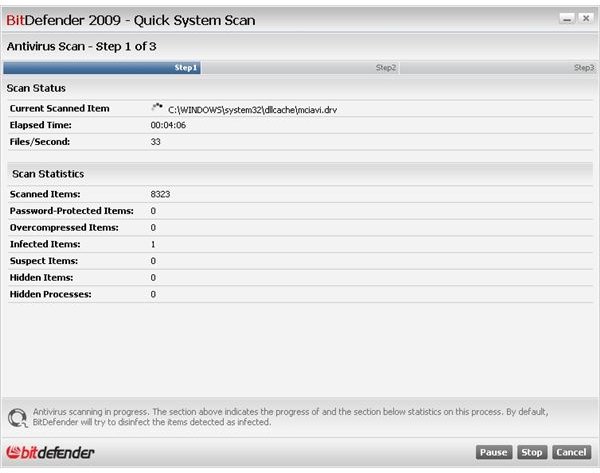
Once BitDefender Antivirus was installed, I performed a definition update and let a quick scan run. The whole process took about ten minutes from start to finish. I particularly liked the numbered step approach to the wizard and scan dialog boxes – BitDefender does a great job informing you of exactly what its doing and what the next steps are.
The user interface starts in basic mode, but an advanced interface is available if you want to tweak some of the more advanced options. I found both interfaces easy to use and intuitive. The basic interface sets sensible default options and hides some of more periphery functions that most home users won’t bother with. The advanced interface again remains intuitive but offers more tweaking options for each of the modules.
Regarding performance – most virus scanners I’ve seen will bog down your computer to the point of it being unusable during a full system scan. I’m happy to report that BitDefender Antivirus utilizes a pretty light footprint when it comes to scanning – only using 20-30% of the CPU and a measly 15MB of RAM. I was somewhat surprised that BitDefender doesn’t let you throttle CPU usage like most mainstream Antivirus applications do.
Usage
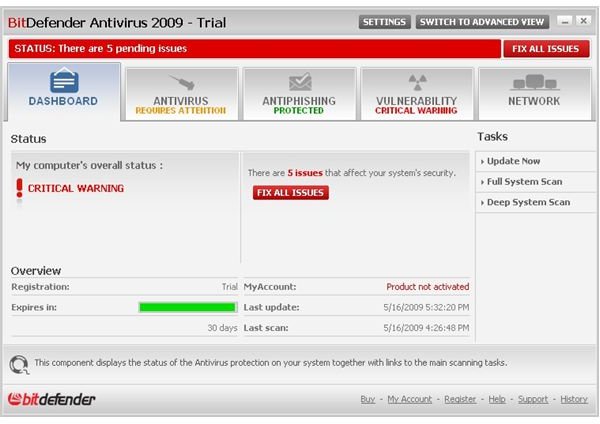
The user interface is organized in a clean, easy to understand fashion and is broken down by tabs. Each tab covers one major area for the application – Antivirus, Antiphishing, Vulnerabilities and Network. The most common actions you’d take for each category are displayed under a tasks heading under each tab – making it easy to do what you want without needing to perform too many clicks.
In today’s market, Antivirus solutions aren’t necessarily all about the Antvirus abilities the tool has. Vendors need to add on extras to differentiate their product from that of the next guy. BitDefender has a few extras mentioned above.
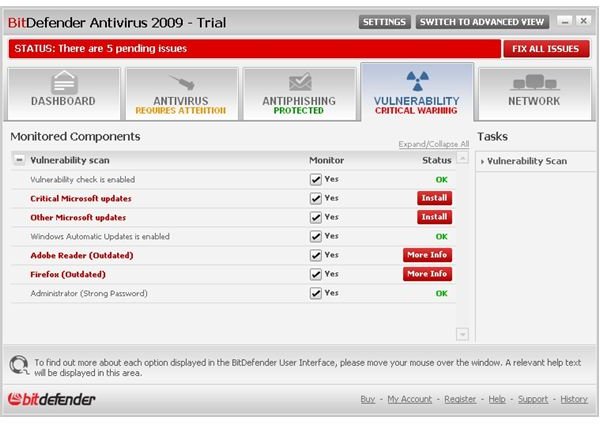
First off is the Vulnerability module. The vulnerability scanner will determine if there are Microsoft updates available and will also look at 3rd party applications installed on your system for out of date versions. In theory, the vulnerability module is a pretty useful tool, but it’s a shame that it feels half-baked. Adobe Reader and Firefox were the only 3rd party applications BitDefender detected and were able to monitor on my system. The Vulnerability Wizard could be a huge selling point if it expanded on what it already has by adding the ability to recommend shutting down unnecessary services and perform other types of system configuration checks to better secure your system.
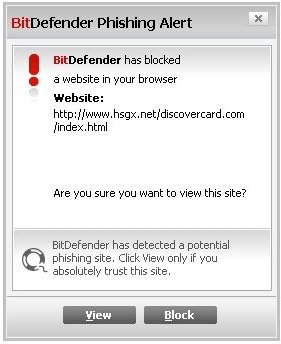
The Antiphishing module uses a browser plug-in to monitor sites you go to for potential malicious activity. It seems to work well giving you a pop-up asking if you really want to go to the potential phishing site. There are also options for determining how to handle cookies and web scripts.
Overall, the extra features are nice to have and certainly do add some value to the overall product.
Pricing, Licensing and Overall Score (5 out of 5)
BitDefender Antivirus is licensed on a per PC basis. Pricing on multiple PCs gives significant savings with one PC for $24.99, 3 for $29.99 or $49.99 for 5 – for one year. All of BitDefender’s products include free 24/7 phone, email or chat support as well. If you have more than one PC at home, it’s definitely worth going for the multi-PC discount.
Although I found some minor quibbles, I thought overall BitDefender Antivirus didn’t disappoint – especially when you can have it for as cheap at $10 a PC for a year. From the nice to have extras to the low resource scans and friendly user interface, I’d be happy to recommend BitDefender.
Images