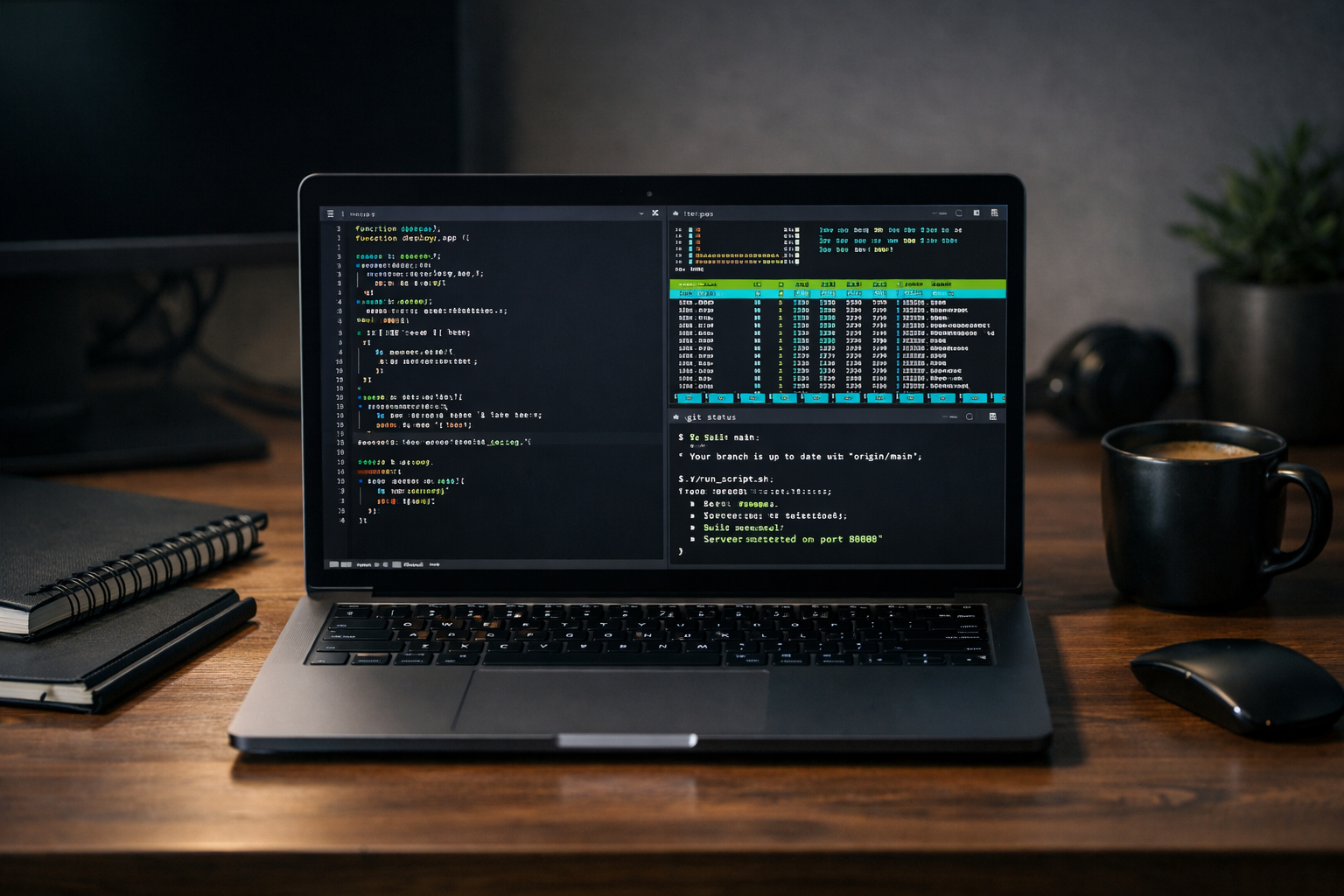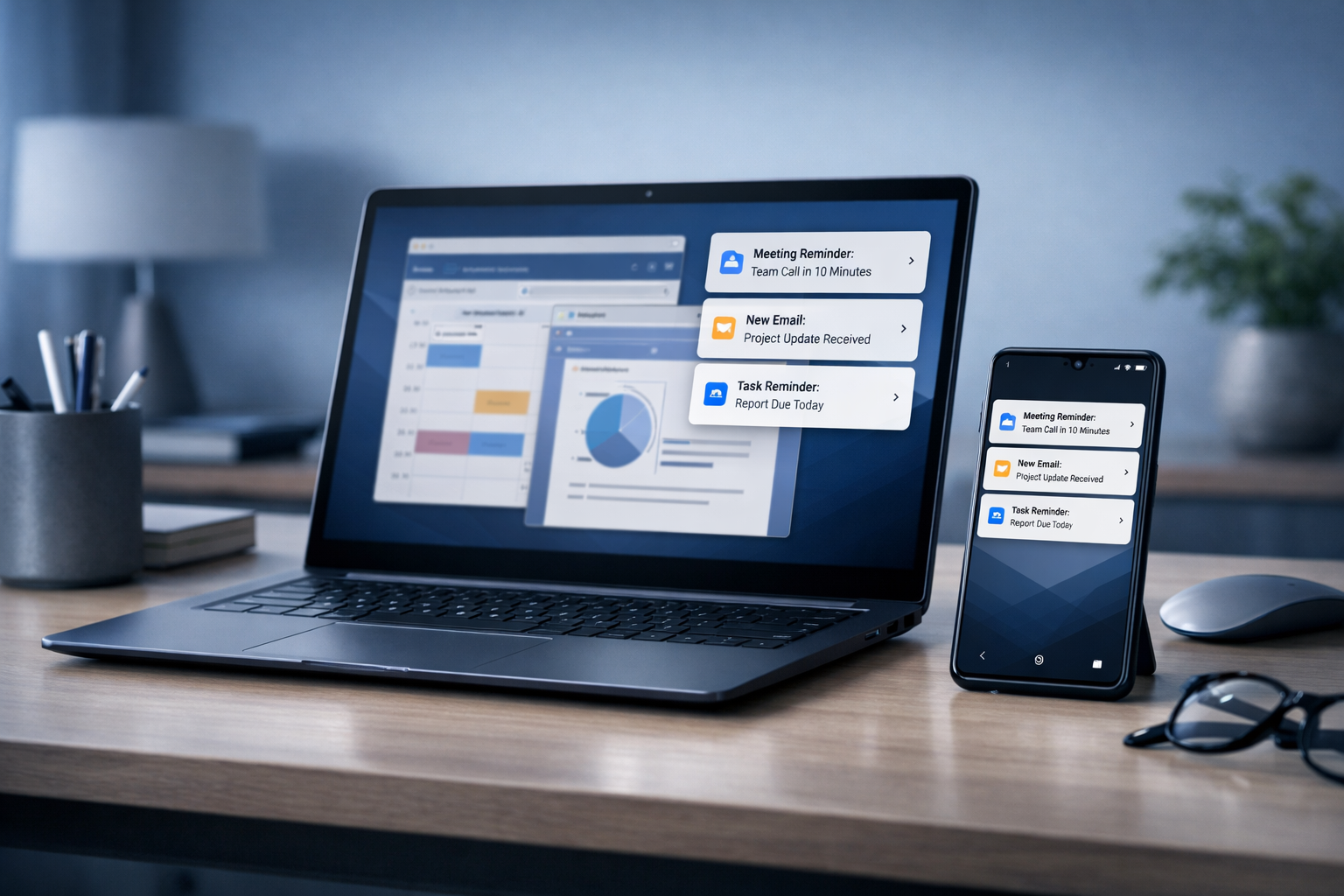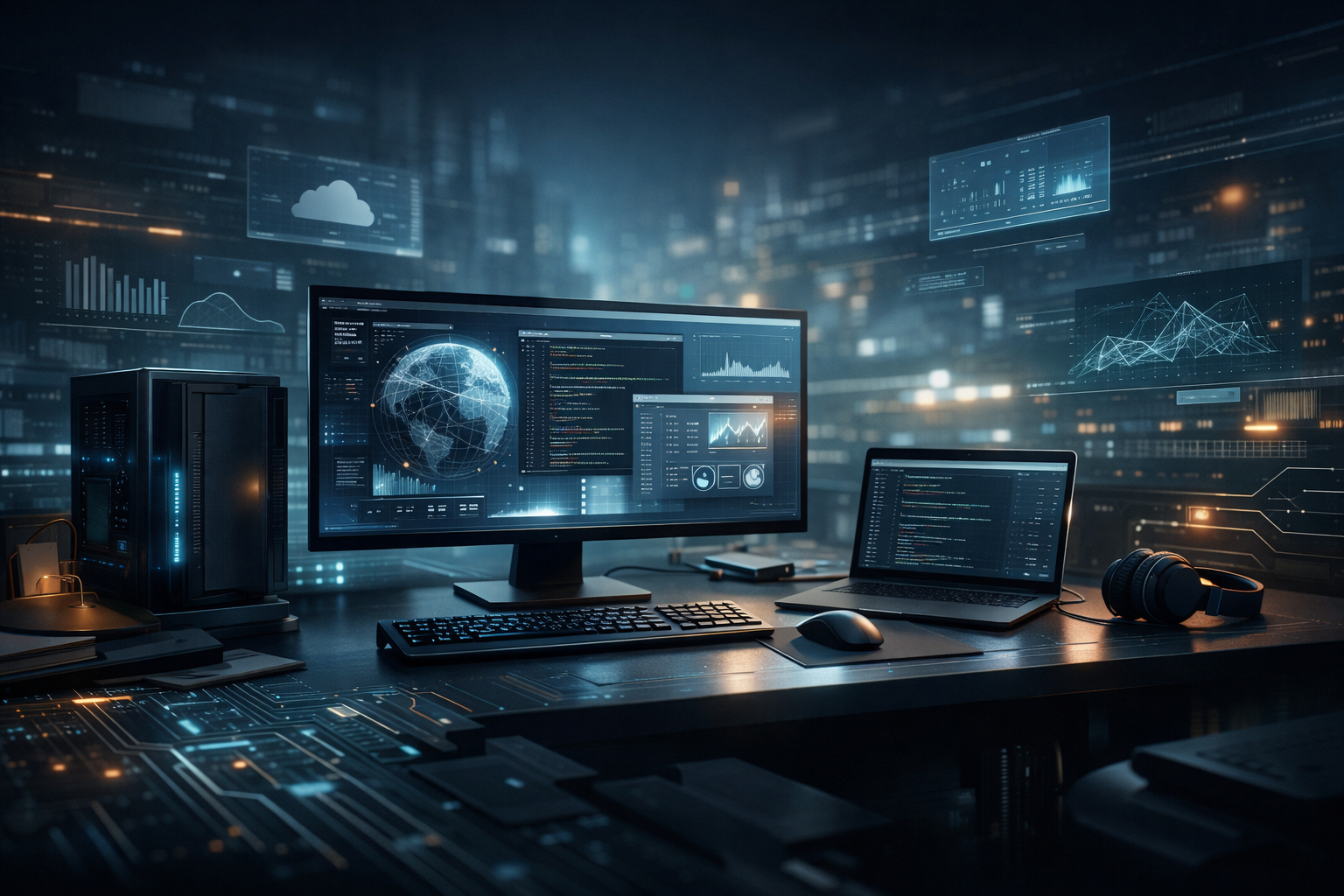
Computers are useless without a screen, so how the technology evolves is of importance to every computer user. So what’s next? This article looks at future computer monitors that might be appearing in the not-too-distant future as a screen near you, from organic displays to projectors.
What Does “VDU” Entail?
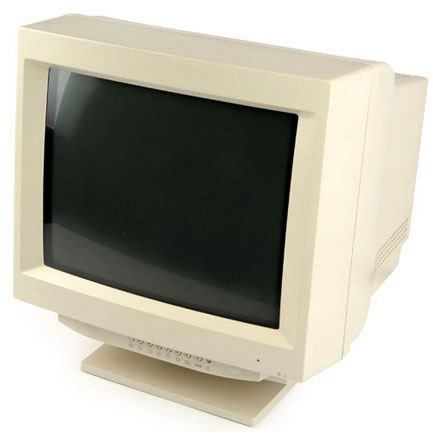
VDU isn’t a term we see too often. It literally stands for “Visual Display Unit”, a general term for any sort of thing that is used to display graphical information for a computer. This includes a variety of familiar technologies, from old bulky CRTs to the current favorite, LCDs, to many future technologies. This article will cover both improvements on the old and developments on the new.
LCD Is Not The End: OLEDs, SEDs & Projectors
As wonderful as LCDs were as a replacement for those bulky old CRTs, they aren’t the end of the VDU evolutionary line.
So, about those bulky old CRTs. The main problem was, well, their bulk. However, they actually offered very high contrast screens, wide viewing angles and a fast response time, often better than more “advanced” screen technologies such as the LCD. A hybrid screen, called an SED, uses the same cathode ray tubes from which CRTs took their name, except makes them much smaller and easier to deal with, like an LCD. The technology has been plagued with lawsuits, but hopefully it will be making a comeback.
OLEDs have actually been around a long time, first developed back in the 80s, but not really utilized until recently. OLED stands for Organic Light Emitting Diode. Basically, they utilize a series of thin organic films, which a current can be run through to make them produce light.
While they are more expensive to produce, they are also thinner than both LCD or plasma, in addition to being faster to change, more durable, lighter, and less power hungry. These displays can be either opaque or transparent. Many major manufacturers are either planning on mass producing these screens, or already have within the last year, for everything from cell phones to large televisions. They’re still generally considered a high end type of screen, as LCDs were once considered, but they should be making their way down to the everyday level within the next few years. This article from Science Daily offers an excellent overview of the technology and its applications, albeit from 2005.
Projection technologies, first popularized for educational and home theater uses, are now starting to be used for your everyday computer. This allows the computer screen to be as big as you want, and it is infinitely portable, capable of being projected anywhere you please. All you need is a blank wall and you’re good to go! Projectors can also be connected wirelessly to a computer. In fact, projectors may even be combined with touch screen technologies .
Touch Screen
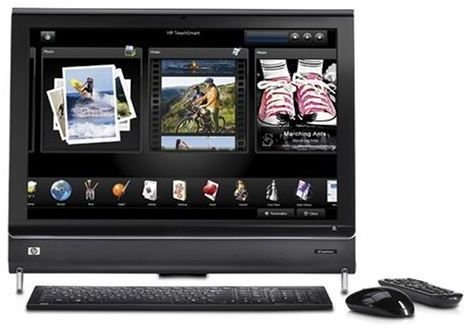
Touch screen is poised to be the next big leap in computer screen technology. Using a mouse gets pretty old for, say, digital illustration work. Touch screen allows for faster, more ergonomic interfacing with your computer. Think of the infinite combinations of spinning, tapping, dragging between your two fingers and all of the different hotkeys they can represent! Free, mobile use of the fingers is just more comfortable in general than clicking away at a mouse.
This may also end up blurring the line between keyboard and screen. They can also make keyboards infinitely customizable, easily switching between layouts like Dvorak, Russian, Chinese, without any need for keyboard stickers or the like. Think of those embryonic steps made in iPhones. The technology may currently be quite frustrating to use, but it has so much further that it can advance, so soon in the future.
Face Recognition And Other Cool Tricks
There are plenty of cool little features that future screens may be incorporating. For example, for those with a slightly more protective bent, some companies are beginning to include face recognition so that the screen will only display for a recognizable face. Along those lines, some manufacturers are offering polarized screens that may only be seen by the person directly in front of them, presumably the user, so that passerby can’t just get a glance at what you’re doing.
Glossy displays are becoming more popular for many screens, especially relatively low contrast LCDs. While this increases glare, it also increases saturation and sharpness.
What about just shaping all these transparent, flexible screens we’ve been talking about into something curved—and thus 3-D? Microsoft, so often a subject of scorn for technology writers of late, is developing as of 2008 a “sphere” screen that offers a full 360-degree touch screen. There are already a few applications designed for it, though it hasn’t reached the marketing stage quite yet.
So what technology is going to “win out”? Well, for the moment, LCDs are dominating and seem to be holding their ground. However, it’s pretty much certain that whatever’s going to be popular next year, or in five or ten years, is in its turn going to be replaced. People are still dreaming up holograms and other far-away sci fi technologies, so don’t expect this field to be settling anytime soon.