Ergonomic Computer Monitor Stand & Desk Setup - Do You Need to Think About Ergonomic Office Equipment?
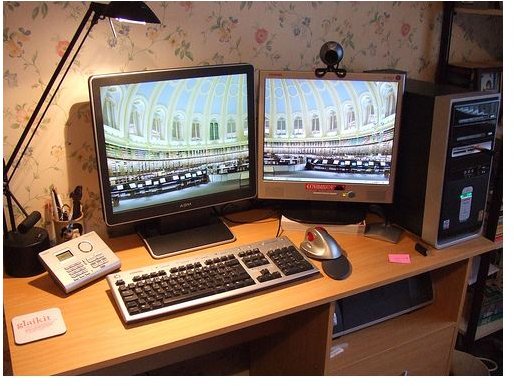
Do You Need an Ergonomically Designed Monitor Stand?
If you are thinking of looking for an ergonomically sound computer monitor stand then it’s time to read around and do some research prior to making a purchase. If the subject is new to you then a definition of ergonomics may be helpful: a search engine can provide you with a dozen or so results, but it is reasonable to say that ergonomically designed equipment is designed with the needs of the human body in mind, with the aim of facilitating work and avoiding injury as a result of that work.
Why May You Need an Ergonomically Designed Computer Monitor Stand?
Perhaps you are seeking information on ergonomic computer stands and other equipment as a result of developing a repetitive strain injury (RSI) or cumulative trauma disorder (CTD). If so then hopefully you have already sought medical advice on the issue: your human resources department may also be a valuable source of information. Alternatively you may be thinking of investing in some ergonomically sound computer equipment as a preventive measure. In the case of disability extra care and concern may be required in these areas, including in relation to computer monitors and stands.
Those of us with office jobs – and even those without – can spend very long hours at a computer workstation. What effect can use of a non-ergonomically sound computer monitor stand have? Problems with the neck, back and eyes may possibly be the result of using such a piece of equipment.
How Ergonomic Is Your Home Workstation Set-up?
What Stand Should You Choose and How Should You Use It?
But what is the right computer monitor stand, ergonomically speaking? Also, what constitutes correct usage? Giving advice on the subject can be a legal and medical minefield, and manufacturers and salespeople’s advice may allegedly vary according to the product they are selling. However some advice issued by relevant authorities seems to be consistent: frequent advice is to have the top of your monitor in your eyeline, to bear in mind the importance of adjustability of your monitor stand, chair and other equipment, to avoid both glare and bodily discomfort through positioning of your monitor stand, and to have any documents equidistant and on a level with your monitor.
Expenses of Ergonomic Equipment
Your country or state may have statutory or regulatory requirements for risk assessments generally or relating to workstations in an office environment: the UK Health & Safety Executive has produced relevant information and leaflets. Reference to your company’s documentation (handbook and health and safety policy) may assist in your choice and usage of ergonomic equipment.
How much is the cost of an ergonomic computer monitor stand going to set you back ? Product searches on Google Shopping reveal a price range starting at around GBP 25.00. If you are having trouble choosing an appropriate model perhaps it is time to seek further medical and professional advice. (Or if you are of a mechanical and money-saving bent you may find this project on Instructables interesting, although this is in no way a personal recommendation!)
Ergonomic Office Equipment: A Conclusion
Of course an ergonomic computer monitor stand by itself is not going to answer all of your ergonomic needs. Desk height, chair height, mouse position etc. all need to be taken into account due to their interplay with the distance, positioning, tilt and size of your computer monitor. You may wind up buying more than just the new computer monitor stand you originally envisaged! Do your research: arm yourself with all the information you need before you go out and choose your ergonomic computer monitor stand. Your health may be worth the cost of acquisition of some new equipment: it’s certainly worth the time spent on doing your homework and due diligence regarding that equipment.
References
1 Jonathan Bailin, Ph.D. “Ergonomics & Computer Injury: FAQs” 1995-2009 Network Science Corporation (17/08/2009) https://www.netsci.org/Science/Special/feature01.html
2 NEC Display Solutions United Kingdom “Better health by working ergonomically at the screen: Ergonomic VDU workplaces are compulsory” 2008 (17/08/2009) https://www.nec-display-solutions.co.uk https://www.nec-display-solutions.co.uk/c/g/uk/en/Monitorizing/BGArticle/Details/dp/Internet/Shared/Content/SeeMore/BGArticle/BetterHealthErgo/index,solutionId=.html
