There has been a rash of fake flash drives advertised for sale on eBay, found in the Amazon Marketplace, and in the ads Google carries from many Chinese sites. How do you tell if you are getting what you pay for, or a drive that was hacked to look much larger than its original size? * Updated*
Many sources help you discover you have been swindled
There are cautionary articles, guides on eBay , websites such as SOSFAKEFLASH.com , and Bright Hub posts and articles such as Is
There Really a 128 GB USB Flash Drive Out There? They are all meant to keep consumers from falling prey to the unscrupulous sellers who take USB flash drives with little memory- sometimes as little as 256MB- and hack the controller so it appears they have 16GB, 64GB, or even the until recently mythical 128GB capacity.
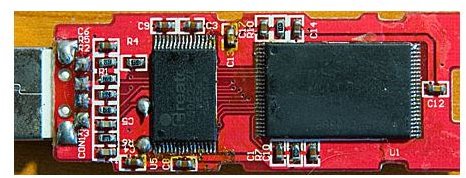
picture courtesy of mtlin from photo displayed on Flickr
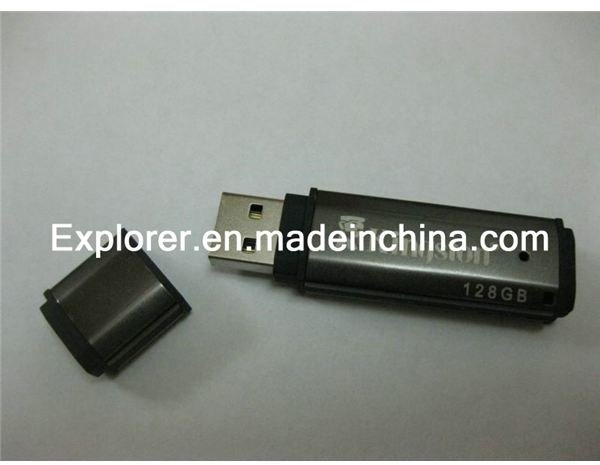
Whether you are contemplating importing a bulk order of inexpensive drives directly from China, or want to bid on one from eBay, do your research. As of June 20th, 2009, there were a number of sellers on the site madeinchina who were offering obvious fakes 128GB drives. If they are selling obvious counterfeit goods of one sort, be wary of the other products they carry as well.
SOSFAKEFLASH.com puts out regular warning lists of sellers of faked drives, particularly for sellers on eBay.
However, many of these guides, especially the eBay guides, concentrate on identifying the fake after you have purchased it. This article will try to help you identify drives you should not buy, saving you grief, money, and the possibility of lost data.
Now there are real 128GB USB flash drives
*Updated* Until June 15th, 2009, if you saw a drive advertised as having 128GB capacity, it was certain that it was a fake. Until July 15th, when the Kingston drive is supposed to be available, any 128GB drive is still a fake- even with Kingston as the brand name.
Since the 15th, three well known companies, Kingston, Edge Tech and Patriot, have announced they will be releasing 128GB drives. No doubt other well known companies will being announcing their release of drives with 128GB capacity soon. It is therefore urgent that consumers are able to determine whether or not a drive is real or not, before they are burned. After July 15th, Kingston will have 128GB drives on the market. Edge Tech expects to have drives available July 31st. Patriot has not set a release date yet. Both Kingston and Edge Tech have pictures of their drive, and it is possible to see how it is distinct from other drives they sell.
*Updated" Corsair and Super Talent Luxio have also released 128GB drives . Read about the drives and see pictures of the actual drives to make sure what you buy is what you really want.
* Kingston, on July 20, 2009, about a month after announcing it had a 128GB drive, has said they have developed a 256GB USB flash drive . It is currently only available in the UK, according to their announcement, and is retailing for over $900 USD.
Check the manufacturer’s site. These are what the only real 128GB drives look like
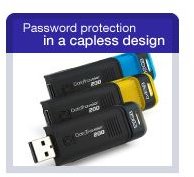
Go to the website of the brand. Kingston can be checked at www.kingston.com . Different sizes are color coded, and they have different styles which only go up to specified capacities. If the picture does not match any drive shown, then it is not a Kingston drive. The 128GB drive has a black end and these are the only models in the DT 200 series.
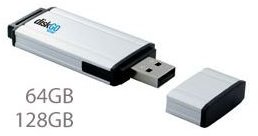
Edge Tech has two sizes in the style they are using for the 128GB drive, a 64GB drive, and the 128GB. You can see the Edge Tech drive on their website.
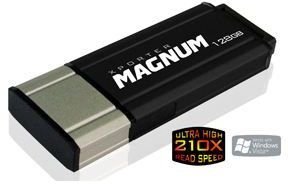
Patriot has said their drive will be in their Extreme Magnum series , and said it will have a read speed of 31MB/s, and a write speed of 20MB/s.
Check too for pictures of the Corsair and Super Talent Luxio drives- the newest legitimate 128GB drives on the market.
For more information about these new drives, see the article: How to Find the Biggest and the Best USB Flash Drive Available: Choices for 128GB drives, and a Single 256GB drive
Check the brand name
First of all, when you see an advertised multi-GB drive, check the brand. Right now a 128GB drive will come from Kingston, Edge
Te
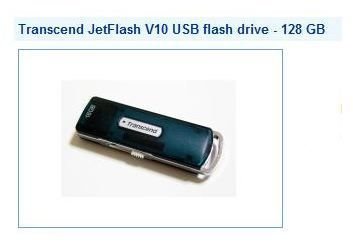
ch, or Patriot. Any other brand in that size is counterfeit. When new companies release a 128GB drive, we will list them in this article.
Transcend has not announced that they make a 128GB USB drive.
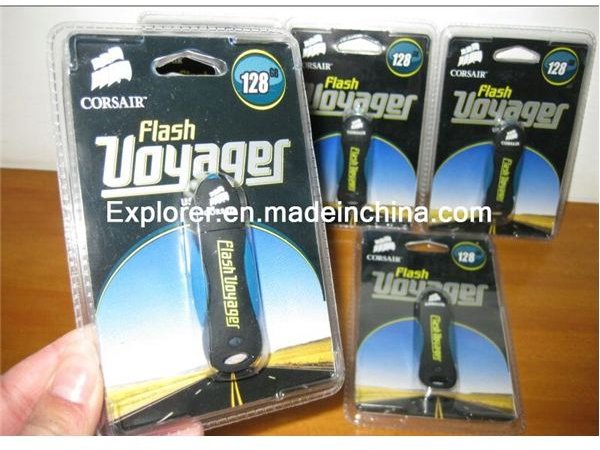
Corsair’s 128GB drive looks nothing like the drive in this picture.
Steps to avoid being cheated
There are definite preliminary steps you should go through before sending out money anywhere but manufacturers’ websites and reputable online dealers.
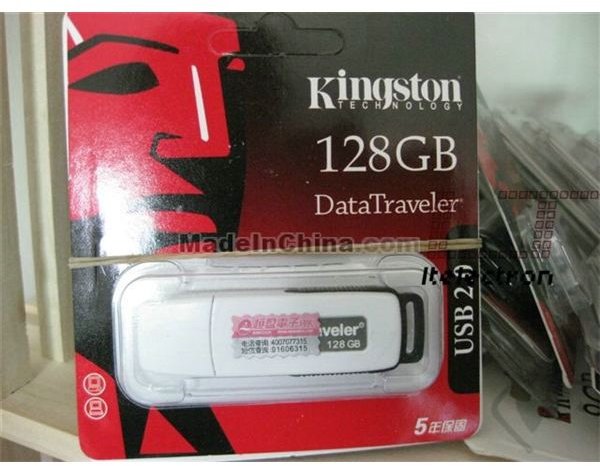
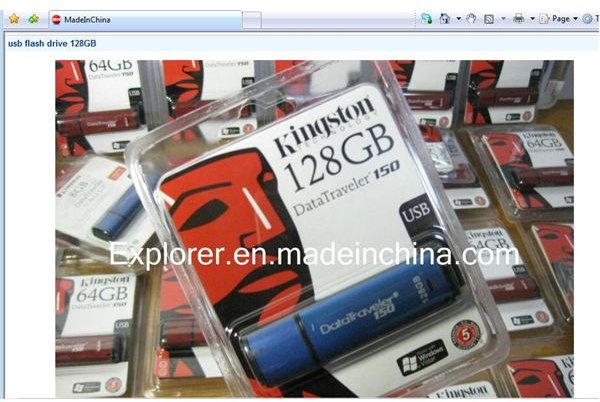
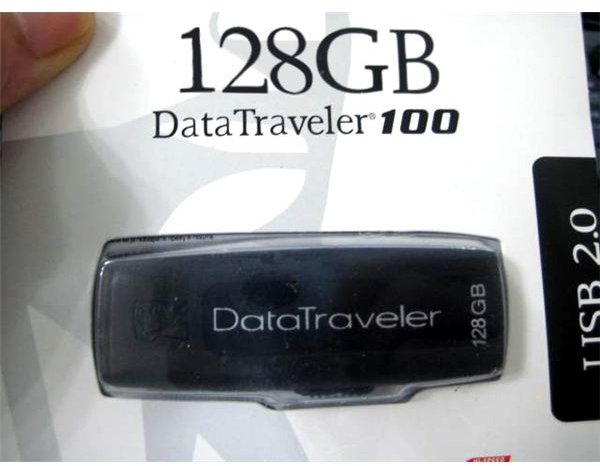
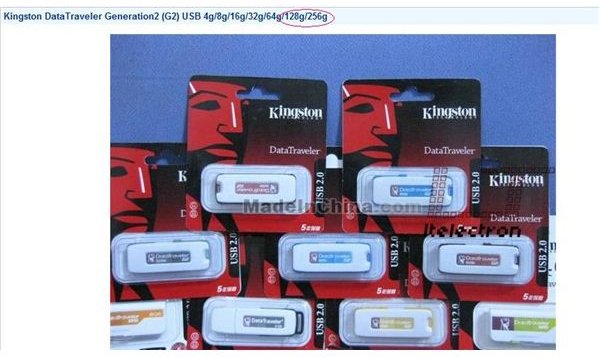
Different faked Kingston 128GB USB flash drives- all from wrong series
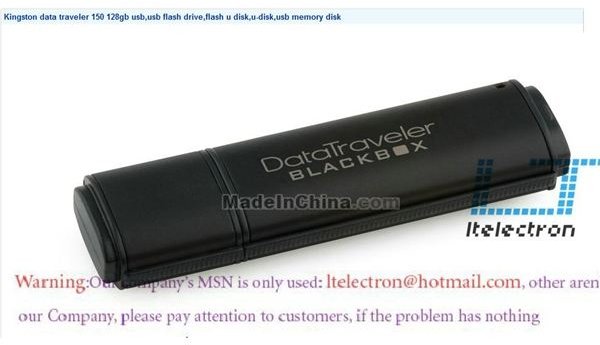
Check the price
Then look at the price. If it sounds too good to be true, it probably is not true. When it costs $2-$4 a GB to manufacture NAND memory for drives, real manufacturers cannot afford to undercut their manufacturing costs by 50%- certainly not beyond a short period of time as a loss leader. If you see a name brand drive for under half price, and it is Black Friday at Walmart, you can probably assume that the two or three drives parceled out to each store are real, if you are lucky enough to be the first customer in line. Under normal circumstances, no one is going to be selling a real USB drive for a third of the price it costs to make it. Even in the Far East, raw materials have a basic cost, and while their additional production costs may be far below those of first world nations, they are not in the business to lose money either.
Packaging

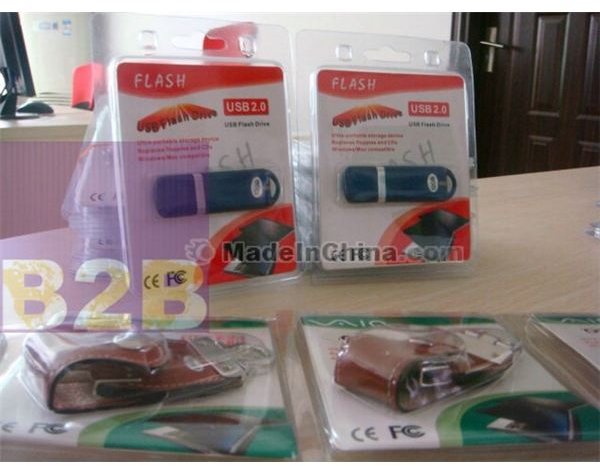
Look at the packaging in the image. Most OEM sell their products, especially ones as small as USB drives, in a package about 4” x 6 “ or 6” x 8”. The edges are mechanically sealed shut. Yes- they use the packaging you need to open with scissors or even a knife. Some fakes are starting to come packaged like th
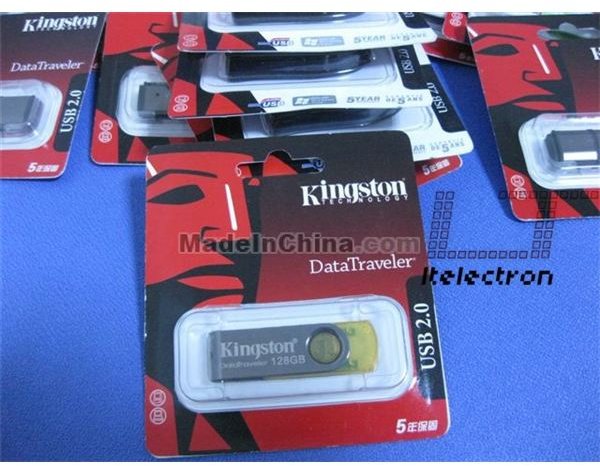
is.
If the outside appears to be cardboard, with a bubble showing the drive and staples holding it shut, the drive has probably been repackaged- and is likely to have been tampered with.
If the outside is plastic, but opens via a hinge, with two small plastic indents to snap shut, it is likely to be
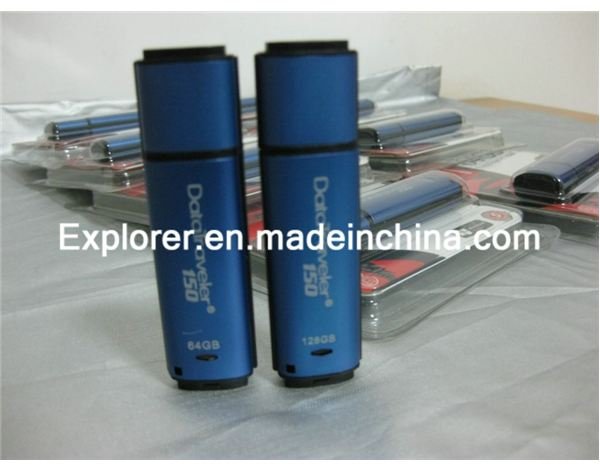
another example of fake packaging.
If you see a picture of the back of the packaging, does it include a serial number? Kingston Technology Asia has set up a site where you can input information from the back of a package, and they will let you know if it is a genuine Kingston Product. Unfortunately, they only cover drives sold in the following countries:
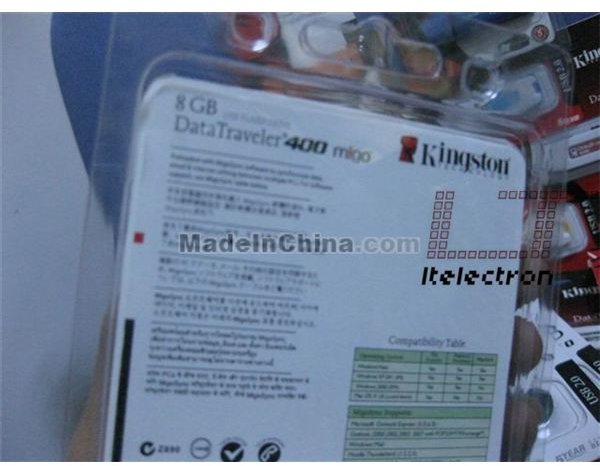
Australia, Bangladesh, China, Hong Kong, India, Indonesia, Japan, Korea, Malaysia, New Zealand, Pakistan, Philippines, Singapore, Sri Lanka, Taiwan, Thailand and Vietnam.
Appearance
It can be a little hard to examine a picture of a drive closely on your computer screen, but there are some
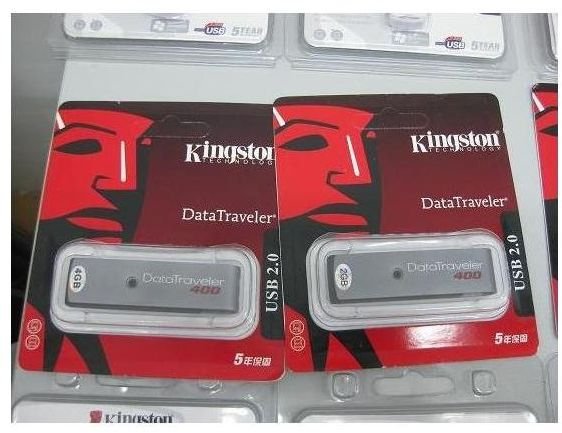
warning signs. The GB size should not be on a sticker attached to the drive, or a sticker attached to the packaging. The colors on the packaging should be intense, not washed out looking ink. They should also match the colors on the manufacturers website. The color on a monitor does not always reproduce accurately, but if an red drive appears orange or brown, be suspicious, especially if you have seen any other warning signs. If you can see the side of the drive, does the color and texture appear to be on a stick on label?
Some have remarked Kingston Data Traveler 150 drives also show a © after the name which is almost too small to be recognized.
If the drive looks poorly finished, with an uneven hole where the LED is supposed to show, or is rough looking edges at the ends, it is probably not in the case designed by the original manufacturer. If you can see the connector, it should have a smooth finished appearance, with the side of the connector where the edges meet meeting smoothly and without any gap. Kingston engraves a serial number on the connectors of their high GB drives. If you are shown both sides of the connector, and they are perfectly smooth, it is not authentic.
Advertising
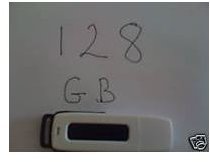
You may occasionally find a bargain used drive on eBay. For new drives, you can check the name of the seller to see if they are on SOSFAKEFLASH.com’s list of sellers they have vetted. If the seller has many low priced USB drives, along with suspiciously low prices for iPods or other Mp3 players, go and check their feedback for negatives. People can not afford to sell below cost for any length of time, and if they seem to have a never ending supply of those cheap drives and players, chances are good they were not made by the OEM.
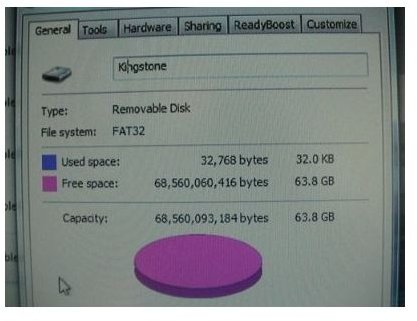
If the seller feels a need to provide screenshots of his drives, attesting to their purported capacity, beware. A hacked drive is going to show altered capacity, so the screen shot proves nothing.
Know what sizes really exist
*Updated*
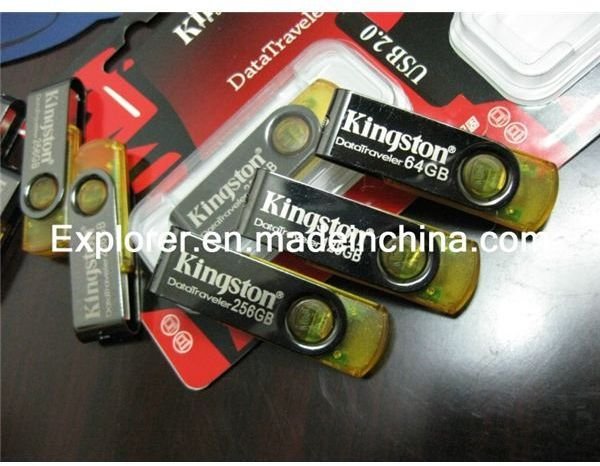
There seem to be some sellers out there who think another one is born every minute…. and so there are
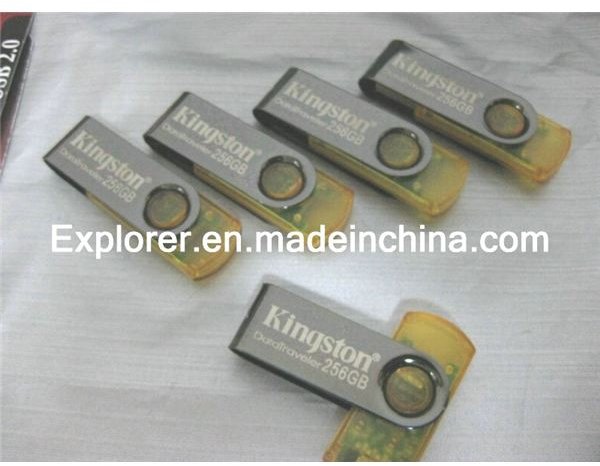
even a couple sellers who have jumped to selling 256GB drives.
* Update * There is now a Kingston USB thumb drive available with 256GB
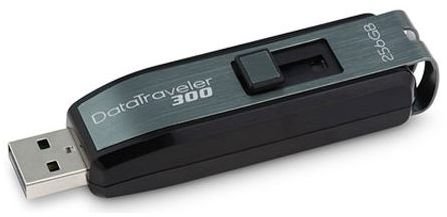
capacity! ( As of July 20, 2009, Kingston has announced they have developed a 256GB UBS Flash drive, the Data Traveler 300.
It is sold in the UK only at this point. ) It is quite distinctive from their other lines of USB flash drive, as can be seen in this picture from the Kingston site. Notice it looks nothing like the fakes shown here.
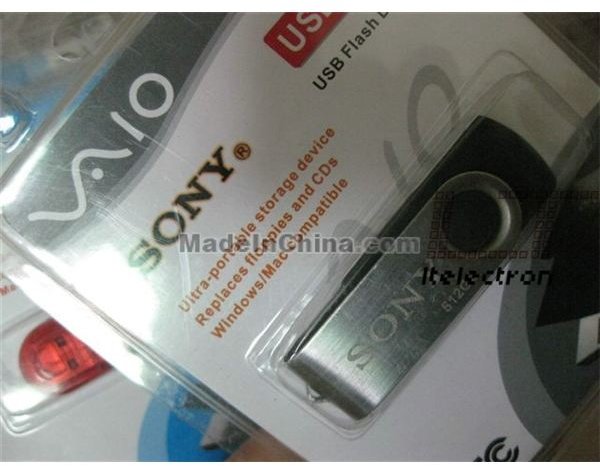
And for those people who are really unaware of what current technology can do, there are sellers out there lying in wait for you.
512GB USB thumb drives aren’t even a gleam in any real manufacturer’s eye yet.
Poor fakes
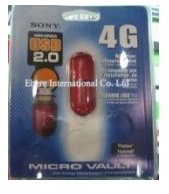
If the packaging lists a drive with capacity of anything from 2G to 32G or 64 G, it is a poor fake. USB flash drives give the capacity in GB or MB.
Information from a swindled buyer
An early victim (2006) of the fake flash drives posted details of what he found wrong about the drive on a forum, and has given me permission to reproduce the information.
He ordered what he thought was a Sony 4GB USB thumb drive from an Amazon Marketplace seller. He wrote:
Sony does not even carry a 4GB Micro Vault in those series only up to 2GB. I did not know this at the time but was suspicious after opening the package. The first thing that caught my eye was that there was no security device inside the package but the insert has a place for it which even said for a security device.
A list of things which [he] found wrong with [his] purported 4GB Sony Micro Vault Classic.
Heres a list of things which [he] found wrong about it.
- No security device inside package
- Missing the CD-ROM and Warranty Card inside package which is mentioned in the instructions
- The package shows English and French however the instructions are in English and Chinese
- The drive shows up as 3936 MB rather than the packages 3992 MB
- The model number on the package (USM4GEV) differs from the instructions (USM4GU2)
- The date on the package is 2004 and the instructions are 2001
- The UPC number (027242645547) is the UPC for the Sony 256MB Micro Vault Classic. The specs differ from the package and instructions (256MB is the maximum size made)
- The serial number on the back of the package and instructions are left blank
- There is no LED indicator on the Flash Drive as mentioned in the Instructions
- The color differs from the images shown online however it is possible it looks darker than they really are
- The strap included does not even bare the Sony name as I would expect. But it is possible there would be no name
Details that make you uneasy
While some of these things are only going to be noticeable if you already have purchased a drive and a
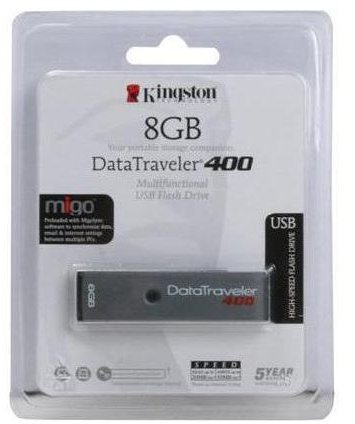
re holding it, others can be additional clues. If the online description says there is a CD packaged with the drive- can you tell if there is space made for the CD in the package. Again, does the package have a serial number, or authentication number? If the drive is supposed to have a LED to show when it is in use- is there a place for the LED drive. Is it in the right spot, according to pictures on the manufacturer’s site?
If anything about the drive you see pictured makes you uneasy, find a reputable place to purchase your USB drive. It may cost a few dollars more- but you won’t be being cheated with a fake drive, you won’t risk loosing information you thought was saved- and you won’t be paying money to a dishonest merchant.
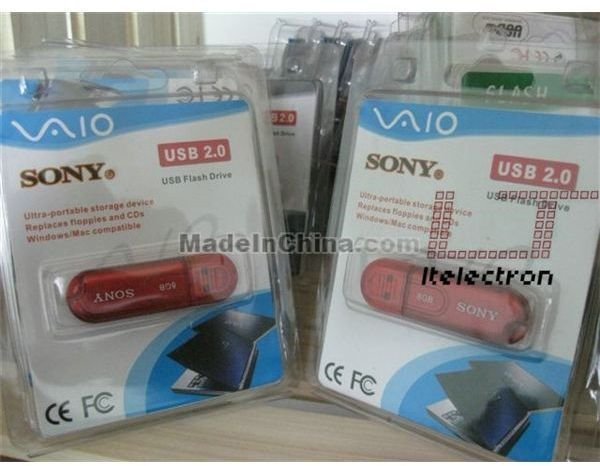
Sony does not make a Vaio USB drive or a 128GB drive. Any drive in any size with that as a brand name is
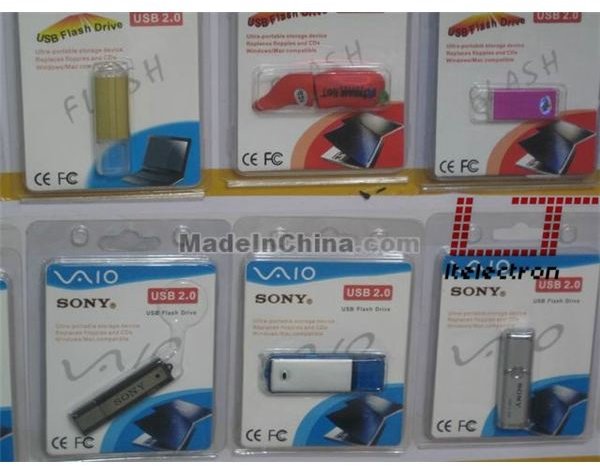
faked.
Thanks to sources for information
.
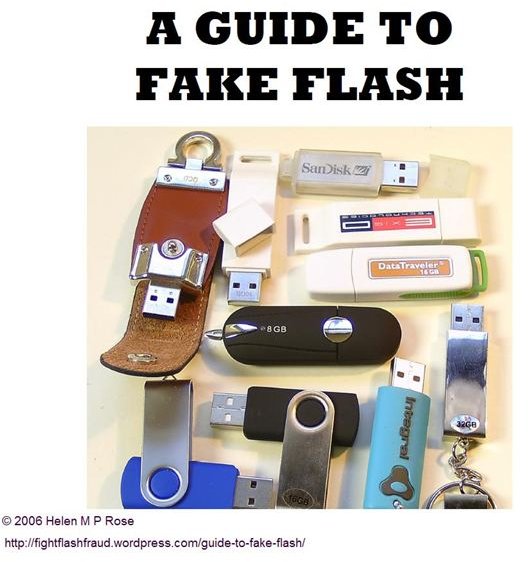
I would like to thank the site SOSFAKEFLASH.com and the pdf guide they make available , © 2006 Helen M P R
ose, for information, confirmation and verification of information, and links to more source material. I’d also like to thank the poster who didn’t want his name published, and mtlin, source of the photo from Flickr showing the inside of an altered Kingston USB flash drive.
A number of the screenshots showing faked drives in this article were taken on the site madeinchina. I do not recommend purchasing USB products through them.