How to Choose the Best Computer Power Supply - A Look at Wattage and Power Consumption
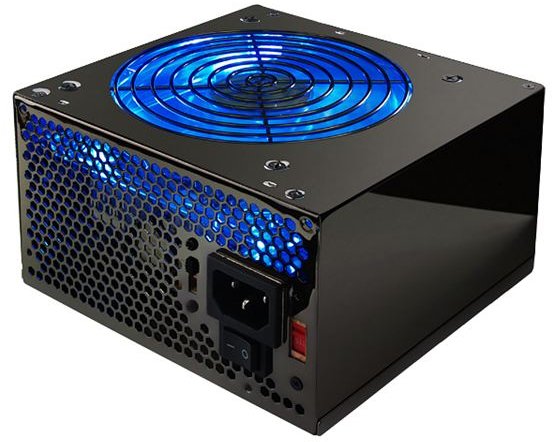
Computer Power Supply
If you are building or upgrading your computer system, this article will tell you how to choose the best power supply for your PC. The power supply is a crucial component of your computer system and it can determine what kind and how much extra hardware you can add to your PC. There are three main things you want to look for in a power supply, and they all vary based on your needs and other hardware: wattage, noise, and cabling.
Wattage
Every power supply has a wattage rating, which is simply the measure of how much power it puts out. Computer power supplies can range in power from less than 200 to over 1,000 watts. What you put in your own PC is dependent upon your hardware needs. For many people, the main driving factor behind a power supply upgrade is for powering a new video card. Most high end video cards requires a minimum 350-400 watt power supply in order to work properly, whereas most factory brand power supplies (like HP or Dell) are 250 watts or less.
Below you will find a very basic set of standards for determining power consumption in your PC. These wattage numbers are based on average ratings and can vary depending on the manufacturer, so double check before you settle on anything. This is mainly just to give you a rough idea of what you will need as far as the maximum wattage on your new power supply.
CPU: 125-150 watts
Motherboard: 50-150 watts, depending on built-in components
RAM: 15-20 watts per gigabyte of memory
Drives: @ 30 watts each
Cooling Fans: 3-5 watts each
PCI Cards: @ 10 watts each
Video Cards: Varies greatly depending on make and model – 100 to 400 watts
You can also use a PSU calculator to help you get a more specific estimate.
Unless your motherboard or any other components have specific voltage requirements, they aren’t that big of a concern when choosing a power supply. Video cards use power at 12 Volts, so if you are using high-end or multiple cards make sure your PSU can deliver enough power at that voltage. The CPU also draws at 12 Volts, so most modern power supplies (ATX 12V 2.x, described on the next page) are set up to deliver most of their total wattage at 12 Volts. Be sure to check your hardware to make sure of any special requirements, especially with your motherboard, CPU, and video card.
Noise
Nobody wants to turn on their computer and have it sound like a helicopter getting ready to take off. This is why you should pay attention to the noise rating and fan types on a power supply. If you purchase the power supply online, there’s a chance that the retailer will include this information. Be sure to read as many reviews as possible on different brands and their models, because there are a slew of them out there. Watch out for the overly cheap models with seemingly high power ratings, because those tend to be the noisy ones. Worse still, they can not only fail, but damage other components, and even start fires. Look for ones that describe the fan or fans as being silent. This makes a huge difference over time, and you should always remember to blow the dust out of your PC every couple of months.
Cabling
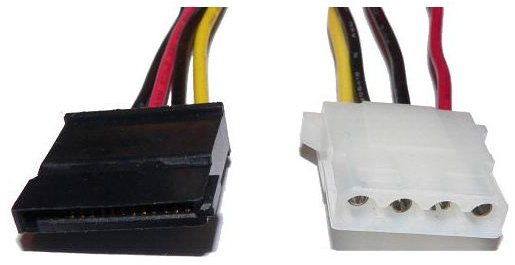
Your power supply has to connect to other devices in your computer, so you need to make sure the power supply has the right type of cables and connectors in order for it to be compatible with your hardware. First, you need to make sure that the power supply can connect to your motherboard. The most common type of interface for this is called ATX 12V 2.x, but there are also such things as EPS12V, so check the stats on your motherboard before proceeding with the purchase.
You also want to make sure your PSU can power the drives in your PC. If you are upgrading the power supply in an older PC, then you may need to get one that has the old 4-pin connectors for powering IDE hard drives and CD/DVD drives. If this is for a newer machine, then you most likely will need one that comes with SATA 5-pin power connectors. Many power supplies come with both, and there are adaptors for such a thing, but it is a lot easier to make sure before you buy.
We have a list with pictures and descriptions of all the PSU connectors and their functions here.
Final Thoughts
Once you determine the minimum requirements for the power supply that fits your system, you’d best buy one a step or two higher. The reason for this is that you don’t want a power supply that is ‘just enough’ because they work much better when you don’t constantly red-line them. For example, if you determine that your system needs a max of 425 watts, then you ought to get a 500 or ever 600 watt power supply. Not only will this take care of your system, but it also gives you room to grow should you decide to upgrade the components or add more hardware, like another hard drive or better video card. It also will run cooler and quieter.
A lot of power supplies on the market include fancy colored lights inside, and whether or not you get them is up to you. I found a good deal last year on a 550 watt power supply from Rosewill, and it has a blue light inside that shines out the back of my HP brand PC. It’s pretty faint and doesn’t disturb anything, but was really made to go in one of those PC cases with the clear side panels so you can see inside the machine. Although it probably won’t make a big difference to most, I can see where some people might be turned off by the idea of blue, red, or green colored lights shining out of their home or office computer.
